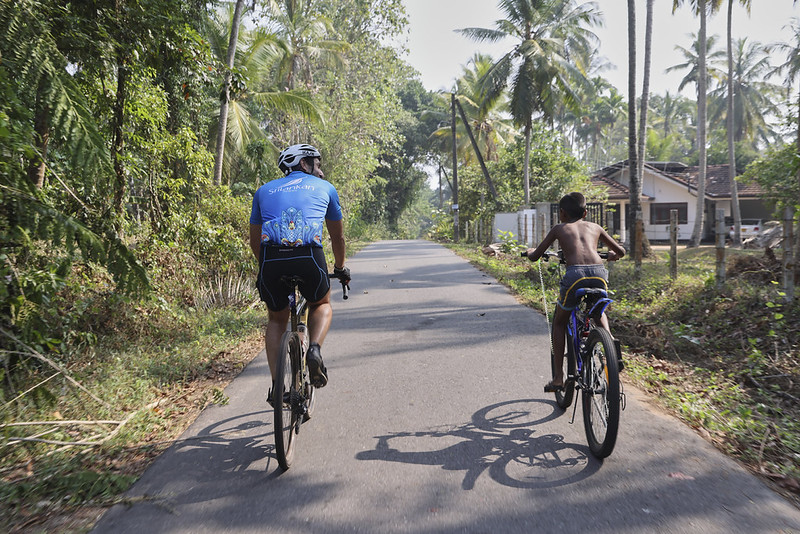
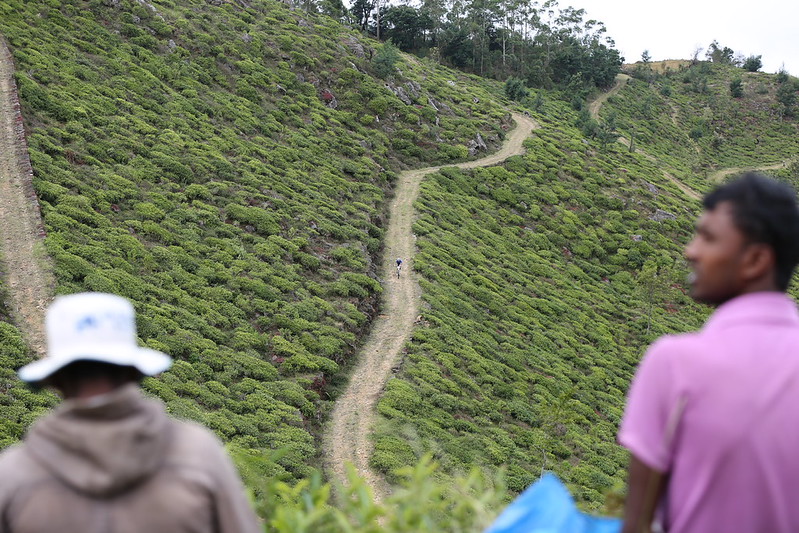
Sri Lanka’s hill country is not a single climb, a single surface or a single kind of challenge. It is a shifting world of tea-estate lanes, cloud forest, old railway towns and sharp escarpments, where a morning can begin in tropical warmth and finish in cool mist. The top Sri Lanka highland rides reward riders who come prepared for proper climbing, quick-changing weather and descents that demand attention.
For many cyclists, the appeal is the contrast. You can ride through working tea country, stop for a fresh cup beside a plantation road, pass Buddhist shrines and Tamil villages, then crest a ridge with views across layers of green hills. The distances can look modest on paper. The elevation, gradients, surface changes and humidity often tell a different story.
What makes Sri Lanka’s highland riding special
The central highlands are compact, but never simple. Major roads connect towns such as Kandy, Nuwara Eliya, Haputale, Bandarawela and Ella, while smaller estate roads and back lanes open up a more intimate side of the region. A capable gravel bike is often the most versatile choice, although a mountain bike earns its keep on rougher plantation tracks and remote routes. Road riders can build exceptional days too, particularly when a well-planned itinerary avoids the busiest sections.
Elevation is rarely extreme by alpine standards, yet the riding feels substantial. Nuwara Eliya sits close to 1,900 metres, and long approaches from lower ground can accumulate serious climbing. Add humid conditions, steep ramps and occasional broken tarmac, and pacing becomes essential. The strongest day is not always the one with the biggest numbers. It is the day that leaves enough energy to enjoy the view, the food and tomorrow’s route.
7 top Sri Lanka highland rides
1. Kandy to Nuwara Eliya via Ramboda
This is the big, classic tea-country ascent: a journey from Kandy’s busy, lowland energy towards the cooler air of Nuwara Eliya. The route climbs through villages, roadside fruit stalls and increasingly dramatic tea plantations, with the Ramboda area providing a powerful visual and physical centrepiece.
It is best treated as a full day rather than a race. Traffic can be busy on the main road, especially around towns and pinch points, so local route knowledge and vehicle support make a genuine difference. The reward is a superb sense of progression as palms give way to eucalyptus, tea bushes and highland cloud.
2. Nuwara Eliya to the Horton Plains approaches
Riding out from Nuwara Eliya towards Horton Plains delivers the cool, windswept side of Sri Lanka. The landscape feels more open here, with rolling upland roads, vegetable plots, pine stands and wide views when the cloud lifts. Early starts are worthwhile, both for clearer skies and quieter roads.
This is a ride for steady endurance rather than technical bravado. The gradients bite in places, and the weather can turn from bright sun to drizzle in minutes. Access rules around protected areas can change, so any ride towards the national park should be planned with current local guidance rather than assumed from an old GPX file.
3. Haputale to Lipton’s Seat
Few highland rides deliver a stronger payoff for the climbing than the ascent towards Lipton’s Seat. From Haputale, the road winds through tea estates and small communities before rising to one of the region’s most celebrated viewpoints. On a clear morning, the panorama can stretch towards the southern plains, a reminder of just how abruptly the hill country falls away.
The key is timing. Set off early before cloud settles over the ridge, and expect sections of variable surface as you move deeper into the estates. It is an excellent gravel or mountain bike outing, particularly when paired with a long, satisfying descent and a lunch stop back in town.
4. Ella, Bandarawela and the estate back roads
Ella is well known, but the best riding lies beyond its busiest streets. Linking Ella with Bandarawela through estate roads and quieter lanes creates a day of constant variety: short, sharp climbs, red-earth tracks, railway views and descents that twist beneath dense vegetation.
This is where route selection matters most. Some tracks are wonderfully rideable after dry weather, while rain can turn the same line into a slippery, slow-moving test. Riders seeking a more technical day will enjoy the off-road options; those wanting a smoother gravel experience can remain on the smaller tarmac roads and still find plenty of elevation.
5. Knuckles Range backcountry challenge
The Knuckles Range is for cyclists who want remoteness, rugged terrain and a bigger sense of expedition. Approaches from the Kandy or Matale side can lead into steep valleys, forested ridges and isolated villages where the road narrows, roughens and occasionally disappears into a track.
This is not the place for casual navigation or an optimistic weather forecast. A support vehicle cannot always follow every section, and conditions can change rapidly at higher elevations. With an experienced local team, however, the Knuckles delivers some of Sri Lanka’s most deeply immersive mountain biking: demanding, raw and far removed from the standard tourist circuit.
6. Maskeliya, Castlereagh Reservoir and Bogawantalawa
West of Nuwara Eliya, the tea country around Maskeliya and Bogawantalawa offers rolling plantation roads, reservoir views and a more relaxed rhythm than the headline climbs. The roads rise and fall constantly, creating a deceptively demanding day with very little truly flat riding.
Castlereagh Reservoir brings a calmer visual counterpoint to the surrounding hills, while the estate roads reveal the working life of the region. This is a strong choice for riders who value scenery and cultural texture as highly as a summit tick. It also works brilliantly as part of a multi-day journey, allowing time to explore rather than simply pass through.
7. Belihuloya and the southern escarpment
Belihuloya sits on the edge of the highlands, where the terrain begins to tumble towards the south. That position makes it ideal for a ride combining forest, rivers, plantation tracks and wide-open views. Expect punchy climbs rather than one long pass, with heat increasing as you descend from higher ground.
It is a useful contrast to the cooler, mistier routes around Nuwara Eliya. The riding can be fast and playful on dry tracks, but the region’s rain can create loose stone, ruts and slippery clay. Good tyres, sensible pressure and a willingness to adapt the route are more valuable here than chasing a fixed schedule.
When to ride the Sri Lankan highlands
Sri Lanka’s weather patterns are regional, not conveniently uniform. The central highlands can receive rain at any time, and the two monsoons affect different sides of the island. Generally, the drier spells in the hill country offer the most dependable riding windows, but a blue-sky forecast is never a guarantee once you are among the ridges.
The sensible approach is to pack for both heat and cold. Start with a lightweight layer for early highland departures, carry a waterproof shell, and keep dry clothing accessible in your day bag or support vehicle. Descents after rain can feel surprisingly chilly. Hydration matters just as much as clothing, particularly on long climbs below the cooler elevations.
Make the hard parts part of the holiday
Sri Lankan highland riding is far better when the logistics are handled properly. The best routes rarely begin and end at the same hotel, and the most rewarding lanes do not always suit a conventional point-to-point transfer. A well-organised cycling holiday allows riders to focus on the road ahead while luggage, route adjustments, mechanical support and local knowledge are already in place.
At Multi Terrain Biking, that knowledge is built around the reality of riding here: when to use a quieter alternative, where a support vehicle is essential, which descent needs caution after rain, and where to stop for the kind of local meal that becomes part of the story. Whether you want a challenging gravel itinerary, an off-road adventure or a premium, fully supported journey through the tea country, the route should fit the rider, not the other way round.
Choose the highlands for more than a climb. Choose them for the mornings above the cloud, the tea-scented descents and the satisfying exhaustion of reaching a place that could only ever be reached properly by bike.