
Your first descent in the Himalaya, or along a Sri Lankan tea-country lane, should begin with anticipation rather than a loose headset or a missing axle. Knowing how to prepare bike for overseas tour travel is not about making your machine look immaculate in a bike box. It is about arriving with a dependable set-up that suits unfamiliar terrain, can be rebuilt without drama, and leaves you free to enjoy the riding.
For a guided cycling holiday, your operator may handle airport transfers, daily mechanical support and luggage movements. Your bike, however, remains the most personal piece of kit you bring. A few considered decisions before departure will protect the ride you have travelled so far to experience.
Start with the route, not the bike box
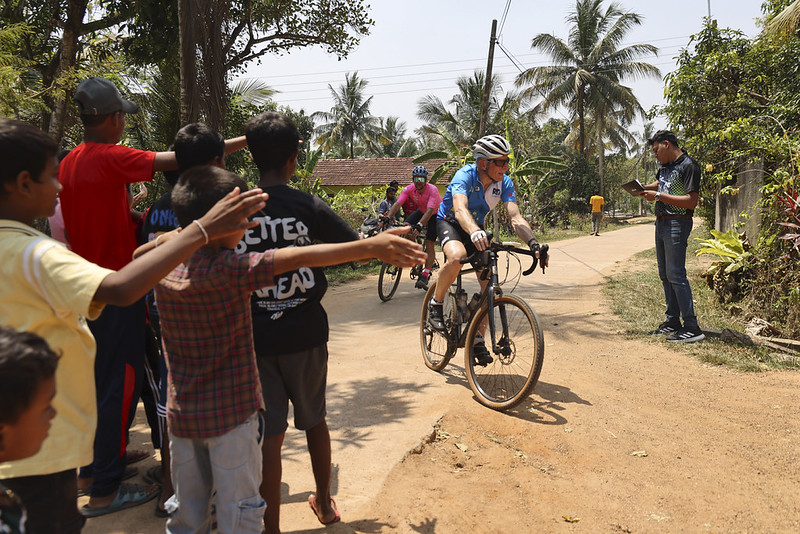
Preparation should reflect where and how you will ride. A hardtail that feels perfect on local woodland trails may need different tyres, gearing or luggage choices for Nepal’s long, rough mountain descents. A gravel bike headed for Sri Lanka may spend one day rolling through coconut groves and the next climbing broken tea-estate roads in tropical heat.
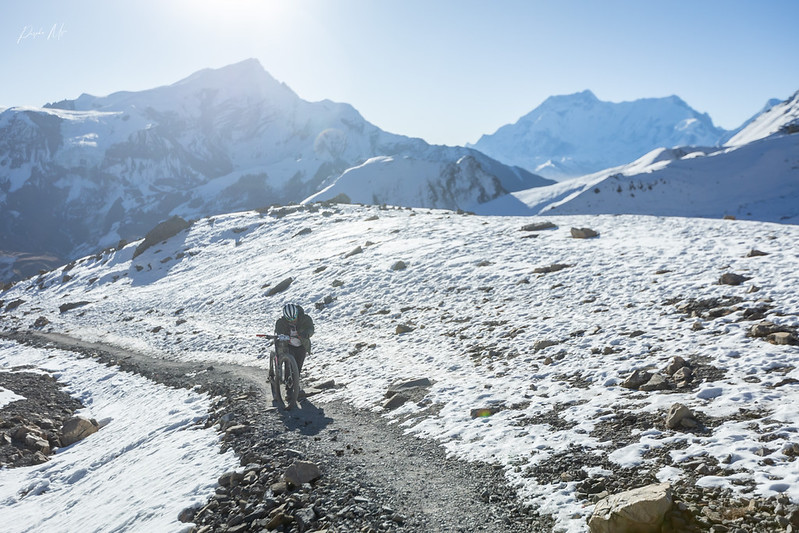
Read the trip notes closely and ask direct questions about surface, climbing, likely weather and support. Consider the hours you expect to spend in the saddle rather than relying on distance alone. At altitude, a modest gradient can feel far harder than it does at home. On a humid coastal route, puncture resistance and hydration can matter more than saving a few grams.
This is also the moment to be realistic about your bike. For technical mountain terrain, a well-maintained trail hardtail or short-travel full-suspension bike is often more useful than an ultra-light machine with narrow margins. For mixed-surface touring, a gravel bike with sensible tyre clearance and low gearing can be ideal. The best choice depends on the route, your confidence off-road and the kind of holiday you want – fast and performance-led, or composed enough to stop for the view.
Give the bike a proper pre-tour service
Book a full service two or three weeks before travel, not the night before your flight. That gives you time to ride the bike afterwards and catch anything that has settled, creaked or been fitted incorrectly. Tell the mechanic where you are going and how the bike will be used. A workshop can only prepare for the conditions it understands.
Pay particular attention to bearings, brake pads, cables or hoses, drivetrain wear, wheel tension and tyre condition. Replace a chain or cassette that is close to its limit rather than gambling on another few rides. Fit fresh brake pads if they are part-worn, especially for long descents where wet grit and loaded riding can consume material quickly.
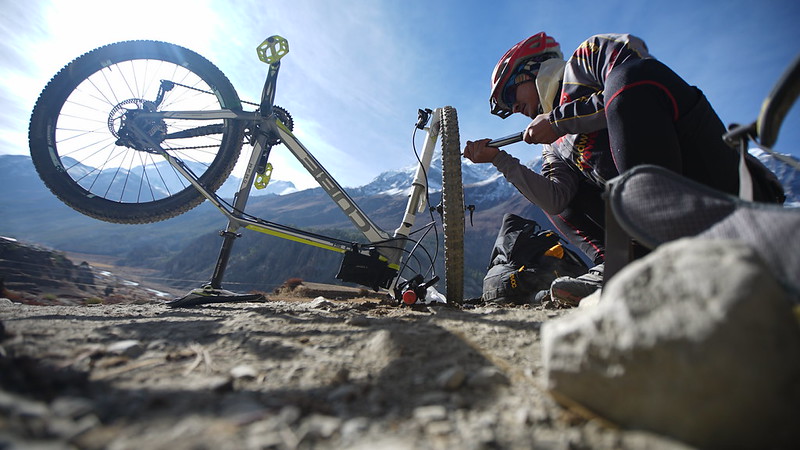
Suspension riders should service forks and shocks to the manufacturer schedule and set pressures for loaded, real-world use. Check that dropper posts return cleanly, and that tubeless valves, seals and tyre beads are reliable. A slow leak in your garage is an irritation; a slow leak on a remote mountain morning can delay everyone.
Do not make sweeping changes immediately before departure. New handlebars, a radically different saddle position or unfamiliar pedals can turn a dream trip into a sore-kneed experiment. If you need to change tyres, gearing or grips, ride several times with the new set-up before packing.
Choose tyres and gearing for resilience
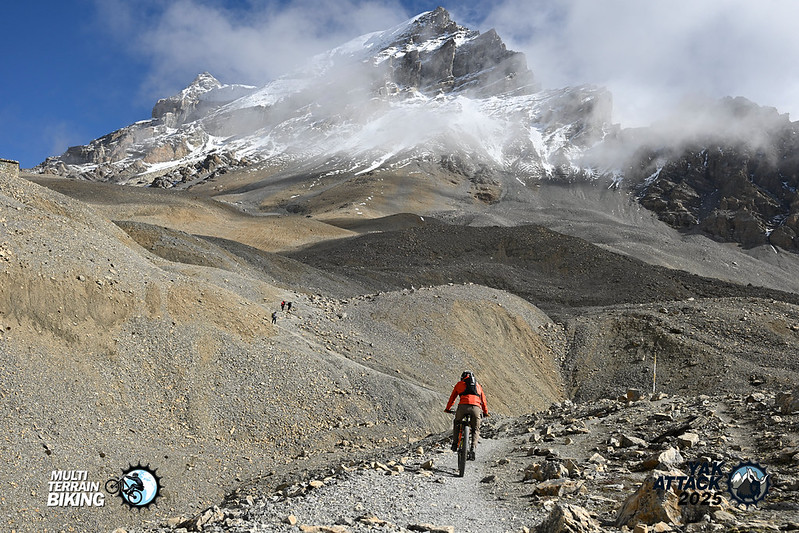
Tyres are your most meaningful route-specific upgrade. Prioritise a casing and tread that match the terrain, with enough volume to take the sting out of rock, corrugation and rough road edges. For Nepal mountain biking, many riders benefit from durable tubeless tyres with confident side knobs and room to run pressures that offer grip without constant rim strikes. For Sri Lankan gravel and back-road riding, a fast-rolling but reinforced tyre is often a strong compromise.
Tubeless is excellent when it is already proven on your bike. Use fresh sealant, inspect the tape and carry the means to repair a larger cut. But if you have never run tubeless, an overseas tour is not the place to learn its quirks. Reliable inner tubes remain a perfectly sensible choice.
Low gearing is equally valuable. A compact chainset or wide-range cassette lets you ride steep climbs at a sustainable effort, particularly when heat or altitude has narrowed the gap between comfortable and difficult. The aim is not to win every climb. It is to keep enough in reserve for the next one.
How to prepare a bike for overseas flight packing
Every airline has its own rules on bike cases, weight and whether handlebars must be turned or pedals removed. Check the policy for every flight in your itinerary, including domestic connections, then measure and weigh your packed bike before leaving home. A published allowance is not always applied consistently at the check-in desk, so print or save the relevant policy.
A hard case offers the greatest protection for a high-value bike, but it is heavy, bulky and can be awkward in smaller vehicles. A padded bike bag is easier to store and often suits organised trips with experienced ground teams, although it demands more careful packing. A cardboard bike box is inexpensive and surprisingly effective for one-way or occasional travel, but it needs protection from rain and rough handling.
Whichever option you choose, remove the pedals, lower or remove the seatpost where necessary, turn or remove the handlebars, and take off the wheels if the case requires it. Use axle spacers or through-axles to protect the fork and rear dropout. Protect the derailleur especially carefully: either remove it and wrap it against the frame, or ensure it cannot take a direct hit.
Deflate tyres slightly rather than fully. Do not leave them soft enough for rims to be damaged in transit. Remove CO2 cartridges from your bike kit unless your airline explicitly permits them – many do not. Lithium batteries for electronic shifting, lights and computers have separate carriage rules, so keep them in hand luggage only when permitted and protect the terminals.
Photograph the bike from both sides before packing, then photograph the packed case. It is useful evidence if baggage is damaged, and it makes rebuilding less dependent on memory after a long journey.
Pack spares that solve real problems
Bring parts that are specific to your bike and hard to source abroad, rather than attempting to carry a miniature workshop. A hanger is the essential spare, because the right one is small, cheap and often impossible to find locally. If your bike uses an unusual axle, proprietary headset part, electronic derailleur battery or non-standard brake pads, pack a spare or confirm what support is available.
Your on-bike repair kit should be compact but complete: a multi-tool with the correct hex and Torx keys, tubeless plugs or patches, tyre levers, a pump, two tubes even if you run tubeless, a quick link matched to your chain, and a small amount of chain lubricant. Include a few cable ties and a short length of tape. They are unglamorous, but remarkably capable in a pinch.
For an event or remote itinerary, carry the details of your bike’s tyre size, chain speed, brake-pad model and axle dimensions in your phone. If you need assistance, this saves guesswork. Multi Terrain Biking’s teams can provide practical destination advice, but a rider who knows their own bike always starts from a stronger position.
Rebuild calmly and ride before the big day
Allow time after landing to rebuild the bike properly. Inspect the frame, rotors, derailleur and wheels before fitting everything back together. Torque bolts to specification, check brake bite, shift through every gear and spin both wheels to make sure the rotors are not rubbing. If you travelled with the rear derailleur removed, confirm the hanger is straight before blaming the indexing.
Take a short shake-down ride before the first serious stage. Listen for clicks, check tyre pressure after a few kilometres and make sure your luggage, bottles and computer mounts are secure. Local roads and trails reveal a loose cleat or rattling cage quickly, when the stakes are low.
Then stop fussing. A bike prepared with care is there to carry you into places that would otherwise remain a line on a map. Let it do its job, look up from the bars, and take the long way through the landscape.