If you are asking what fitness level for Yak Attack, the honest answer is this: stronger than a typical trail holiday rider, but not necessarily elite. This event is demanding because it layers big altitude, repeated climbing, rough Himalayan terrain and consecutive race days on top of one another. A rider with solid endurance, sensible pacing and the ability to keep moving when the air gets thin will usually fare better than someone with bigger power numbers but limited resilience.
Yak Attack is not hard in one simple way. It is hard in several ways at once. You are dealing with long days in the saddle, steep off-road climbing, high passes, cold mornings, accumulating fatigue and the very real effect of altitude on appetite, sleep and recovery. That is why fitness for Yak Attack has to be judged in the round, not by one impressive weekend ride at sea level.
What fitness level for Yak Attack in real terms?
A good benchmark is this: you should arrive able to ride several hard days back-to-back without falling apart. For most riders, that means a strong amateur endurance base rather than a purely recreational level of fitness.
If your normal riding consists of one or two social spins a week, Yak Attack will feel brutal. If you regularly complete demanding sportives, marathon MTB events, multi-day bikepacking trips or long mountain rides, you are much closer to the mark. Riders who cope best are usually comfortable with five to seven training hours a week as a minimum base, with more volume in the build-up, and they already know how their body responds to long climbs, fuelling pressure and cumulative fatigue.
That said, this is not just about speed. Plenty of riders finish Yak Attack without being at the sharp end of the field. What matters is whether you can keep producing a steady effort day after day while recovering well enough to do it again tomorrow.
The three kinds of fitness that matter most
Aerobic endurance comes first. You need a diesel engine, not just a good sprint. Long, steady output is what gets you through drawn-out climbs and lengthy stages, especially when oxygen becomes limited. If you fade badly after three or four hours, that weakness tends to get exposed quickly in Nepal.
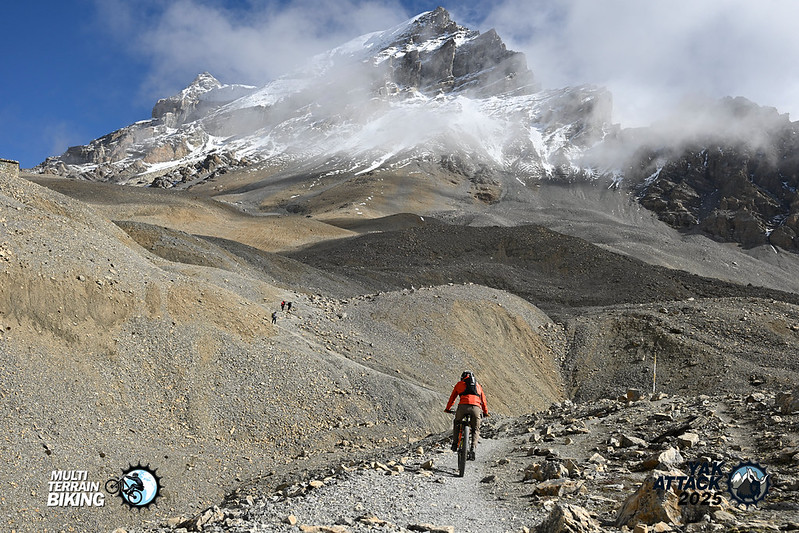
Muscular endurance is next. Yak Attack often asks you to grind uphill for prolonged periods over mixed surfaces, with sections that are loose, technical or simply steep enough to force awkward pacing. A rider who can sit on threshold for an hour on a smooth turbo session may still struggle if they lack the leg strength and riding economy for rough climbing at altitude.
Then there is resilience. This is less glamorous, but it is often what separates a decent ride from a difficult week. Can you wake up stiff, under-slept and slightly dehydrated, then get back on the bike and perform sensibly? Can you eat enough when appetite drops? Can you stay calm when the weather turns or a stage feels harder than expected? Yak Attack rewards riders who are durable as much as riders who are fast.
Why altitude changes the answer
Any realistic discussion of what fitness level for Yak Attack needs to include altitude. This is not a footnote. It is one of the defining features of the event.
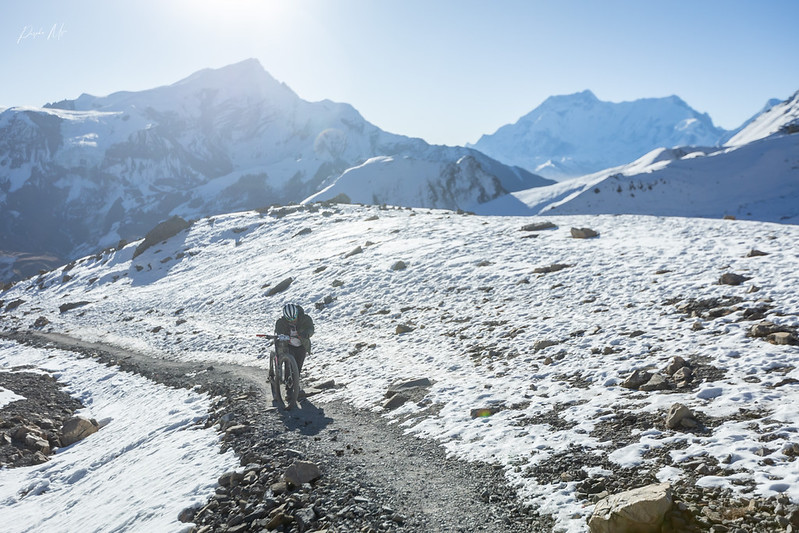
At high elevation, your heart rate response changes, your power drops and recovery gets slower. Even very fit riders can feel ordinary above 3,000 metres, and once you move higher, the gap between sea-level confidence and mountain reality can become uncomfortable. You may find climbs that would normally feel manageable now require very conservative pacing. Sleep can become patchy. Hydration matters more. Small mistakes are amplified.
This is why riders should be wary of comparing Yak Attack to a hard European stage race or a big Alpine week. The numbers on paper may only tell part of the story. Altitude makes moderate efforts feel harder and hard efforts feel expensive.
The practical implication is simple. If you are borderline fit at home, you are underprepared for this event. You want headroom. You want the sort of base that still leaves you functional when altitude trims your performance.
Can a strong recreational rider do it?
Sometimes, yes. But there is a difference between finishing and enjoying it.
A strong recreational rider with discipline, solid preparation and realistic expectations can absolutely line up for Yak Attack. If you have a background in mountain biking, gravel, endurance sport or multi-day adventure travel, you may already have many of the right habits. Technical calm, self-management and a willingness to ride within yourself count for a lot.
Where people get caught out is assuming general fitness transfers neatly. Running fitness helps, gym strength helps and a decent weekly commute helps a little, but Yak Attack is still a cycling event at altitude. Bike-specific endurance matters most. If your body is not used to six-hour mountain days, no amount of enthusiasm will fully replace that conditioning.
Signs you are probably ready
You are likely in a sensible place for Yak Attack if you can comfortably handle long back-to-back rides on consecutive days, climb steadily without repeated blow-ups and recover well enough to train again within 24 hours. It also helps if you have already ridden in mountains and know how to pace yourself on sustained ascents.
Experience with off-road riding is another major plus. The event is not just a fitness challenge but a terrain challenge. If you waste energy through poor line choice, over-braking or fighting the bike on rough ground, your fatigue rises fast. Riders with efficient handling often save more energy than they realise.
You do not need to be the fastest rider in your club. You do need to be the rider who can still move well on day five.
Signs you should build more before entering
If long climbs regularly force you into the red, if three hard riding days would leave you exhausted for a week, or if your current training is inconsistent, you would be wise to spend more time building. The same applies if you have never ridden at altitude and are planning to arrive with minimal preparation, hoping grit will sort the rest out.
Another red flag is poor fuelling practice. Yak Attack punishes riders who under-eat or under-drink. If you often forget to eat on rides, struggle with stomach issues under effort or finish sessions depleted and shaky, those habits need attention before race week.
There is no shame in waiting a year. In fact, for an event like this, patience is often the smartest performance decision you can make.
How to train for the right fitness level
The ideal build combines volume, climbing specificity and consistency. Start with your aerobic base. That means regular endurance riding at a pace you can sustain, gradually extending duration rather than chasing intensity every week. Once that foundation is solid, layer in climbing work and back-to-back sessions.
One of the best preparations is a weekend block with a long hilly ride on Saturday followed by another substantial ride on Sunday. This teaches you how to pedal on tired legs, fuel properly and keep your effort under control. Midweek, sustained climbing intervals or low-cadence strength work can help build the muscular endurance that mountain stages demand.
Off-road time matters too. If your local terrain is flatter than Nepal, you can still work on handling, traction and efficient body position. Those skills reduce wasted effort and help preserve energy over a long event.
If you can access altitude before the race, that is valuable, but it is not essential for everyone. What is essential is arriving well rested, not overtrained. Riders sometimes panic late in the build-up and cram in heroic sessions. That usually leaves them flat rather than fit.
Fitness is only part of the picture
Plenty of riders ask the fitness question when they are really asking a broader one: am I capable of this experience? Usually, the answer depends on more than watts and weekly mileage.
Yak Attack rewards maturity. Good pacing, smart kit choices, careful hydration and the humility to respect the mountain environment all matter. So does mindset. If you can accept that some days will feel harder than expected and still stay composed, you are far more likely to have a strong event.
That is one reason many riders choose to work with operators who know Nepal inside out. With an event of this calibre, logistics, local knowledge and pre-event guidance can make preparation feel far more stress-free. For a rider travelling long-haul for something this ambitious, that support is not a luxury. It is part of arriving ready.
The honest standard to aim for
If you want the clearest answer to what fitness level for Yak Attack, aim to be comfortably fit for a tough multi-day mountain bike event before altitude is added. Not barely fit enough. Comfortably fit enough. You want depth in the tank, not just courage on the start line.
That standard does not mean professional. It means prepared. It means a body that knows long hours, climbing load and repeated effort. It means respecting the fact that Nepal magnifies weakness but also rewards riders who come ready for the challenge.
If Yak Attack is on your radar, train for durability, not bravado. The riders who get the most from it are rarely the ones who talk biggest beforehand. They are the ones who arrive calm, conditioned and ready to earn every extraordinary kilometre.