
Sri Lanka can serve up dry, sunlit coastal miles and cool mountain climbing on the same holiday, but timing matters. The Seasons in Sri Lanka are shaped by two monsoons rather than one simple wet-and-dry pattern, which gives cyclists a major advantage: when one side of the island is soaked, another can be riding beautifully.
For a properly rewarding cycling journey, think in regions, not just months. The island is compact, yet its weather changes quickly between the Indian Ocean coast, the central highlands and the drier north and east. Get the seasonal window right and you can expect fast rolling tarmac, red-earth gravel, tea-country switchbacks and long beach roads at their best.
Understanding the Seasons in Sri Lanka
The south-west monsoon, known locally as Yala, generally runs from May to September. It brings the heaviest rain to the west and south-west coasts, including Colombo, Galle, Bentota and the wetter slopes of the central highlands. Rain often arrives in powerful afternoon bursts, although prolonged wet spells are possible. Roads can be slippery, jungle trails can become technical, and climbs through the tea estates may sit under low cloud.
That does not make these months a write-off. It simply shifts the strongest riding towards the north and east. Trincomalee, Pasikuda, Arugam Bay and the Cultural Triangle are typically drier through the European summer, offering superb conditions for riders who want sun, open landscapes and quieter roads.
The north-east monsoon, Maha, usually arrives between October and January. It has most influence across the north and east, while the south and west often offer their most dependable riding from December through March. This is a prime period for a route that combines the southern coast, Sinharaja’s fringes and the central highlands.
April and October-November are transition periods. They can deliver excellent riding days, but also sudden thunderstorms that arrive with little warning. For flexible itineraries, they are rewarding months: greener landscapes, fewer visitors and a more dramatic feel to the riding. For a fixed-distance challenge or a tightly scheduled self-guided trip, it pays to build in sensible contingencies.
When to Ride Each Part of the Island
The south and west coast: December to March
For coastal riding between Negombo, Galle and the deep south, December to March is the most reliable window. Days are hot and bright, humidity is manageable by Sri Lankan standards, and an early start lets you enjoy the roads before the heat builds. Expect palm-lined lanes, fishing villages and broad coastal stretches rather than huge elevation.
This period also works well for pairing the coast with the central highlands. It is a strong choice for riders seeking a polished point-to-point holiday, where relaxed recovery time by the ocean follows a hard day in the hills.
The central highlands: December to April, with flexibility
Kandy, Knuckles, Nuwara Eliya, Ella and Haputale deliver the island’s most memorable climbing. The terrain is relentlessly rewarding: steep tea-estate ramps, cool forest roads, contouring gravel and big views across layered valleys. Conditions are often best from December to April, but mountain weather has its own rules. A clear morning can become misty, wet and distinctly cool by mid-afternoon.
Pack a lightweight waterproof layer even in the driest months. On long descents from Nuwara Eliya or Horton Plains, it can feel surprisingly cold after a hot climb. The weather is part of the character here, not an inconvenience to be ignored.
The east and north: May to September
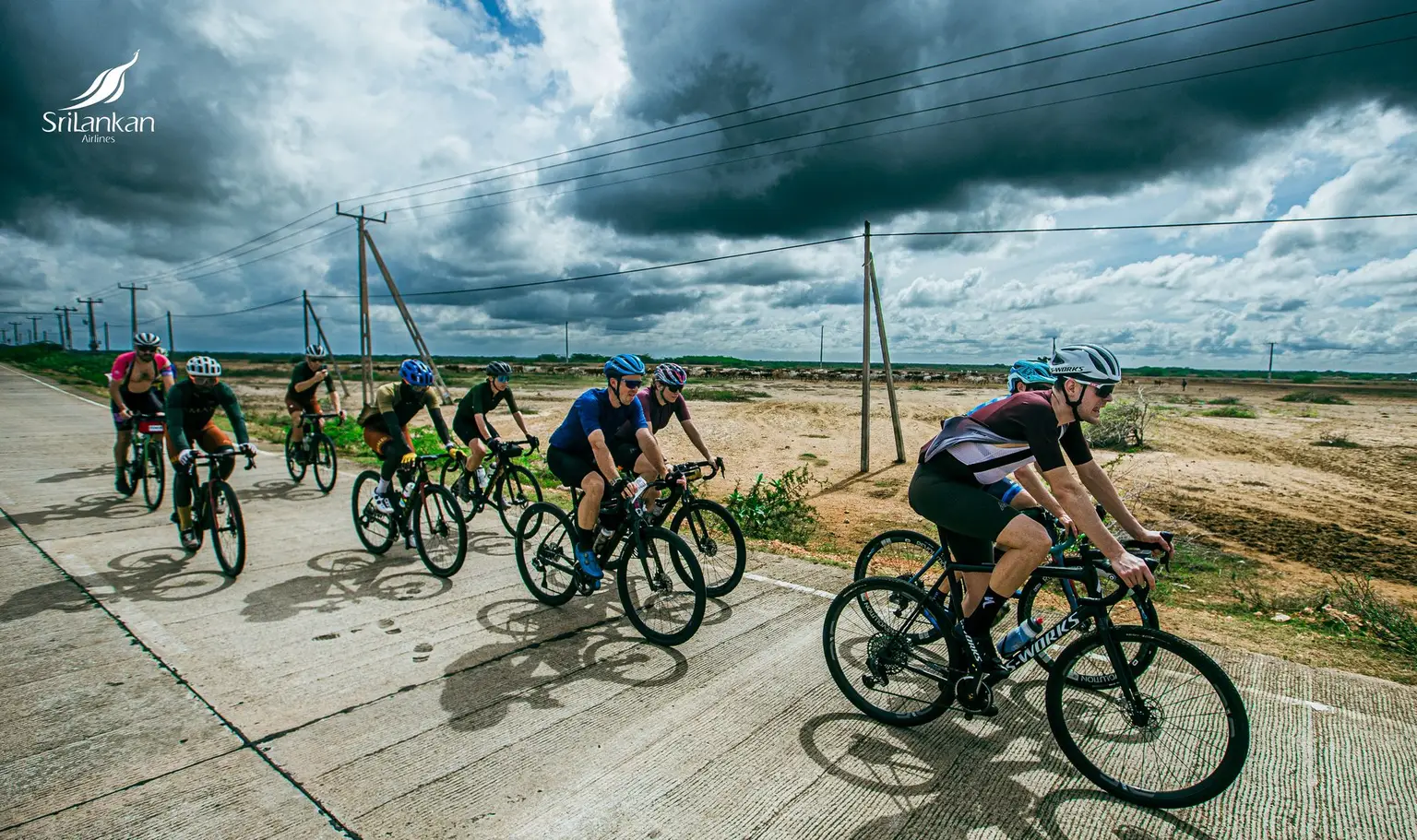
When European riders are looking for a summer escape, Sri Lanka’s east and north become especially compelling. This is the season for dry coastal air, quiet back roads and wide-open riding around the ancient cities. The terrain is less mountainous than the highlands, but it is ideal for endurance road days, gravel exploration and mixed-terrain adventures through rural villages and national-park edges.
Heat is the key consideration. Start at first light, carry more water than you think you need and plan the hardest efforts before late morning. This is also the time to allow for wildlife crossings, particularly around elephant country. Local route knowledge is not a luxury on these roads – it is central to a safe, well-paced day.
What Rain Means for Different Riders
Road riders can usually continue through short tropical showers, provided surfaces are treated with respect. Painted lines, polished tarmac and leaf-strewn descents become slick quickly. Gravel and mountain bikers may welcome the added challenge, but sustained rain can turn clay tracks into slow, energy-sapping ground and make river crossings unsuitable.
A guided itinerary offers useful flexibility in these conditions. An experienced local team can switch a high mountain traverse for a lower valley loop, adjust a start time, or choose a route with better road surfaces after rain. That is the difference between merely enduring a wet day and still having a brilliant day on the bike.
Multi Terrain Biking designs Sri Lankan routes around these regional patterns, matching the season to the terrain and the kind of riding you want. Whether the priority is a luxury gravel journey, demanding highland climbs or a coast-to-coast challenge, the right route can make the island feel purpose-built for two wheels.
Sri Lanka rewards riders who travel with a little flexibility. Choose the region that suits your dates, ride early, keep a rain layer close, and let the changing weather lead you towards the roads and trails that are riding best.