
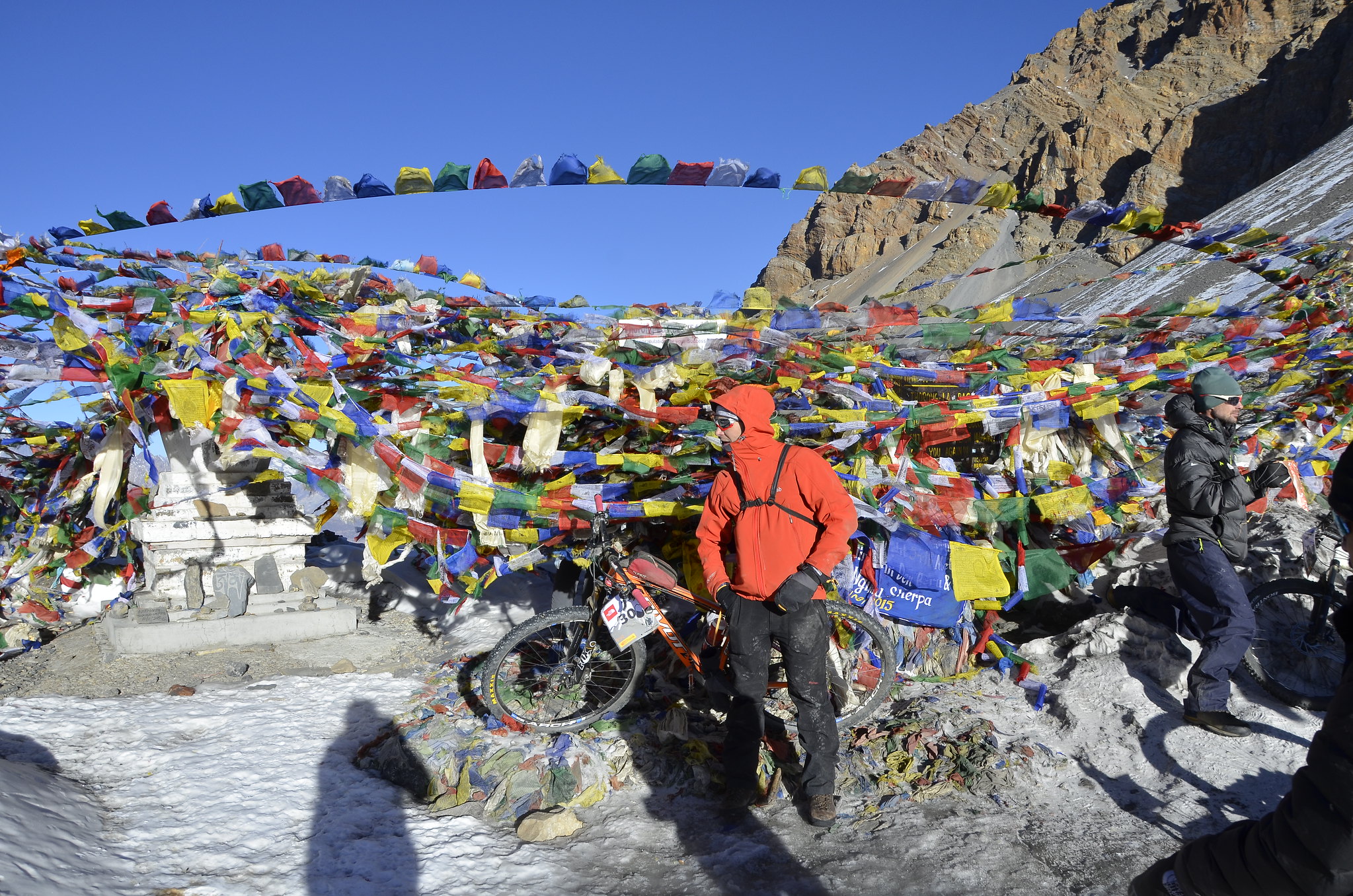

Crossing a 5416m mountain pass with your mountain bike
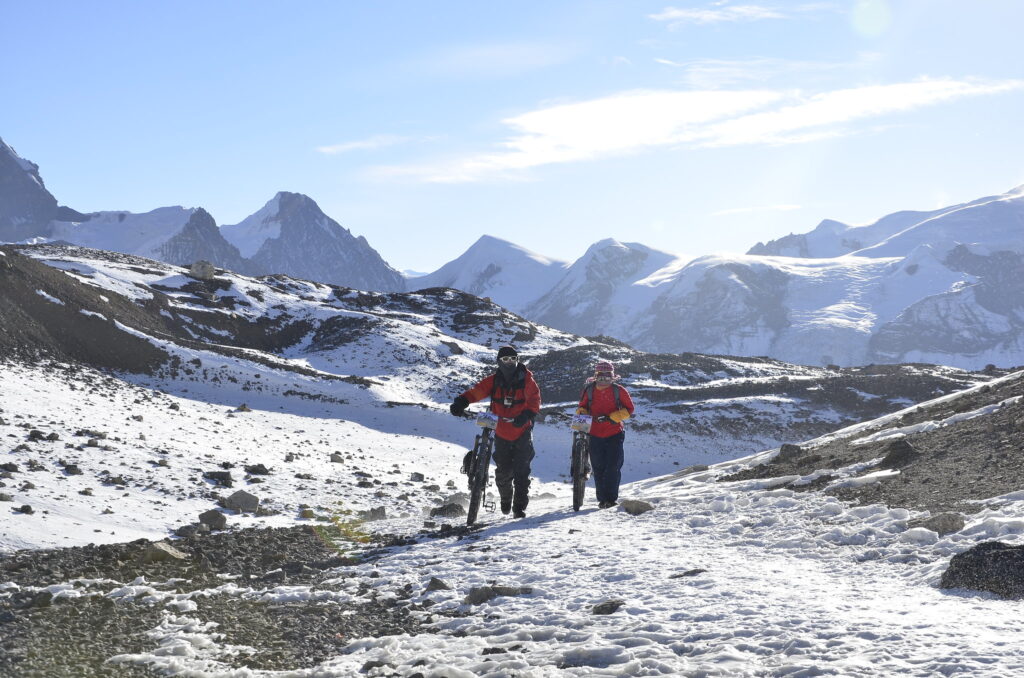
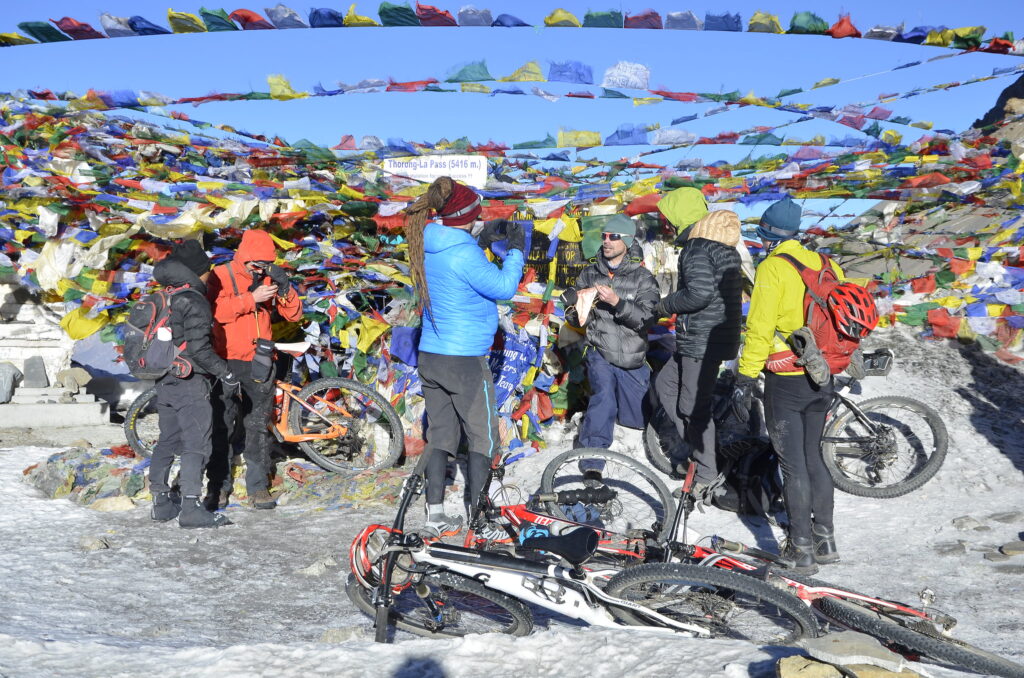
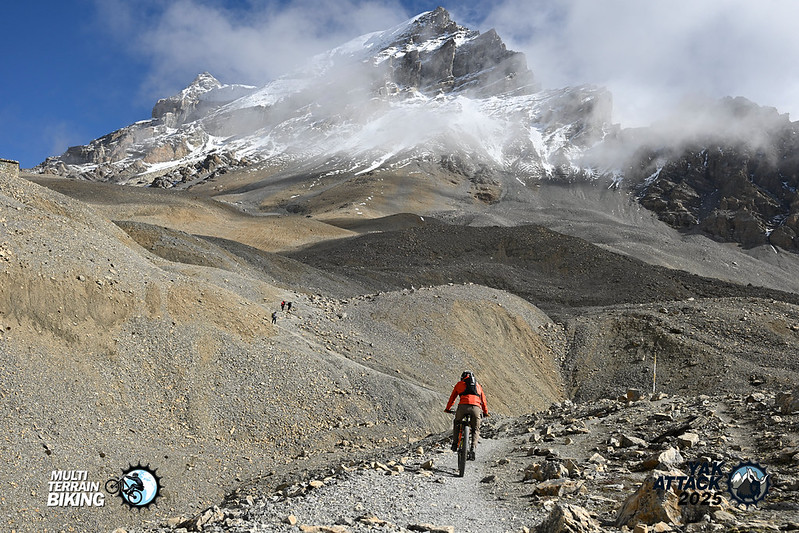
Thorong La is a 5416m high mountain pass in Nepal, approximately half way around the Annapurna circuit, connecting Manang district in the east and Mustang district in the west.
For many hikers and mountain bikers alike this is the highest altitude they will ever reach and Thorong La is the pinnacle of any Annapurna circuit adventure.
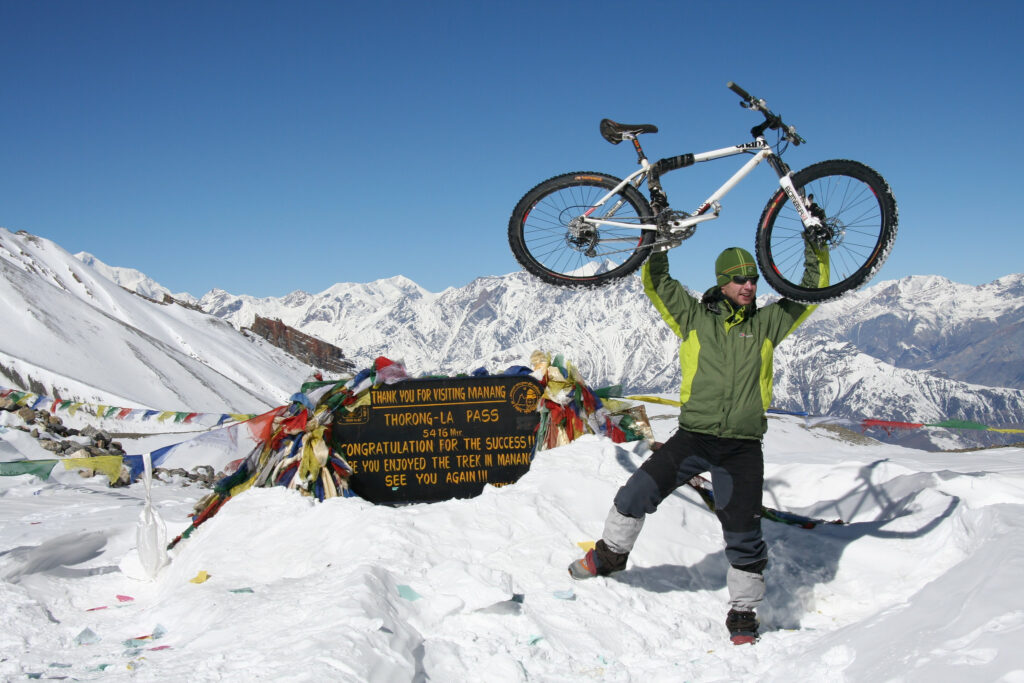
We’ve asked Mountain Biking Worldwide director Phil Evans to give us the low down on crossing the pass, for do’s and don’ts and for any tips he has to ensure a successful passage.
How many times have you crossed Thorong La?
So far 15, with and without my bike! My first time was back in 1990 on a solo Annapurna trek and the last time was 2019 with Yak Attack. Between 2007 and 2019 I crossed it at least once every year and twice in 2009!
15 times!! It must seem like a walk in the park now?!
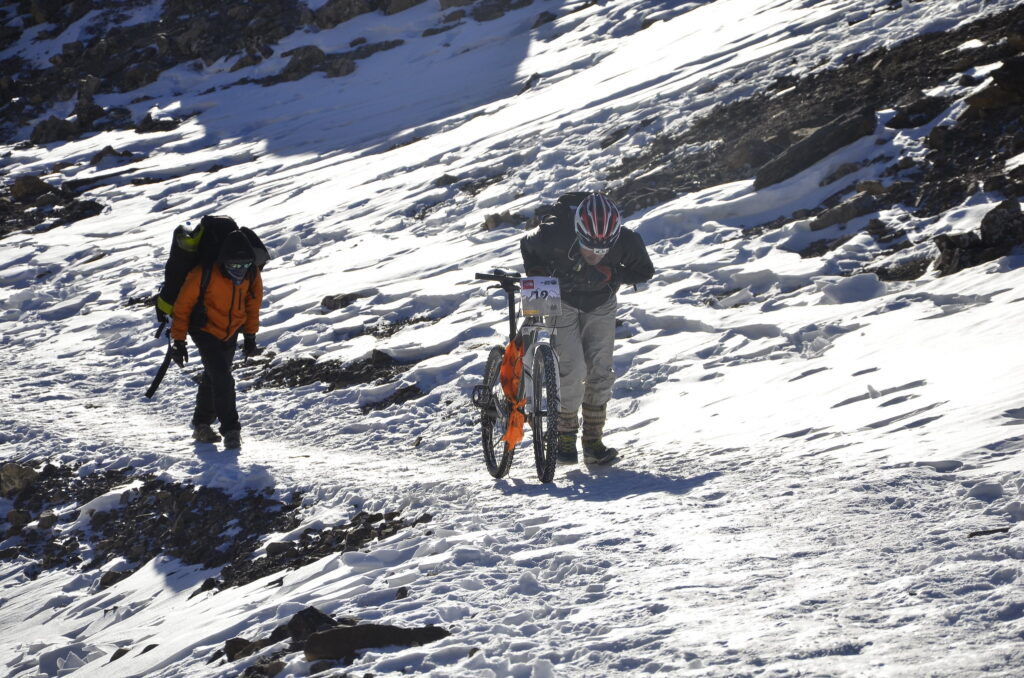
Far from it. You never really know how your body is going to cope with the altitude, and each year is different. One year you could be striding over in a little over the 2 hours with very little effects from the altitude then the next year taking twice as long and feeling like death.
Is altitude the biggest obstacle in crossing the pass?
It’s one of them. At 5000m above sea level the atmospheric pressure is half that at sea level, which basically means it feels like there’s only half the oxygen. Any physical activity takes a much greater effort as your body struggles to cope with lower oxyhemoglobin levels.
What other things can play a factor in how hard or easy it is to cross the pass?
The weather can play a big part. For some years the trail for the whole crossing was snow covered which made forward progress much slower. The longer you are at altitude the more it is going to hurt and then the descent is also not much fun on icy terrain either. Another year, although mainly clear of snow, it was bitterly cold with an estimated wind chill of -40˙c which is also obviously quite miserable and a few riders experienced mild frostbite symptoms! It’s not always like that though and since moving Yak Attack to November, we have experienced very little snow or extreme temperatures.
Is it possible to ride a bike up the pass?
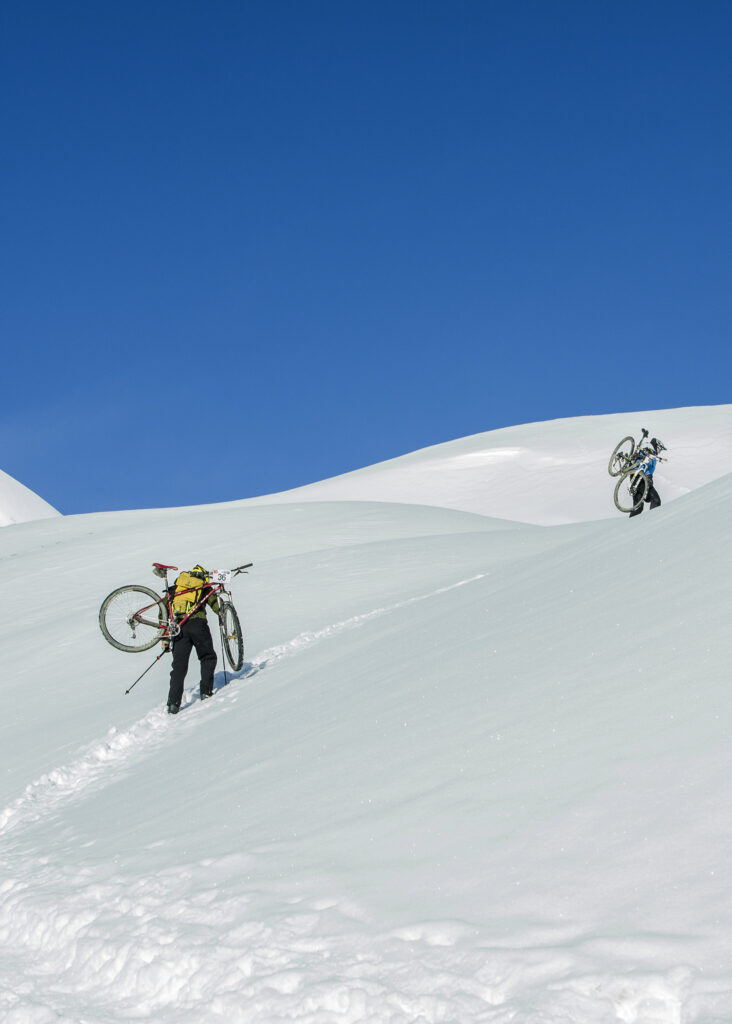
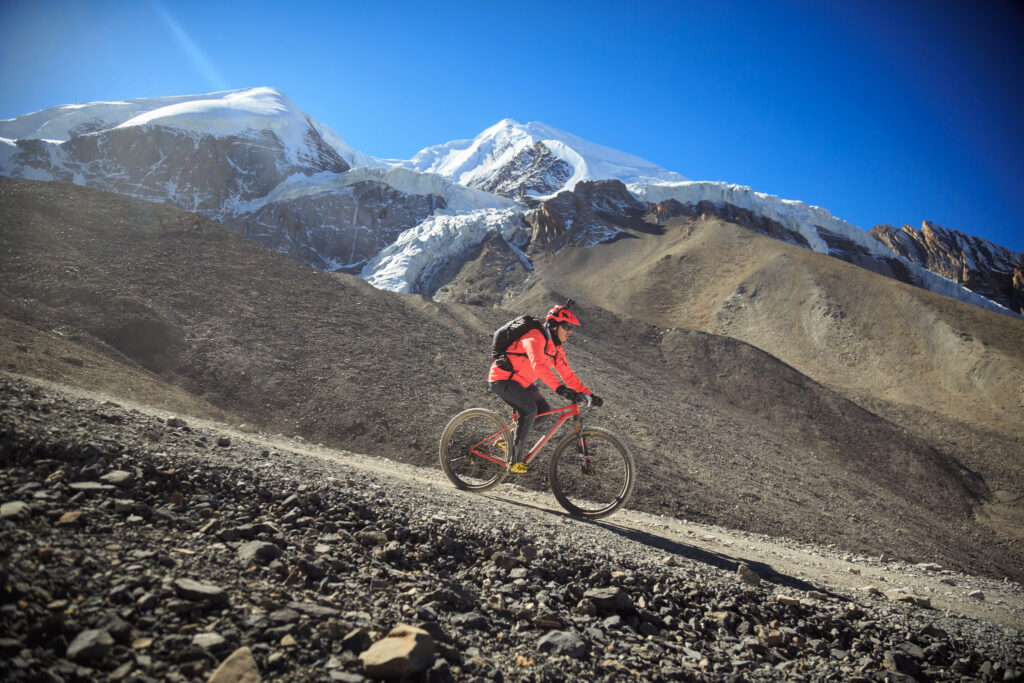
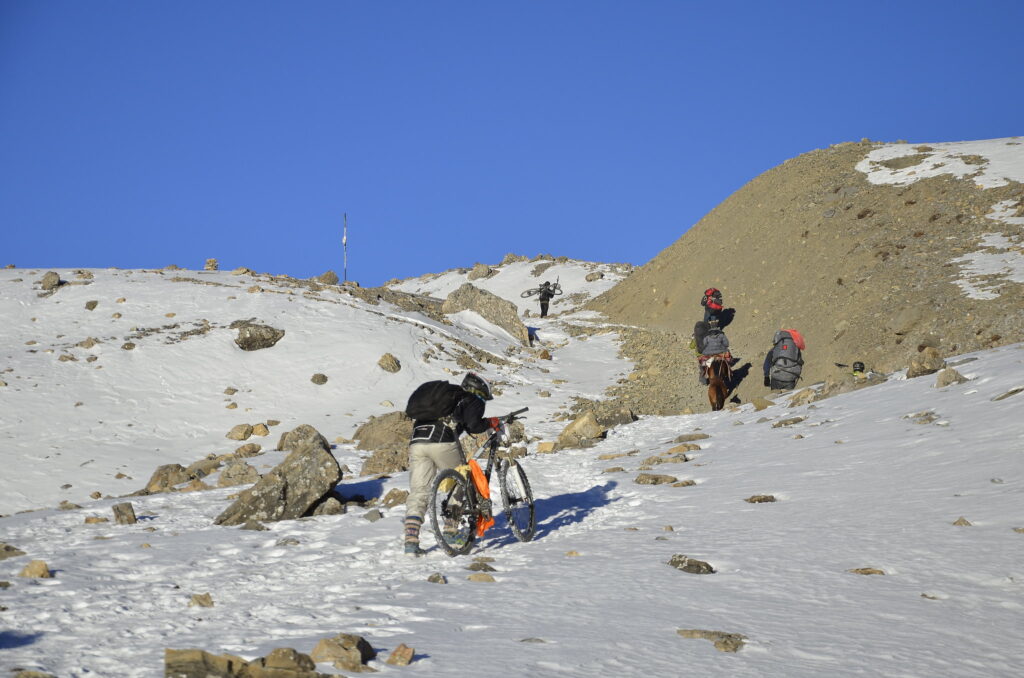
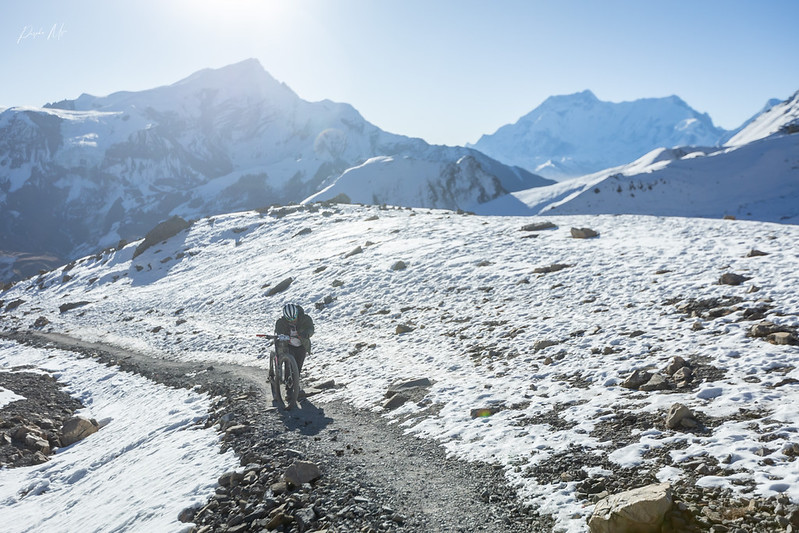
No! A very small handful of the elite riders are able to ride some of the flatter sections on the way up, but for most it’s push / carry all the way to the top.
What about down?
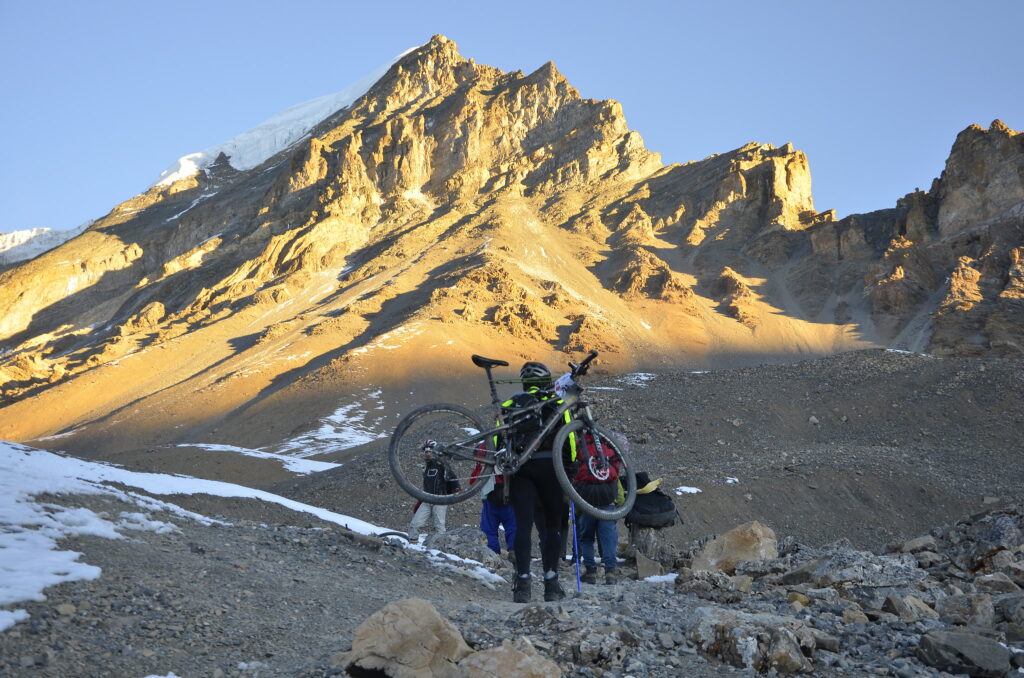
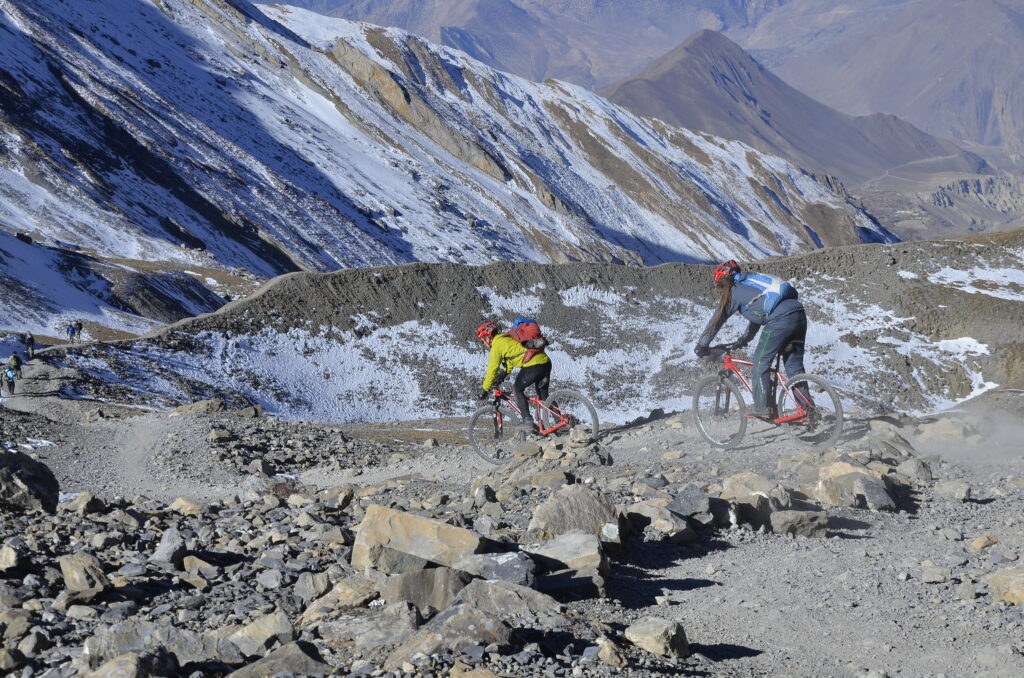
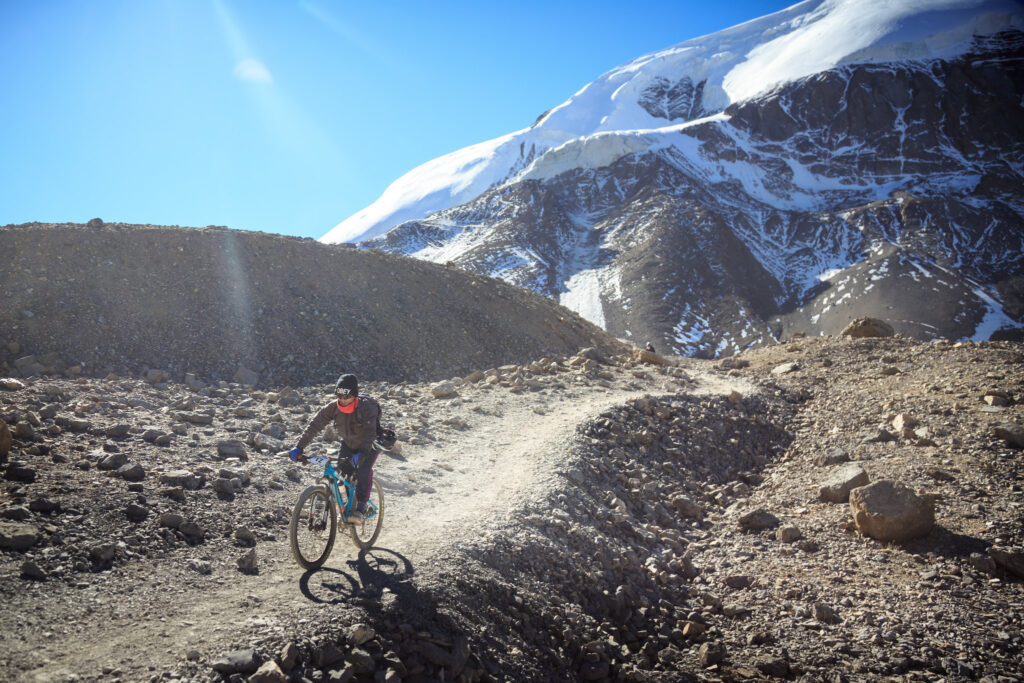
Without a doubt. You’ll obviously need to be a confident and proficient mountain biker but if the descent is snow free it’s one of the most exhilarating downhill rides on earth.
Where do you sleep the night before crossing and what’s it like?
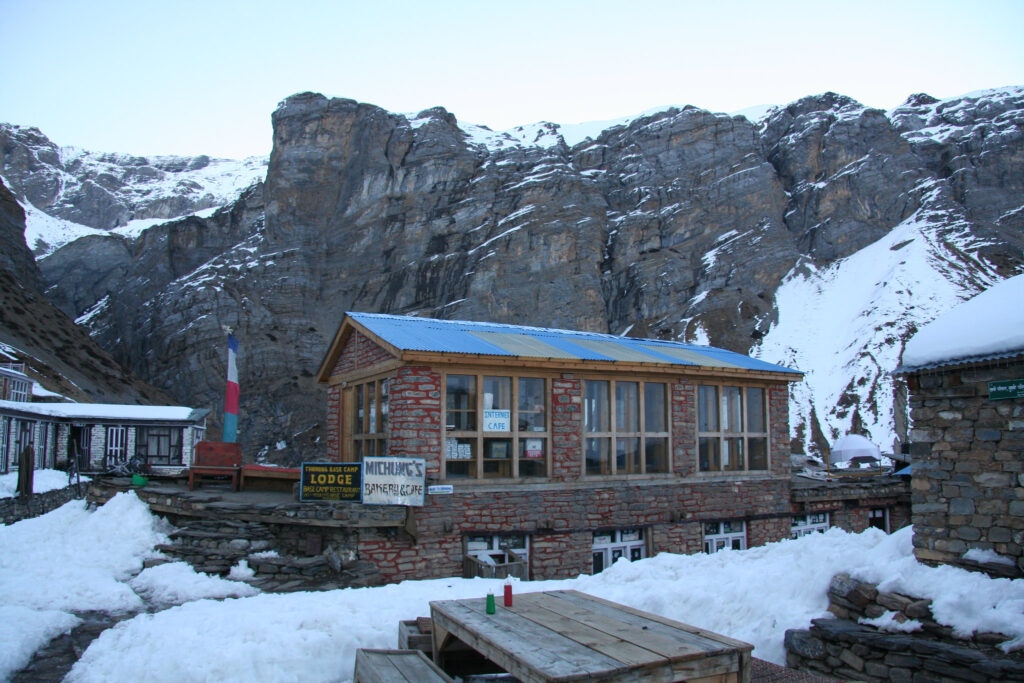
Most people either sleep at Thorong Phedi at 4540m altitude or slightly higher at High Camp which sits at 4880m. Both places offer very basic accommodation and you’ll definitely need a warm 3 season sleeping bag to remain warm and comfortable during the night. At these heights sleeping isn’t easy even though most people will be in bed by 8pm!
Do those 2 places provide food?
Yes, both have surprisingly extensive menus, from the staple Nepali Dhal Bhat to pizza to apple crumble and custard although there is a little bit of poetic licence on some of the dishes! You can even get a beer there, although consuming alcohol at those altitudes is not recommended and you’ll be paying up to 3 times the cost of a beer in Kathmandu.
What about water?
You can buy bottled mineral water, but this all has to be carried in and comes at a financial and environmental cost. You’d pay around 20rp for a bottle of water in Kathmandu but 200rp at Thorong Phedi. Also purchasing bottled water will only add to the plastic problem that plagues many parts of Nepal. A better and cheaper alternative is to fill your bottles with flitered water at Thorong Phedi. This is perfectly safe to drink and comes at about 25% the cost of bottled water.
Throw some figures at us on altitude and distances etc.
Ok, from Thorong Phedi to Thorong La is 5km and you’ll gain 876m in altitude, peaking at 5416m above sea level. From here it’s a 10km and 1666m descent to Muktinath and then a further 12km and 950m descent onto Kagbeni.
Talk to us about times, how long does it take to reach the top?
This is totally dependent on the individual and the conditions. In 2019 a couple of Yak Attack riders covered the 5km ascent in around 1 hour 30 minutes, but that is a super human effort. On average it will take a racer between 2 to 3 hours to reach the top and a trekker around 4 hours. In really bad conditions we’ve had people take up to 8 hours to reach the top and over 12 hours to make it to Muktinath.
What about going down from the top, how long does that take?
The fastest of riders are getting from Thorong La to Kagbeni in around 40 minutes in good conditions but again that’s not the norm! On average we’d expect somebody to ride it in 1 to 2 hours and to walk to Muktinath in 3 to 5 hours. For trekkers the descent is almost as hard as the ascent.
Timings from the last Yak Attack can be found here
You said the ascent is mainly unrideable. How do people get their bikes to the top?
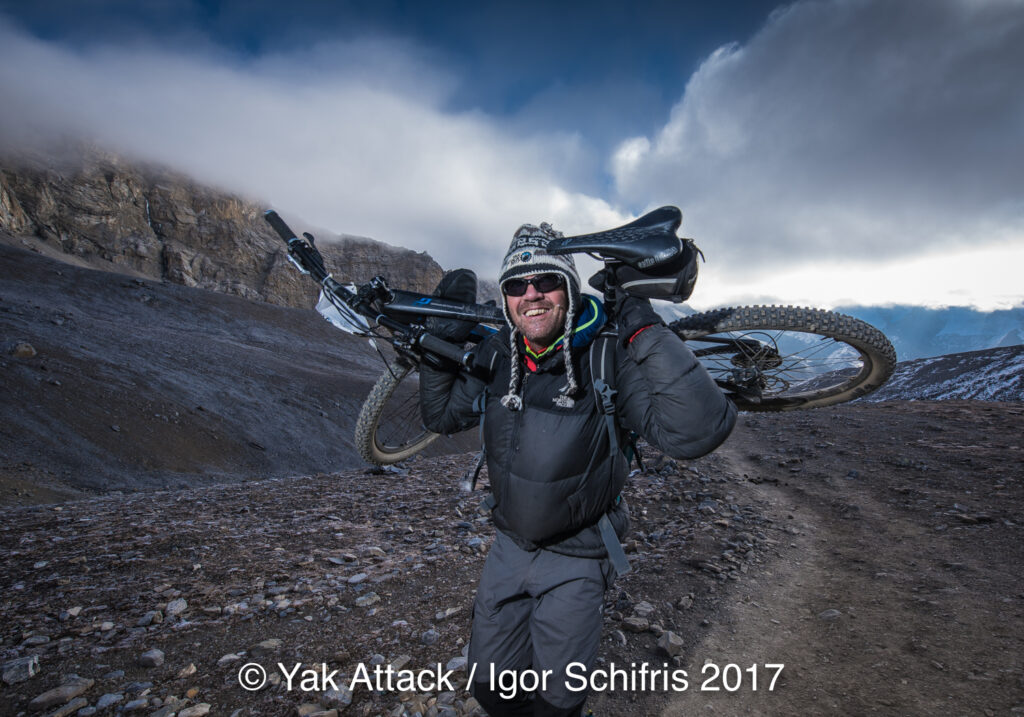
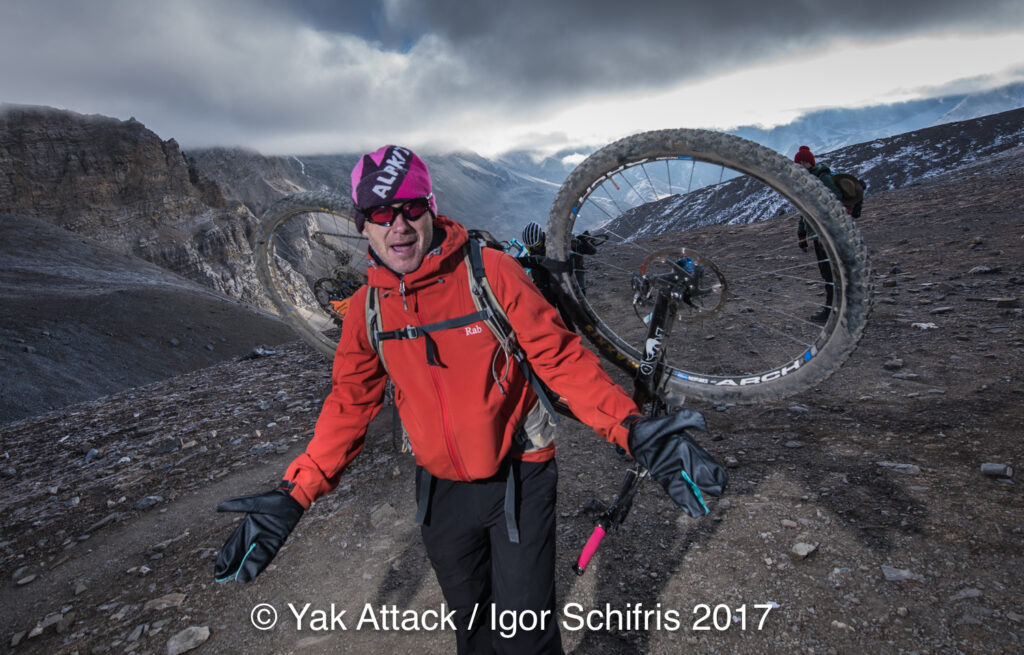
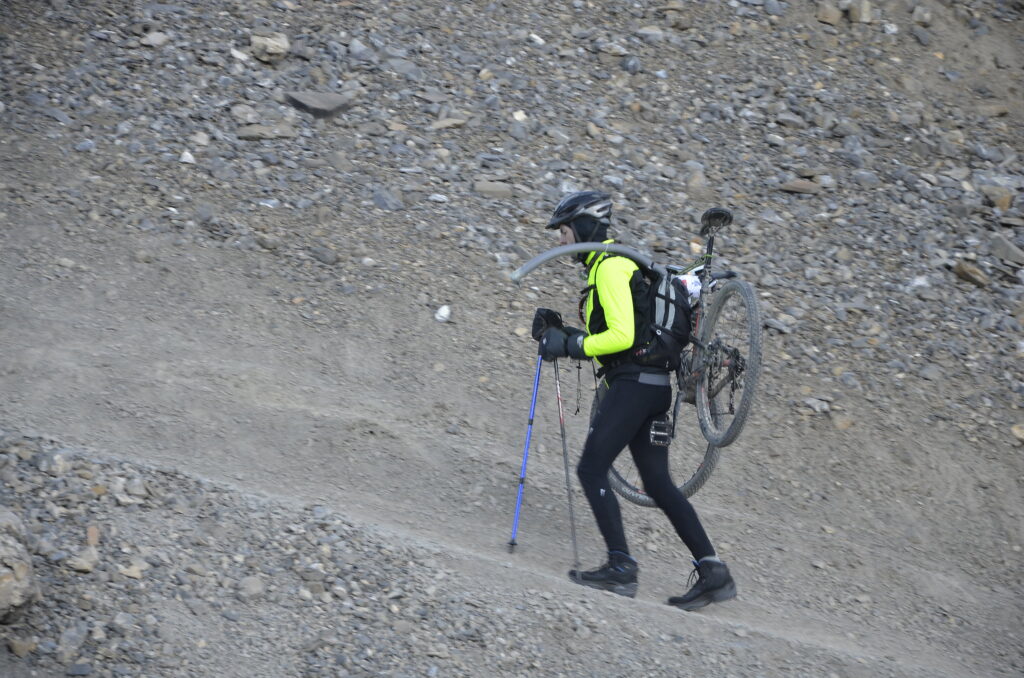
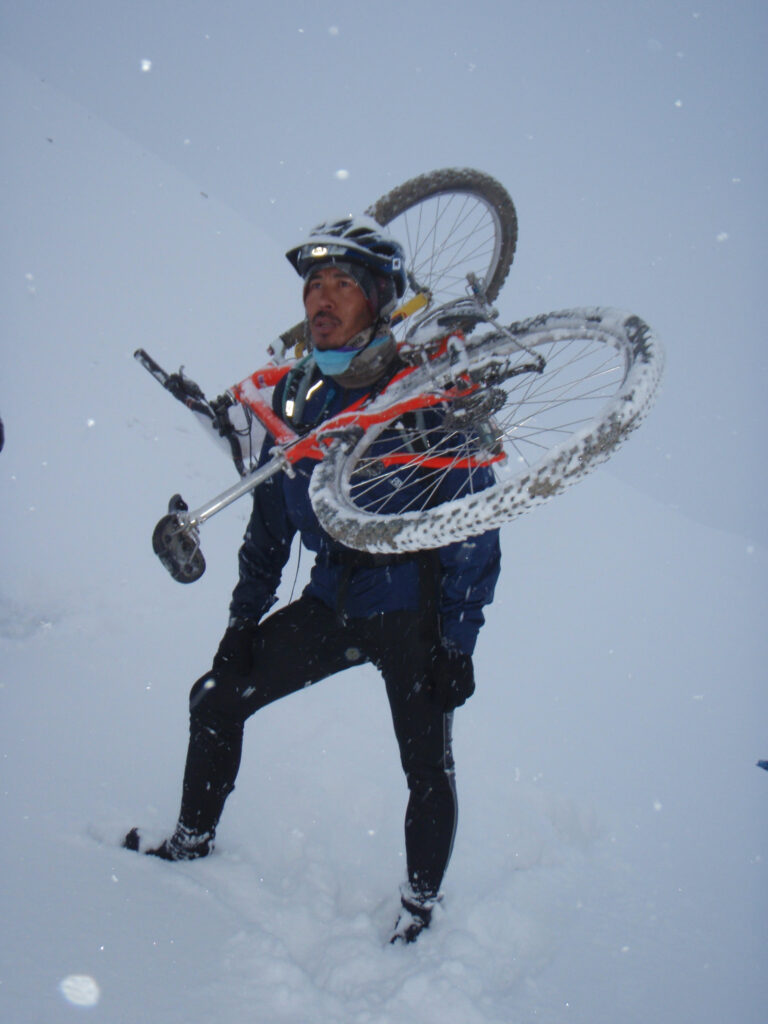
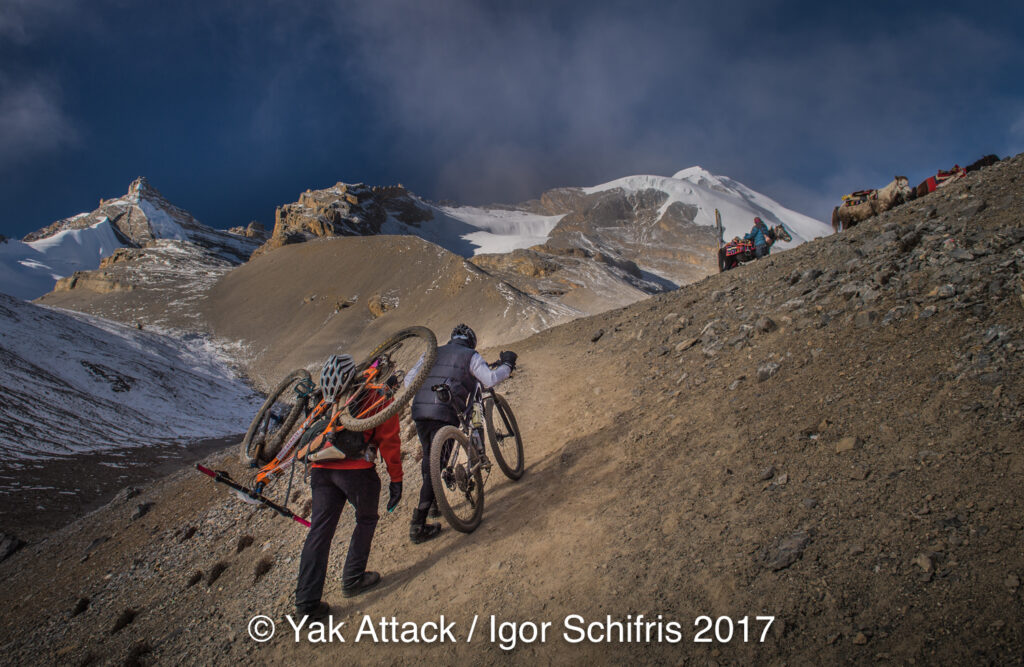
Carry them! There are various techniques however to do this! In the early years riders mostly used to just shoulder the bike but 2 to 3 hours of a cross bar digging in to your shoulder, even with padding becomes very uncomfortable. Other riders used to carry thew bike across their backs, but this technique can lead to your hands getting very cold as they are elevated and exposed to the cold. Some local riders even carried the bikes balanced on the helmets on their heads but this technique is only for those with strong necks and good balance. More lately riders have been coming up with more sophisticated methods, partly dismantling the bike and strapping it to their back packs. This alleviates some of the discomforts associated with the other techniques but the down side is that you’ll need to assemble your bike in freezing cold conditions at 5416m above sea level to enjoy to descent! You can also merely push your bike up hill but the effort of walking is hard enough without adding in rolling tyre resistance in my opinion! Whatever method you choose, one of my biggest recommendations is that you perfect it well before you even reach Nepal, Thorong Phedi is no place to be experimenting with different methods!
Are there any ways to diminish the effects of altitude?
Acclimatisation would be the most foolproof way of combatting the effects of altitude but only a few people have the time or live in an appropriate region to implement this. Full acclimatisation can take days or even weeks. General thinking is that full haematological adaptation can be calculated by multiplying the altitude in kilometres by 11.4 days, so to fully adapt to life at 5000m would take 57 days! Over the years some racers have resorted to sleeping in altitude tents prior to leaving home, but most have said the lack of sleep from the noise of the pump and the isolation outweigh the benefits.
The most common method to diminish the effects of altitude is the use of acetazolamide (Diamox) which is used to accelerate the body’s natural acclimatisation process. There are side effects associated with this drug and it is on the WADA list of prohibited substances but only during competition. It is advisable to consult your doctor regarding this before leaving for Nepal.
What is the best time of year to cross the pass?
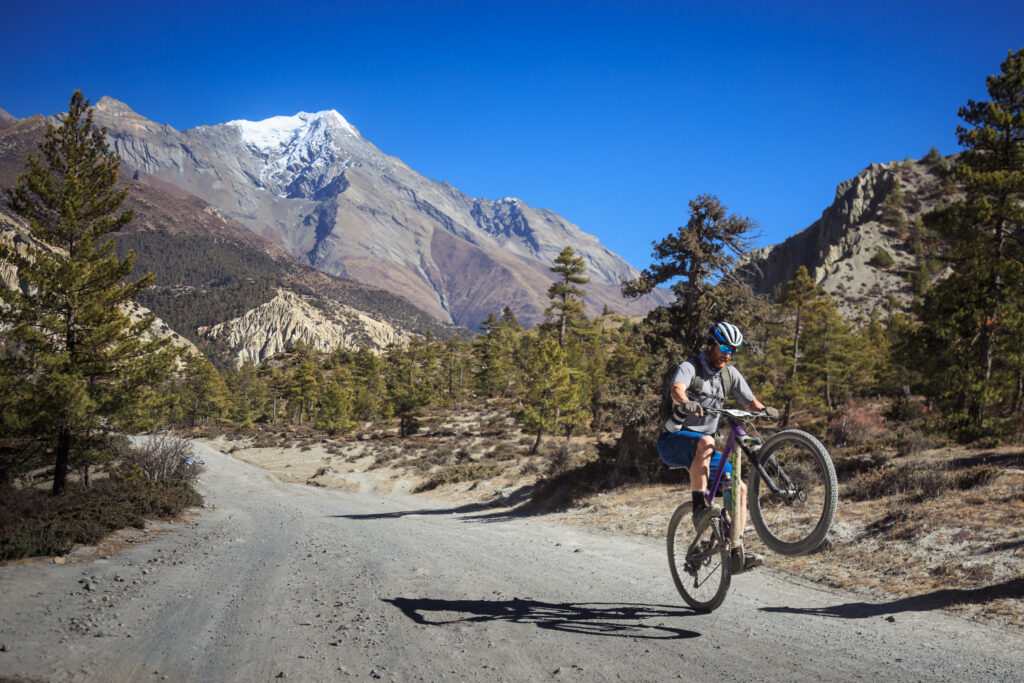
Historically March to May and October to November were regarded as the best months to do the Annapurna circuit. More recently with global weather trends altering it appears October and November are the most stable months with the least likelihood of snow and storms. March and April and early May are still a good second option, with December, January and February being generally extremely cold at altitude. From June thorough to mid September is monsoon season in Nepal with the mountains often obscured by clouds, but the Manang region is partly protected from the monsoon as it sits in the rainshadow of the Annapurna mountains.
What happens if you can’t make it over the pass?
This again depends on the circumstances. If you are on an organised tour then your group leader will ascertain the best course of action. During Yak Attack we have a team sweeping the trail, alert to any riders that maybe struggling. The race doctor would examine the riders, take some medical readings and then decide if it was safe to continue. If it was deemed unsafe, one of the team would descend down to high camp or Phedi with the rider and if their health continued to deteriorate would call for helicopter evacuation back to Kathmandu. If the riders was not suffering from altitude effects but was physically struggling we would have a porter carry their bike to the top and in extreme cases we would hire a horse to carry the rider to the top.
Individual riders and trekkers would have these options available to them but they may be much harder to implement.

Finally, having crossed 15 times you must have some tips to share?!
I have learnt a few things over the years, but I’m always still learning with each successive crossing…
- Its better to be over prepared than under. Don’t scrimp on warm gloves, clothing and footwear. Conditions can change rapidly at those altitudes and become very unpleasant very quickly. It’s better to have extra gear and not use it than to regret not having it in an emergency situation.
- Stay hydrated. The air will be very dry and you will be breathing heavier than normal which could lead to rapid dehydration. Your camelbac tube or water bottle could freeze on the way up so it’s good practice to carry a hydroflask filled with warm water under your jacket.
- Slow and steady wins the race! The start of the ascent up the pass is very steep. If you feel your heart rate and respiration increasing to a uncomfortable level back off the pace just a little, it will make the world of difference. It’s better to keep moving forward slowly with a steady heart rate than to have to stop to catch your breath every 20 metres
- Good quality sunglasses. Especially if there is lying snow. The sun’s glare is extreme at altitude and we have known a few riders to suffer from snow blindness, which apart from being very uncomfortable will definitely be the end of your riding tour.
- Check your brakes, pump your brakes! For some reason the altitude effects certain hydraulic brakes making them very spongy. Before careering off the top on a 2500m descent it’s would be sensible to ensure your brakes work!
- Before you leave for Nepal, learn the symptoms of altitude sickness, Hape and Hace so that you know what to look out for. If you start to feel unwell, disorientated or developing a severe headache or cough stop ascending. If you can’t find assistance, then start to descend until you feel better. Under no circumstances continue to ascend thinking you’ll be alright once you reach the top, chances are you won’t. There’s also an informative article here on “How to Treat and Prevent Altitude Sickness” which is well worth a read before leaving home
- Most of all try to enjoy every moment not matter how tough it feels. Take your time, take lots of photo’s, your awesome for doing this!






2 responses
Wonderful to see these photos and to be reminded of the time, five year ago, when I accompanied my son Tom Ling on Yak Attack. I was a spectator he was riding. He competed again this year (2022).
It was a great experience: breathtaking views, wonderful and friendly people – competitors and locals – and it was very well organised. .
A great trip that I cannot recommend more for rider or supporter. .
Thanks so much for your kind words Anthony and we’re so glad that you had a great experience! We missed you this year. Tom did great!!