
A fast dirt road dropping through tea country, a high Himalayan jeep track scattered with rock, a surprise section of singletrack before lunch – this is where the gravel bike versus hardtail question stops being theoretical. Both can carry you far beyond the ordinary, but they ask different things of the rider and deliver a very different day in the saddle.
For adventure cycling, the right choice is less about labels than the surface beneath your tyres, the weight you are carrying, and how much time you want to spend pushing versus riding. Choose well and a route feels brilliantly expansive. Choose poorly and even spectacular scenery can be overshadowed by fatigue, punctures and rattling hands.
Gravel Bike Versus Hardtail: The Core Difference
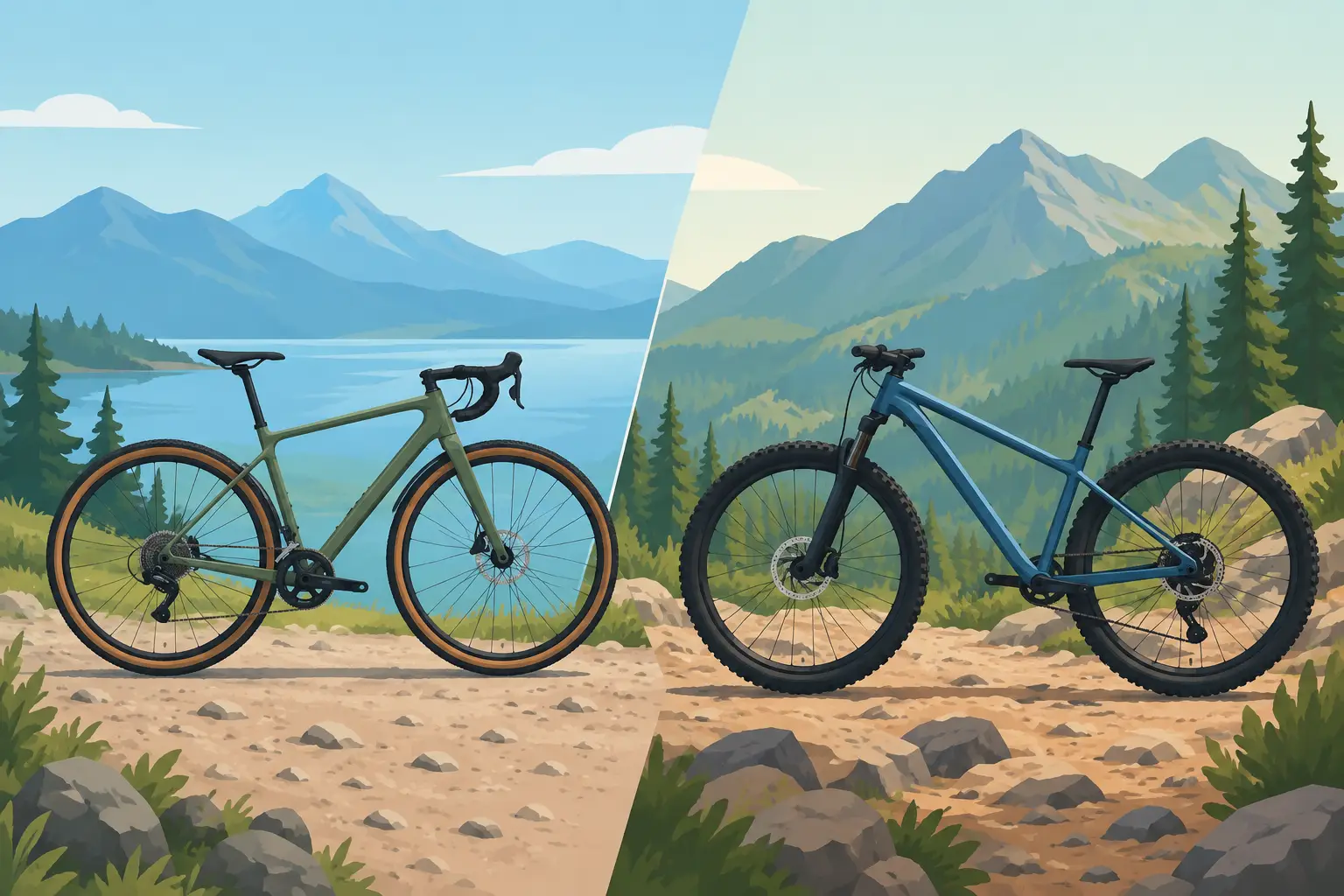
A gravel bike is built around efficiency across mixed surfaces. Its dropped handlebars offer several hand positions, its geometry rewards steady pedalling over long distances, and its relatively light weight makes it quick on tarmac, hardpack and smooth gravel. With modern tyre clearance, many gravel bikes can run 45-50 mm tyres, or wider on some frames, giving far more confidence than the skinny tyres of earlier road-inspired machines.
A hardtail mountain bike has front suspension, flat handlebars, more upright geometry and usually much wider tyres. It is designed to stay composed when the ground becomes rough, loose, steep or unpredictable. The fork absorbs repeated impacts that would otherwise travel straight into your wrists and shoulders, while a slacker front end makes descending less intimidating.
Neither is automatically the more adventurous machine. A gravel bike is often the better tool for a long, flowing journey linking villages, valleys and quiet back roads. A hardtail comes alive when the route includes broken tracks, rocky descents, washouts and technical sections where control matters more than speed.
Where a Gravel Bike Earns Its Place
If your riding day combines tarmac, farm roads, compact dirt and only occasional rough patches, a gravel bike is hard to beat. It covers ground efficiently, feels lively on climbs and allows you to settle into a sustainable rhythm over long distances. For riders coming from road cycling, the familiar drop-bar position also makes the transition feel natural.
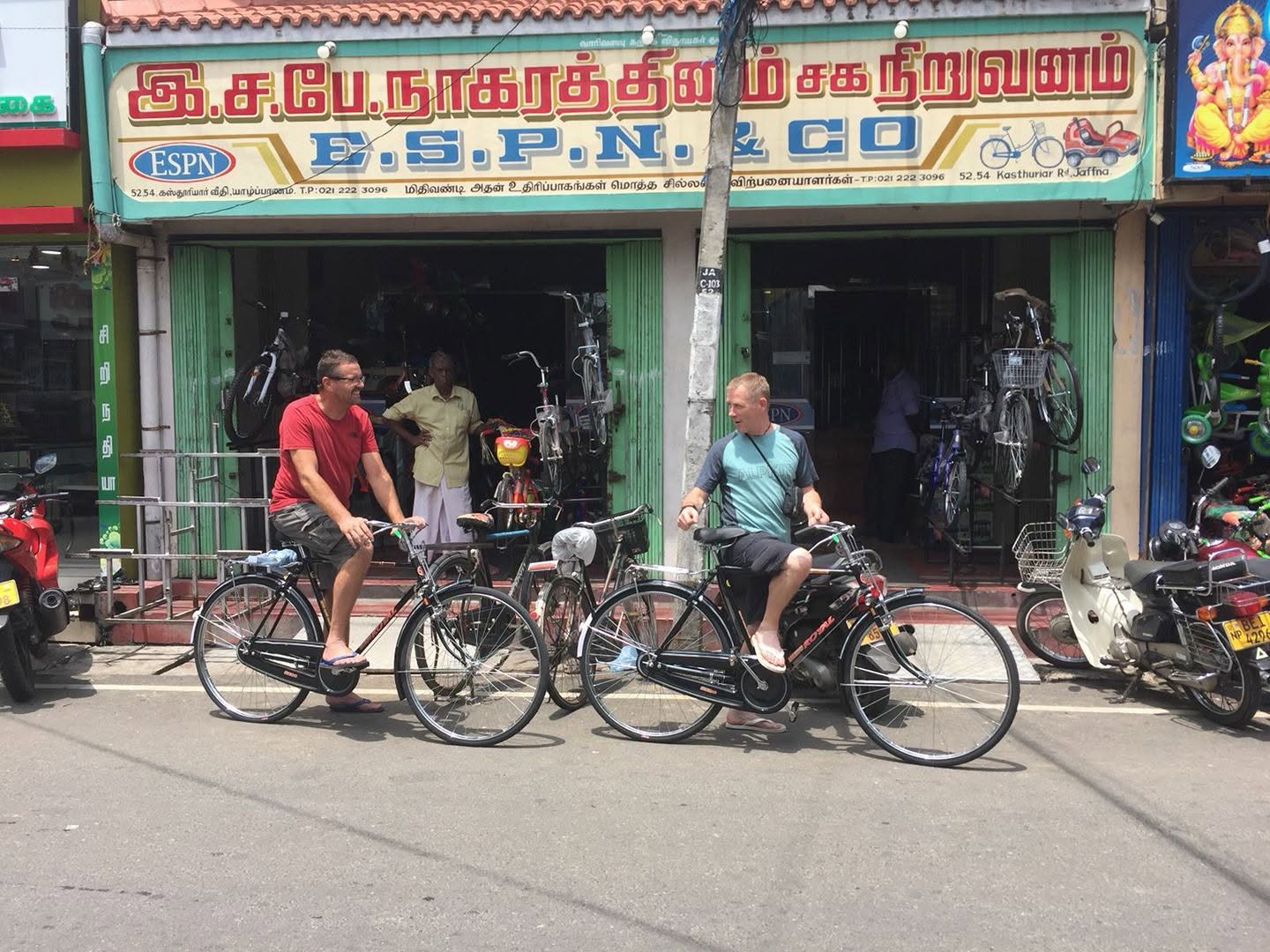
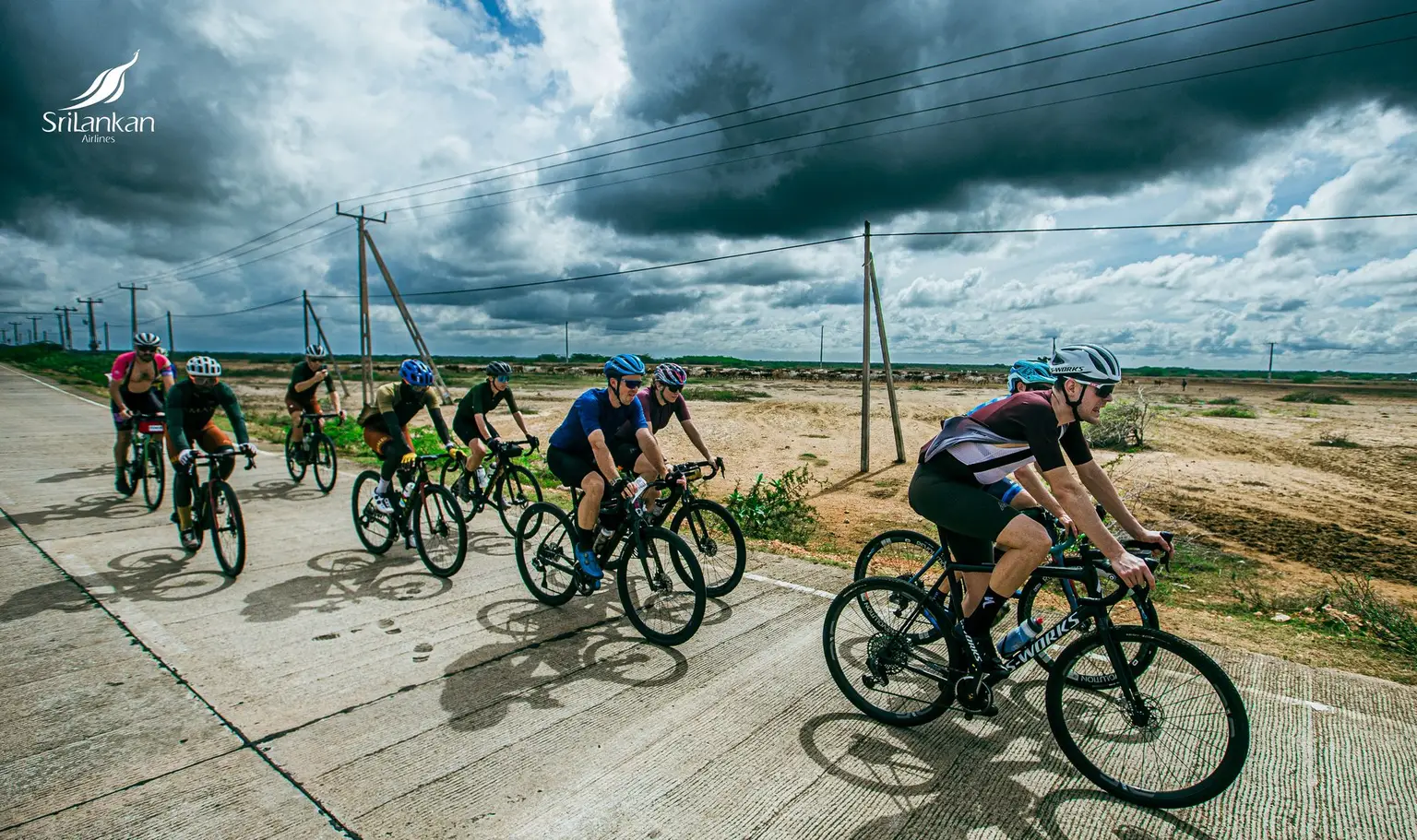
This matters on destinations where the best days are built from variety rather than a single trail network. In Sri Lanka, for example, quiet lanes through rice fields, plantation roads and coastal stretches can reward a gravel bike’s pace. You can ride from a heritage town into the countryside, pass temples and market stalls, then cover another 30 kilometres before the heat rises – all without feeling as though you are dragging a mountain bike along the road.
Drop bars have another advantage on long holidays: hand position. Being able to move between the hoods, drops and tops can reduce pressure points on all-day rides. Pair the bike with sensible tyre volume and tubeless set-up, and it can remain genuinely comfortable on corrugated dirt rather than merely tolerating it.
The compromise arrives when rough terrain lasts longer than expected. A gravel bike can descend loose, stony tracks in skilled hands, but it demands concentration. Repeated square-edged hits are punishing, braking distances grow on steep loose surfaces, and the margin for error narrows considerably when the bike is loaded.
Gravel bikes favour distance and flow
For a rider seeking a fast, immersive route with big daily mileage, a gravel bike makes strong sense. It is particularly well suited to well-maintained unsealed roads, rolling terrain and journeys where a substantial proportion of each day is paved. It can also be the right answer for riders who value café stops, cultural encounters and scenery as much as technical riding.
Tyre choice is critical. A supple 45 mm tyre can transform a gravel bike on imperfect roads, while a narrow, high-pressure tyre can make the same route feel needlessly harsh. On a trip with remote riding, tubeless tyres, a durable casing and the ability to fit a wider tread are practical safeguards, not marginal upgrades.
When a Hardtail Is the Better Adventure Bike
A hardtail is the sensible choice when route conditions are genuinely uncertain. The front suspension adds weight and requires set-up, but it buys comfort and control where it counts. On broken mountain roads, loose switchbacks and trails churned up by monsoon weather, it lets you maintain momentum rather than constantly picking a cautious line.
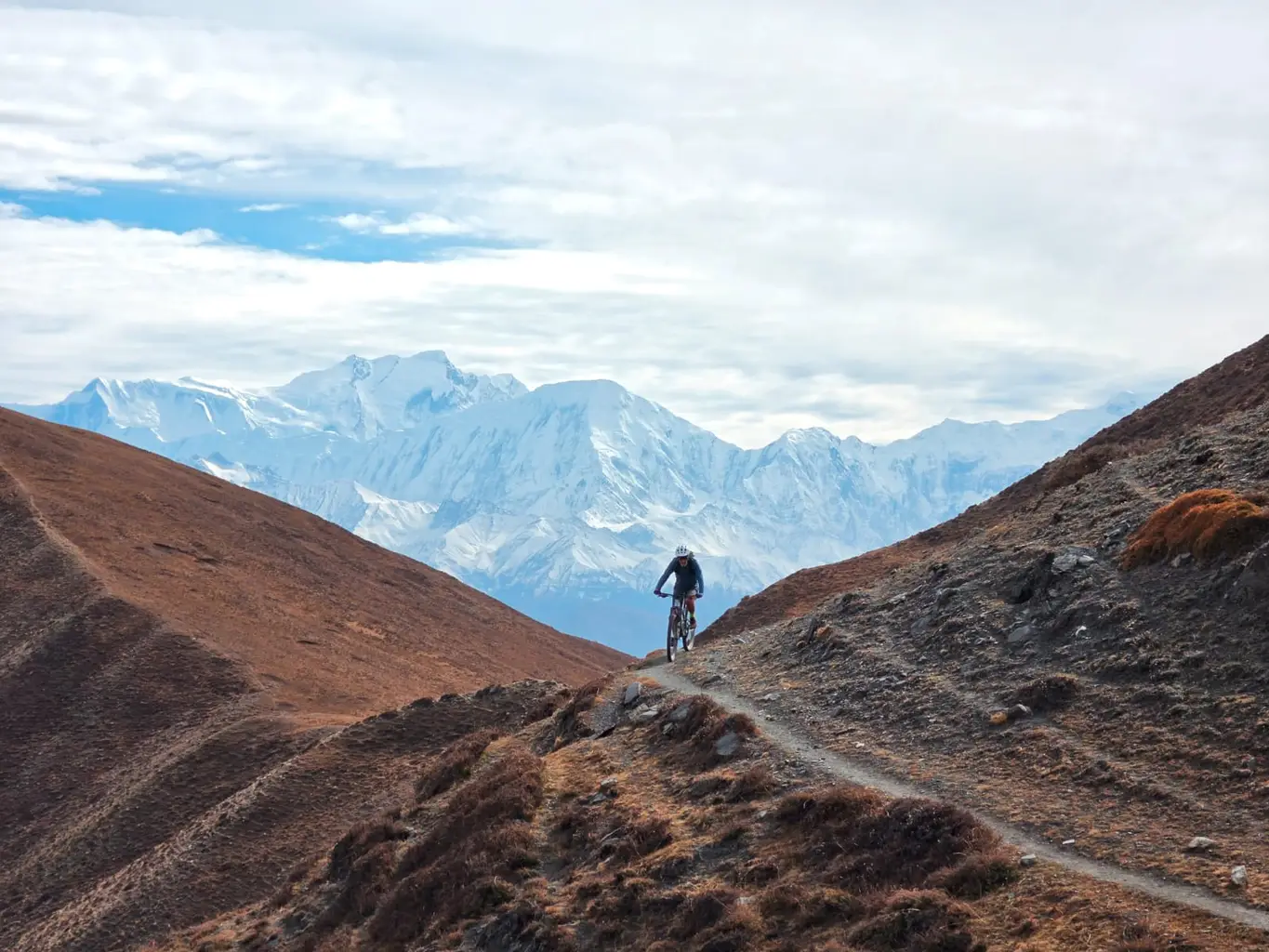
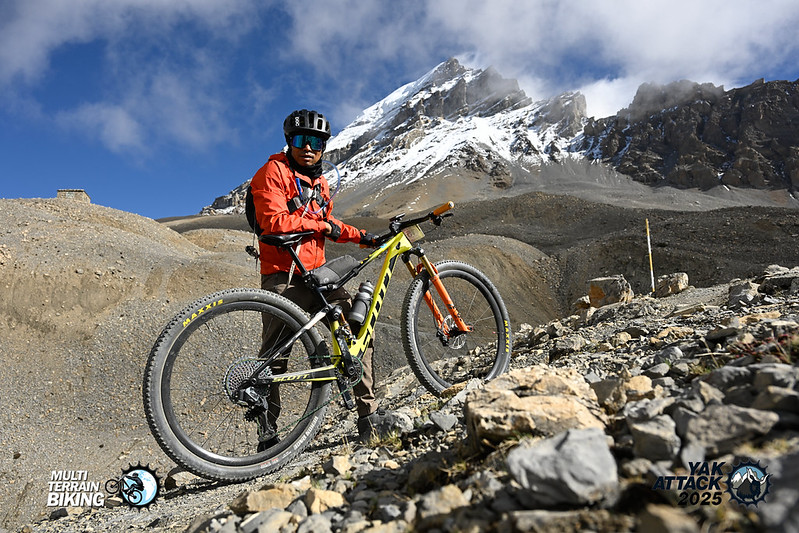
Nepal makes the case clearly. Many of its most memorable routes use old jeep tracks and mountain roads that can shift dramatically with weather, road works and landslides. A surface that is smooth one season may be deeply rutted the next. At altitude, where breathing is already demanding, reducing the physical battering from the trail can preserve energy for the climb, the view and the next day.
A hardtail’s flat bars also provide immediate steering leverage. This inspires confidence on steep descents, especially for riders who are less accustomed to riding loaded bikes off-road. Wider tyres add grip on loose dust and rock, while lower gearing makes steep, slow climbs more manageable.
The trade-off is obvious on smoother roads. A hardtail rolls slower, catches more wind and can feel inefficient over long paved transfers. Locking out the fork helps, but it does not remove the additional weight or upright position. If a route is 70 per cent tarmac and smooth gravel, the hardtail’s capability may go largely unused.
Suspension is not a substitute for good planning
A suspension fork will not turn every route into a carefree ride. It needs to be correctly inflated for rider and luggage weight, and it should be serviced before a major trip. Too much pressure makes it feel harsh; too little can cause it to dive under braking and reduce precision.
For remote travel, simplicity has value. A quality hardtail with a reliable air fork, robust wheels and a sensible 1x drivetrain strikes an excellent balance. Full-suspension mountain bikes offer more comfort on technical trails, but add complexity, weight and less space for conventional luggage. Unless the route is consistently technical, a hardtail is usually the more versatile expedition platform.
Luggage Changes the Equation
The bike you love on a two-hour local loop may behave differently with bags, water and several days of kit. A lightly packed bikepacking set-up works well on either style of bike, but weight placement is crucial. Keep dense items low and central, avoid an overloaded handlebar roll, and allow enough clearance for the front wheel and suspension movement.
Gravel bikes suit riders travelling light. Frame bags, a saddle pack and a compact bar roll can carry the essentials without spoiling the bike’s efficient character. However, rough descents can make a large saddle pack sway, and narrow drop bars leave less room for accessories.
Hardtails offer more front-end control when loaded and their wide bars accept lights, navigation devices and small packs more easily. The suspension fork can also take some sting out of the extra mass. For rough, self-supported routes, that stability often matters more than outright speed.
On fully supported cycling holidays, luggage capacity is less decisive because your main bag travels separately. That gives you freedom to choose the bike for the riding itself – an important advantage on expertly crafted journeys where each day has been designed around the terrain rather than the burden of carrying everything.
Match the Bike to Your Riding Personality
The practical question is not simply, ‘Which bike is best?’ It is, ‘Where do I want to feel strongest?’ A confident mountain biker may find a hardtail more relaxing everywhere, even on long road sections. A road rider with strong handling skills may be happier taking a capable gravel bike onto rougher ground than conventional advice suggests.
Think honestly about descents. If loose, steep terrain makes you tense, a hardtail can turn a demanding route into an enjoyable one. If you love maintaining speed, covering distance and feeling connected to a road’s changing texture, gravel is likely to deliver more of the sensation you came for.
Fitness also plays a role. A gravel bike rewards steady endurance, while a hardtail can save upper-body energy over repeated impacts. On high-altitude routes such as those encountered in Nepal, conserving energy is not a minor detail. It can determine whether you reach a pass with enough focus left to enjoy the descent.
A Practical Choice for Nepal and Sri Lanka
For predominantly smooth gravel, quiet tarmac and rolling rural terrain in Sri Lanka, choose a gravel bike with generous tyre clearance and low enough gearing for sustained climbs. It will feel fast, elegant and entirely at home on the kind of varied roads that make the island such a compelling cycling destination.
For rugged Nepalese mountain tracks, high passes, loose descents and routes where weather can reshape the surface overnight, choose a hardtail. A 100-120 mm fork, dependable disc brakes, wide tubeless tyres and climbing-friendly gears will offer the confidence to keep riding when conditions become properly wild.
There is, of course, overlap. A very capable gravel bike can handle adventurous Nepalese roads with an experienced rider, just as a hardtail can make a superb companion in Sri Lanka. Multi Terrain Biking plans routes around real local conditions, helping riders select the machine that complements both the destination and their ambitions.
The best bike is the one that lets you look up from the front wheel. Choose gravel when you want to travel quickly through a landscape; choose a hardtail when you want to meet that landscape on its own terms.