
Land in Kathmandu, roll out past temple squares and terraced hillsides, and within a few hours a self guided cycling holiday Nepal stops feeling like a trip idea and starts feeling like a proper adventure. This is not a destination for riders who want painted cycle lanes and predictable café stops every 20 kilometres. It is for cyclists who want real terrain, big scenery, and the satisfaction of moving through a country under their own steam, with the route and logistics handled well enough that the experience stays exciting rather than chaotic.
Nepal suits self-guided riding surprisingly well, but only when expectations are realistic. The best trips are not about ticking off maximum distance. They are about riding through extraordinary contrasts – dusty ridge roads, pine forest descents, medieval towns, river valleys and high Himalayan views – while keeping enough structure around the journey to make each day flow.
Why a self guided cycling holiday in Nepal works
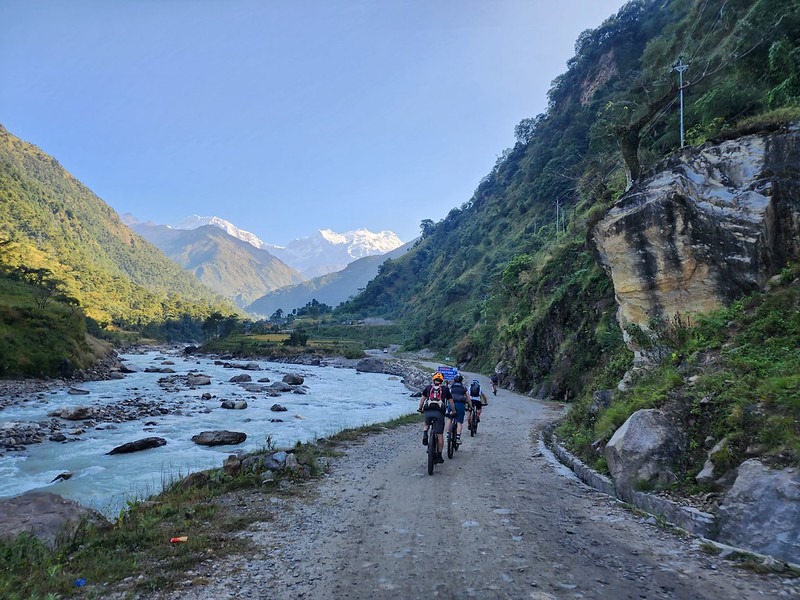
Nepal has the ingredients riders talk about for years afterwards. The climbing is meaningful, the landscapes change fast, and the cultural depth is there every day rather than as an occasional add-on. One morning might begin among Buddhist prayer flags and end in a subtropical valley with orange groves and warm air. Few cycling destinations offer that much variation in such a compact geography.
The appeal of self-guided travel is freedom. You can ride at your own pace, stop where the view demands it, linger over lunch in a hill village, or push on when the legs feel good. For experienced travellers, that independence is part of the reward. You are not tied to a group speed, and the trip feels more personal.
That said, Nepal is not self-guided in the same way as southern Europe. Signage can be inconsistent, road conditions change, and weather or roadworks can alter a route quickly. The strongest self-guided holidays here are expertly crafted behind the scenes, with local route knowledge, pre-arranged accommodation, transfers where they matter, and practical support if plans shift. Freedom is still the headline, but the smart version of freedom comes with a safety net.
Choosing the right self guided cycling holiday Nepal route
Route choice shapes everything. Nepal can be welcoming and accessible, or hard and committing, depending on where you point the bike.
For many riders, the Kathmandu Valley and the middle hills are the ideal starting point. The riding is varied, culturally rich and physically rewarding without requiring expedition-level logistics. You can link heritage towns, ridgeline viewpoints and quieter rural roads in a way that feels adventurous but still manageable. The altitude is present, though not usually extreme, and creature comforts are easier to build into the itinerary.
The Pokhara region is another excellent fit. It gives you lake views, classic mountain panoramas and a broader mix of gravel tracks, back roads and climbing options. The atmosphere is a little more spacious than Kathmandu, and the riding can be tailored from moderately demanding to seriously punchy. Riders who want a premium feel alongside the adventure often find this area hits the balance well.
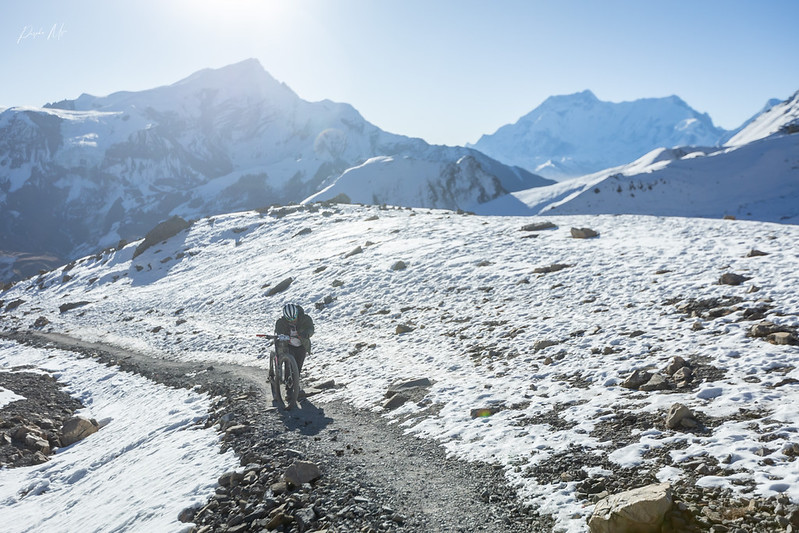
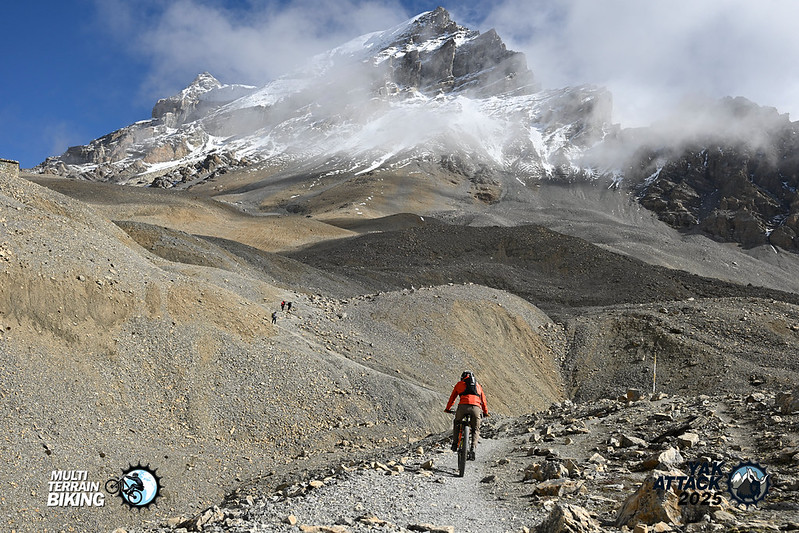
More remote routes towards Mustang or high mountain terrain are different beasts. They are magnificent, but they ask more from the rider and from the logistics. Weather windows matter more. Surfaces are rougher. Altitude can become the defining factor rather than just part of the challenge. These routes are brilliant for strong, experienced cyclists, but they are rarely the best first taste of Nepal on a self-guided basis.
Terrain, roads and what the riding really feels like
Nepal is not flat, and there is no point pretending otherwise. Even on a carefully designed itinerary, elevation gain is part of the story. Climbs tend to come in sustained blocks or in repeated steep pitches rather than in gentle, rolling drifts. The payoff is enormous scenery and unforgettable descents, but riders should arrive expecting to work.
Surface quality depends heavily on region and route design. Tarmac can range from smooth and flowing to broken and potholed. Gravel sectors may be fast and enjoyable or loose and technical after rain. In the hills, roads are often narrower than visitors expect, and traffic patterns can shift quickly as you move in and out of towns.
This is why bike choice matters. A gravel bike is often the sweet spot for many self-guided itineraries in Nepal, especially if the route mixes sealed roads with dirt sections. A hardtail mountain bike makes more sense once the route leans rougher, steeper or more remote. A pure road bike can work on selected routes, but there is less margin for comfort and route flexibility. Tyre clearance, low gearing and reliable braking are not luxury features here. They are what keep the ride enjoyable on day four as well as day one.
How much support do you actually need?
The phrase self-guided means different things in different countries. In Nepal, the most effective model is usually independent riding paired with serious local planning. That might include airport transfers, bike hire, GPX files, accommodation, luggage moves, key route briefings and emergency backup. You ride under your own steam, but the framework has been built by people who know how Nepal works on the ground.
That support matters because small details have a way of becoming large ones. A missed turning can turn into an extra hour of climbing. A mechanical in the wrong place can derail the afternoon. A local festival can fill hotels that looked available the week before. Riders who are comfortable travelling independently still tend to appreciate having experienced operators quietly solving those problems before they arise.
For many people, this is the difference between a bold holiday and a stressful one. It keeps the spirit of adventure intact without leaving you to improvise every logistical detail in a country where transport, road conditions and communications do not always behave to plan.
Best time for a self guided cycling holiday in Nepal
The two prime seasons are autumn and spring. Autumn, broadly from October to early December, is the classic window. The air is often clearer, mountain views are at their sharpest, and riding conditions are generally excellent. It is also a popular period, so the best accommodation and logistics should be arranged well in advance.
Spring, usually from March to April, is another strong option. Hillsides can be greener, temperatures are pleasant in many regions, and the atmosphere on the trails and roads is lively without feeling overcrowded. Visibility can be a touch less reliable than autumn, but the riding can still be superb.
Winter works on lower and mid-altitude routes if you do not mind cold mornings. Monsoon season is far more variable. Some regions remain rideable, but heavy rain, mud and landslip risk make route planning more complex. For a premium self-guided experience, most riders are happier aiming for the cleaner windows of autumn or spring.
Who this style of trip suits best
A self-guided holiday in Nepal suits riders who enjoy autonomy but do not need to prove a point by making travel harder than it needs to be. If you like the rhythm of setting off on your own each morning, reading the landscape, pacing your effort and arriving somewhere earned, it is a superb format.
It is especially strong for couples or friends with similar fitness who want a shared adventure without joining a full group departure. It also works well for experienced cyclists who have ridden in the Alps, Spain or Morocco and want a destination with more edge, more cultural texture and far less predictability.
If you are new to multi-day riding, uneasy with navigation, or unsure how you will respond to sustained climbing and variable road surfaces, a guided trip may be the better first step. There is no shame in that. Nepal rewards confidence, and confidence often comes from choosing the format that lets you enjoy the country properly.
Practical planning that makes the trip better
Fitness matters, but pacing matters more. Nepal can punish riders who chase huge daily distances simply because the roads on paper look short. A well-planned itinerary respects climb time, altitude, photo stops and the fact that some of the most memorable parts of the day happen off the bike.
Pack lighter than you think, but smarter. Layers are essential because temperatures shift with elevation and time of day. Good glasses, quality gloves and a compact rain layer all earn their place. So does a simple mechanical kit, even if backup is in place.
Most importantly, choose a route built by people with deep local knowledge. That is where the quality of a self-guided trip is won. The right back road, the right overnight stop, the right transfer to avoid a dead stretch of traffic – these details change the whole feel of the holiday. Operators with real Nepal pedigree, including specialists such as Multi Terrain Biking, understand how to turn a difficult country to plan into a remarkably smooth riding experience.
A self-guided cycling journey in Nepal is not the easiest holiday you will ever take, and that is exactly why it stays with you. Get the route, season and support level right, and you will come home with tired legs, a crowded camera roll, and the rare sense that the adventure was genuinely your own.