
The Yak Attack event review most riders want is not a list of finish times or a glossy claim that it is “tough but rewarding”. They want to know what it feels like when the trail climbs beyond the tree line, the air thins, and a normal day on the bike becomes an exercise in judgement. Yak Attack is a genuine Himalayan expedition with race plates, built for mountain bikers who want their endurance challenge wrapped in Nepal’s raw mountain scale and remarkable cultural depth.
It is not a conventional stage race transferred to a dramatic backdrop. The environment dictates the experience. Altitude affects pace, weather can alter plans, and surfaces range from rugged jeep track and loose rock to old trails, steep hike-a-bike sections and fast, open descents. For the right rider, that unpredictability is exactly the appeal.
What Makes Yak Attack Different?
Yak Attack has long held a formidable reputation as one of the world’s highest mountain bike races. Its route reaches deep into the Nepalese Himalaya, where big elevation, remote settlements and serious mountain passes shape every stage. You are not simply chasing a result from one finish-line town to the next. You are travelling through a landscape where logistics, acclimatisation and self-management matter as much as fitness.
The race is best understood as a multi-day mountain biking expedition. Days can be long and demanding, but the challenge is broader than pedalling. Riders may find themselves carrying or pushing bikes across rough ground, managing layers through dramatic temperature swings, and preserving energy for the next day rather than emptying the tank for a single segment.
That makes it unusually compelling for experienced recreational riders as well as endurance racers. A podium contender will read the course differently from a rider whose goal is to finish, but both are asked to respect the same mountain conditions. Your strongest asset is not necessarily a huge threshold number. It is patience, resilience and the ability to keep making sensible decisions when tired.
Yak Attack Event Review: The Riding Reality
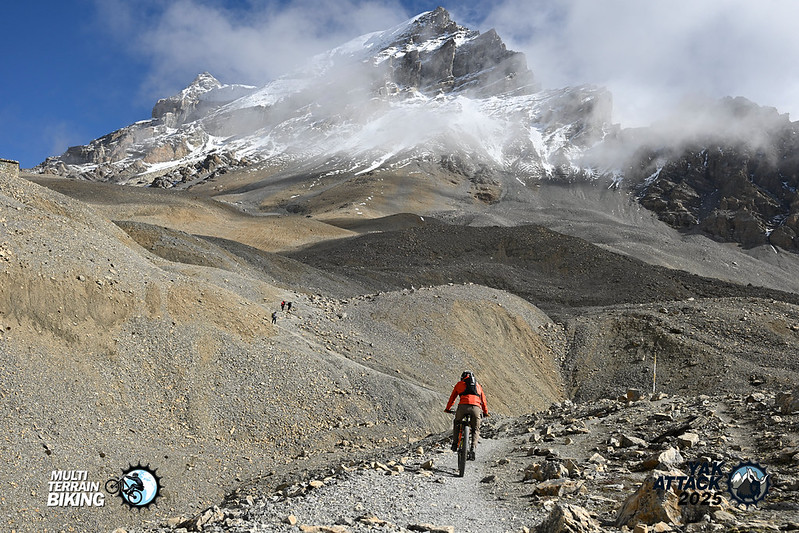
Expect proper mountain biking, not polished trail-centre flow. Nepal’s terrain is beautiful because it is uncompromising. Climbs can be sustained and irregular, with gradients that change sharply as the route passes through villages, valleys and high alpine country. Descents reward confident line choice and an active riding position, especially where braking bumps, shale, dust or loose stones demand attention.
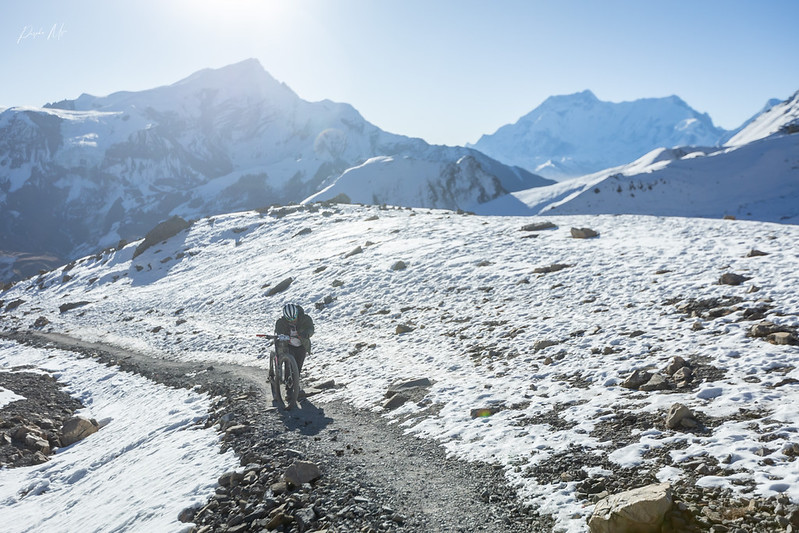
Some sections will suit a strong cross-country rider who can keep momentum over rough ground. Others favour the all-round adventurer who is comfortable getting off the bike without seeing it as failure. Hike-a-bike is part of the mountain experience, particularly at altitude, and treating it as a tactical reset rather than an affront to your fitness will make the week far more enjoyable.
The altitude is the major separator. Even riders arriving with excellent preparation can feel unexpectedly flat as the route rises. Recovery becomes slower, appetite may change, sleep can be lighter and an effort that would feel manageable at home can become hard work. Sensible pacing early in the event is not cautious racing. It is intelligent racing.
Weather adds another layer. Bright Himalayan mornings can give way to biting wind, rain or snow at higher points, while lower elevations may feel dusty and warm. Clothing choice is not an afterthought. It is a safety and comfort issue that affects how well you can descend, eat and recover. Pack for movement and for stillness, because waiting at a mountain pass feels very different from riding uphill.
Technical difficulty versus endurance difficulty
Yak Attack is demanding in both senses, but the balance depends on the specific route and conditions of that edition. A technically capable rider without the endurance base can struggle with the cumulative load. A superbly fit rider with little experience of loose, steep terrain may lose time and confidence on descents.
The most successful entrants tend to be competent rather than specialised. They can ride efficiently for several consecutive days, descend with control rather than panic, look after their equipment, and stay composed when a plan needs to change. If your favourite rides involve long days in remote hills, varied surfaces and the occasional hard-earned summit, the character of Yak Attack will feel familiar, just on a vastly bigger scale.
The Support That Makes the Adventure Possible
Racing in Nepal requires far more than a mapped route and a timing tent. The appeal of an organised event is the support structure behind the scenes: local crews, transport, accommodation arrangements, food planning, mechanical assistance, medical protocols and a team that understands the realities of operating in the mountains.
That support does not make Yak Attack easy. It makes the challenge viable. Riders still need to manage their own effort, nutrition, kit and bike, but they are freed from the complex work of moving through a remote country with a bicycle. This is where an experienced Nepal operator earns trust. Local knowledge informs decisions around routing, weather, transport and pacing the event through terrain that cannot be treated casually.
At Multi Terrain Biking, the philosophy has always been to pair ambitious riding with deeply informed logistics. On an event such as Yak Attack, that means creating the conditions for riders to focus on the experience: the climb ahead, the people beside them and the landscape unfolding beyond the trail.
Accommodation and facilities should be viewed through an expedition lens. This is not a luxury lodge holiday with a short ride attached, although the welcome, warmth and shared meals at the end of a stage can feel exceptionally restorative. Standards vary by location because the route travels through remote mountain areas. Arrive ready to embrace that simplicity and you will find the experience far richer than any uniform hotel stay.
Who Should Enter Yak Attack?
Yak Attack is a strong fit for mountain bikers and gravel-adventure riders with proven multi-day endurance, sound bike handling and a real appetite for high-altitude travel. You do not need to be an elite racer to earn a place at the finish, but you do need to train with honesty. If you have never ridden consecutive long days, rarely climb for more than an hour or dislike rough descents, this is likely a project for a future season rather than an impulsive entry.
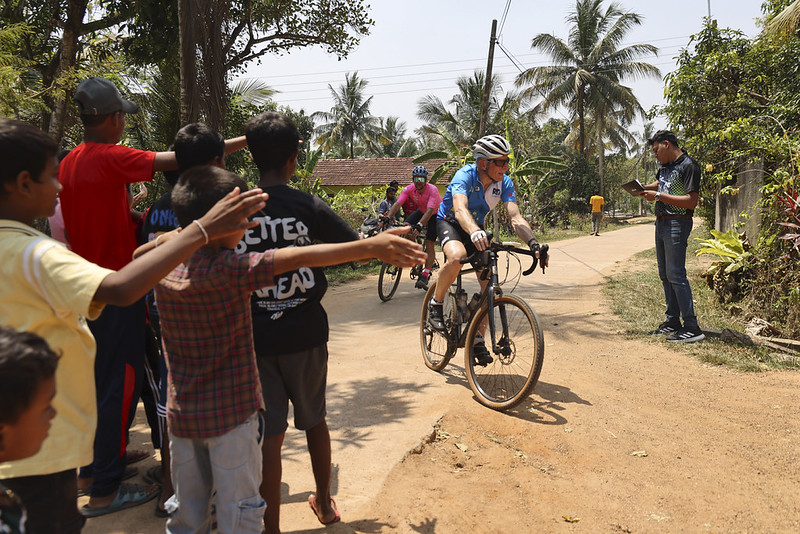
It also suits riders who value the journey around the race. Nepal is never merely scenery. The route passes through communities whose everyday lives are shaped by the same mountains that challenge visitors for a week. A good Yak Attack rider arrives with curiosity and respect, not just a target number on a results sheet.
Conversely, it may not suit someone seeking maximum speed, manicured singletrack or predictable conditions. There are races where every minute is carefully engineered for fast competition. Yak Attack’s identity is different. Its rough edges are part of its credibility.
How to Prepare Without Guesswork
Build your preparation around durability. Long rides matter, but back-to-back days matter more. Include sustained climbing, rough-surface riding and descending when fatigued. Practise eating real race nutrition while working hard, not just during café rides, and test the clothing and luggage systems you expect to use in Nepal.
A full-suspension cross-country or down-country bike is often the confidence-building choice for varied, rugged terrain, though the best setup depends on the current route, your handling and your priorities. Reliability should lead every decision. Fresh tyres with robust sidewalls, dependable brakes, sensible gearing and a bike you know how to maintain are worth more than marginal weight savings.
Altitude cannot be perfectly replicated in Britain, but aerobic conditioning, careful acclimatisation and restrained early pacing all help. Train the discipline of going easier than your ego wants to go. In the Himalaya, that may be the decision that preserves your race.
Is Yak Attack Worth It?
For riders searching for a finish-line medal alone, there are simpler ways to suffer. For those who want a defining mountain bike story, Yak Attack occupies rare territory. It combines the focus of a stage race with the perspective shift of travelling through one of cycling’s most dramatic destinations.
The memories are unlikely to be limited to a single climb or finishing position. They will be of thin morning light on the high trail, the encouragement of fellow riders, a hot meal after a cold descent and the quiet satisfaction of adapting to a place that demands your full attention. Train properly, arrive open-minded, and let the mountains set the terms.