
A climb in the Himalaya rarely begins at the foot of a mountain. It begins with a slow rise through rice terraces, villages, pine forest and river valleys, often long before the air becomes thin enough to change every pedal stroke. The top Himalayan bike climbs are not simply defined by elevation gain. They are defined by scale, remoteness, surface, weather and the feeling of earning a view that no road vehicle can hand you.
For riders travelling to Nepal, the real appeal lies in that combination. One day might mean a smooth, winding tarmac ascent from Kathmandu; the next, a rocky jeep track above the Kali Gandaki, with snow peaks filling the horizon. The strongest itineraries balance challenge with sensible acclimatisation, dependable support and time to absorb the places between the big efforts.
What makes a Himalayan climb different?
Altitude is the obvious answer, but it is only part of the story. A 1,000-metre climb at sea level can be hard; the same gain above 3,000 metres, on rough ground and after several days of riding, is a different proposition altogether. Progress is slower, recovery takes longer and a short steep ramp can feel disproportionately severe.
Then there is the terrain. Nepal’s mountain roads range from newly sealed tarmac to loose rock, washboard, dust, mud and tracks reshaped by monsoon rain. A route advertised as a road climb may still demand confident handling, wide tyres and a willingness to get off and push for a few sections. That is not a failure of the ride. In the Himalaya, it is often part of the experience.
The best approach is to choose climbs that suit your preferred style. Endurance riders may want long, high-altitude passes and multi-day journeys. Gravel riders may favour remote valleys and rough jeep tracks. Those seeking a more relaxed cycling holiday can still find extraordinary climbing on quieter paved roads, with proper hotels and rewarding cultural stops at the end of the day.
Top Himalayan bike climbs in Nepal
Thorong La: the high-altitude benchmark
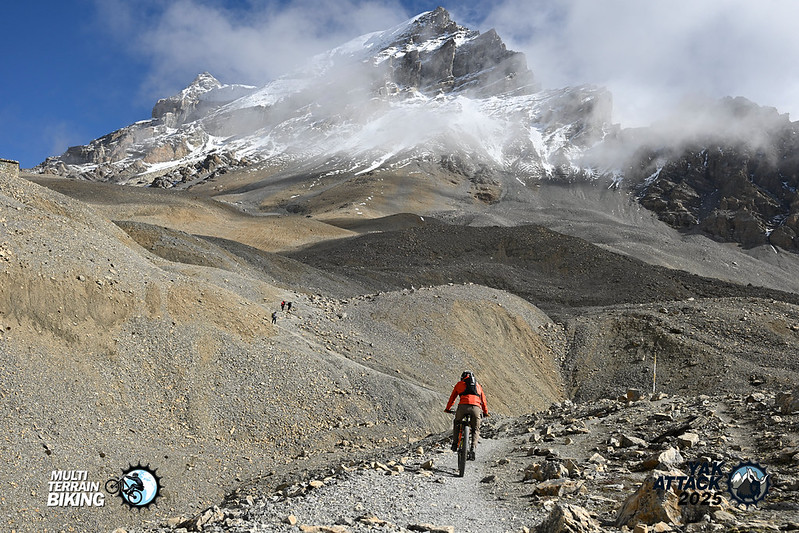
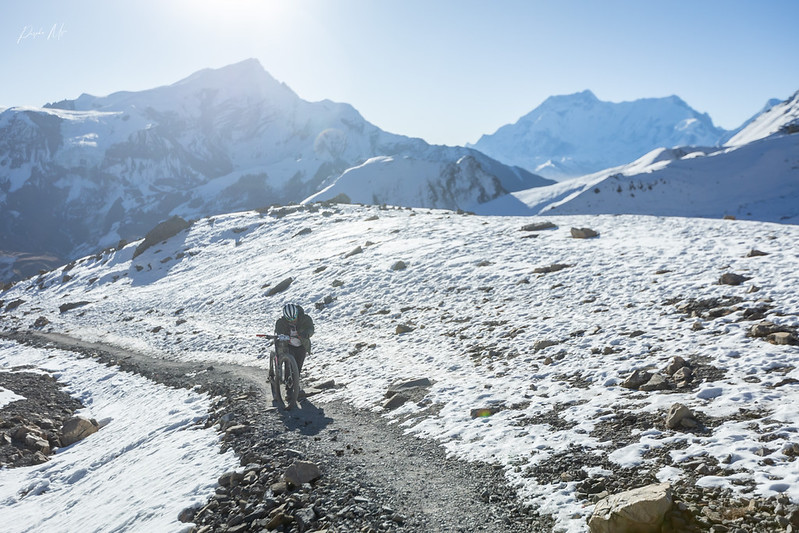
At 5,416 metres, Thorong La is one of the world’s great high passes and a defining objective for ambitious mountain bikers. It sits on the Annapurna Circuit between Manang and Muktinath, surrounded by an immense amphitheatre of Himalayan peaks. There is no pretending this is a conventional road climb. The final approach is frequently a mix of riding, pushing and carrying, especially when snow, ice or loose ground complicate the trail.
That said, the effort is profound precisely because it is not sanitised. A rider reaches the pass after days of gradual acclimatisation through the Marsyangdi Valley, with changing landscapes that move from subtropical forest to dry, high-altitude terrain. The descent towards Muktinath is equally memorable, although conditions and rider ability should dictate how much is ridden. This is a serious mountain undertaking, not a single-day badge hunt.
It is also a route where logistics matter. Weather can close in rapidly, mornings are usually best, and the consequences of poor acclimatisation are real. An experienced local team, flexible timings and vehicle support where the route permits make the difference between an epic journey and an unnecessarily difficult one.
Muktinath to Lupra Pass: Mustang’s raw side
The Muktinath region is one of Nepal’s most rewarding places to ride at altitude. Above the Kali Gandaki Valley, the landscape becomes dry, sculpted and almost lunar, with Tibetan Buddhist culture shaping every village and monastery. The climb towards Lupra Pass is a standout for riders who prefer rugged mountain biking to a smooth, sustained road ascent.
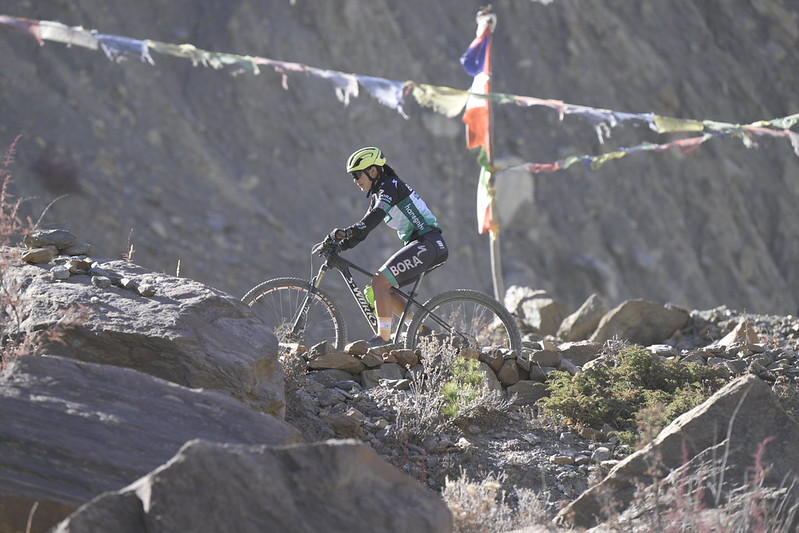
Expect loose surfaces, steep pitches and a real sense of exposure. The pass is lower than Thorong La, but it should not be underestimated: the terrain demands concentration, and the altitude still bites. The reward is a descent through Lupra Valley that feels wild and wonderfully removed from the main trekking corridor.
This is a brilliant choice for capable riders on a Nepal mountain bike holiday because it delivers high-Himalayan drama without requiring the expedition-style commitment of Thorong La. It also pairs naturally with rides around Jomsom, Marpha and Kagbeni, where apple orchards, traditional stone villages and the wind-scoured valley provide a powerful contrast to Nepal’s greener lower hills.
Jomsom to Muktinath: a classic valley-to-sanctuary ascent
The climb from Jomsom to Muktinath is a more accessible Himalayan classic, though “accessible” is relative at these elevations. Starting around 2,700 metres, it climbs towards the sacred settlement of Muktinath at roughly 3,700 metres, passing through the villages of Kagbeni and Jharkot. The route follows broad valley tracks and mountain roads, with long views towards Dhaulagiri and Nilgiri.
Its appeal is rhythm. Rather than a single savage ramp, the ascent unfolds over distance, allowing strong riders to settle into a sustainable pace while the scenery becomes increasingly dramatic. Wind is often the complicating factor, particularly later in the day, when the Kali Gandaki Valley can funnel powerful gusts up-valley.
For riders building towards more technical or higher objectives, this is an excellent acclimatisation climb. It offers meaningful elevation, distinctive culture and a satisfying sense of arrival, without the extended hike-a-bike required by the highest passes.
The Kathmandu Valley rim: Nagarkot and beyond
Not every memorable Himalayan climb starts above 3,000 metres. The roads and tracks around the Kathmandu Valley provide some of Nepal’s most enjoyable early-trip climbing, particularly for riders arriving from the UK or Europe who need a few days to adjust to the heat, traffic patterns and elevation.
A climb towards Nagarkot rises from the bustle of the valley through farmland and hill settlements to a ridge known for broad Himalayan views in clear conditions. Depending on the chosen route, it can be tackled on tarmac, mixed surfaces or more technical trails. The gradients are testing enough to wake up the legs, while the altitude remains manageable.
The value here is strategic as well as scenic. Kathmandu Valley climbing provides a smart lead-in to a bigger journey, helping riders find their climbing legs before heading west towards Annapurna or Mustang. It also proves that Nepal’s finest riding is not confined to the highest passes. A well-chosen ridge road, a tea stop in a village and a distant line of snow peaks can make a modest summit feel complete.
How to choose the right climb
The question is not simply, “What is the highest pass I can reach?” It is, “What kind of day do I want to have?” Thorong La suits riders comfortable with uncertainty, hike-a-bike and a multi-day commitment. Muktinath and Lupra are ideal for mountain bikers who want technical terrain and remote landscapes. Nagarkot works brilliantly for gravel bikes, fitter leisure riders and anyone who wants a strong first taste of Nepal’s climbing culture.
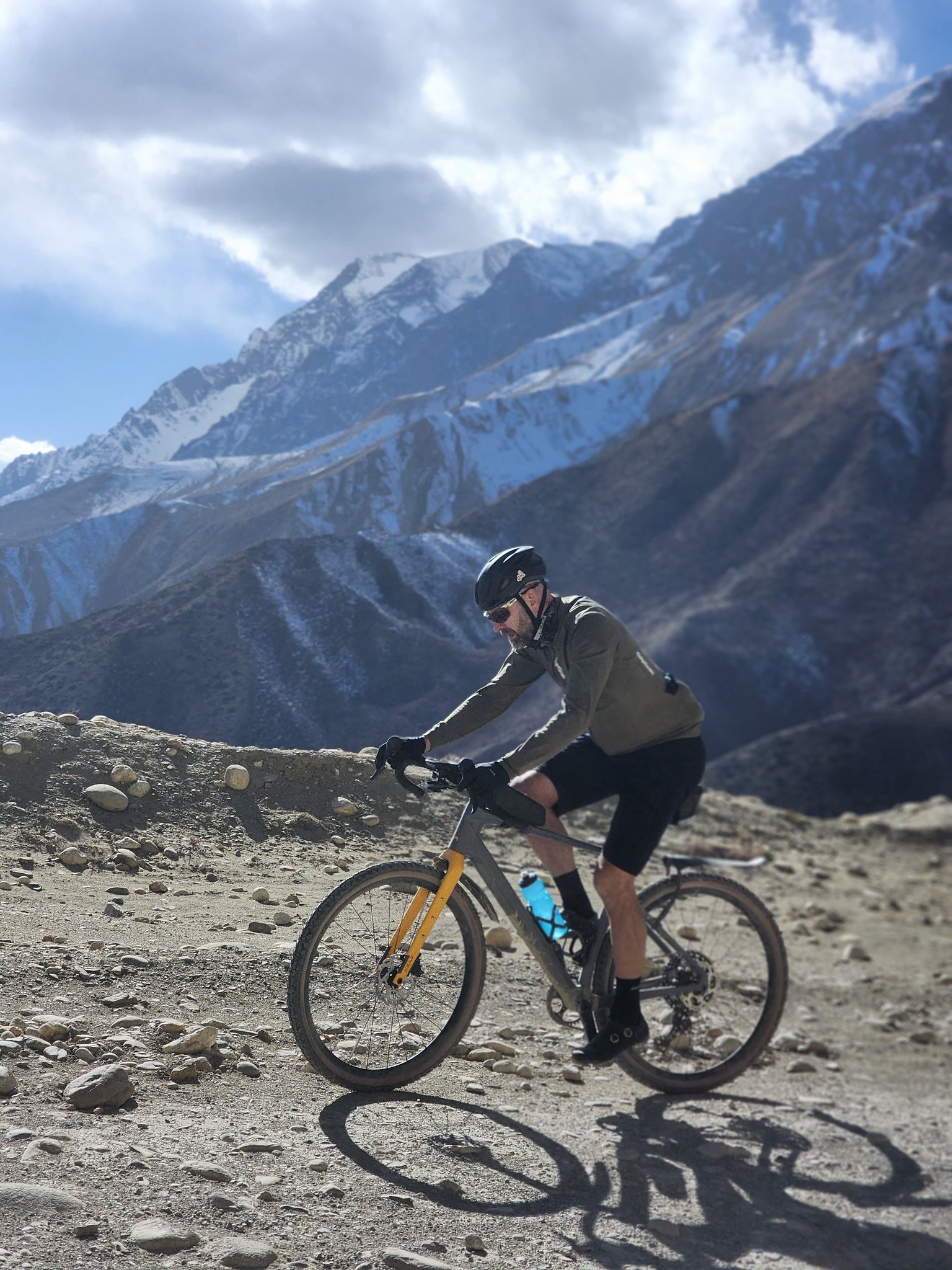
Bike choice follows the same logic. A hardtail or full-suspension mountain bike gives confidence on rough Mustang tracks and rocky descents. A capable gravel bike can be excellent on valley roads and smoother jeep tracks, but tyre volume and gearing matter more than fashion. For high mountain routes, low gears are not optional. Most riders will appreciate a set-up that allows them to spin rather than grind when fatigue and altitude arrive together.
Timing matters too. Spring and autumn generally offer the most reliable windows, though mountain weather always has the final say. Autumn often brings clearer skies after the monsoon, while spring offers warmer days and lively hillsides. In either season, carrying layers for a cold pass and a warm valley is essential.
Ride higher, but ride smarter
Himalayan climbing rewards patience. Build gradually, drink more than you think you need, eat before you feel empty and give acclimatisation the respect it deserves. The strongest riders are not always those who attack every climb. They are the ones who arrive at the high point healthy, alert and able to enjoy it.
With nearly two decades of local experience, Multi Terrain Biking crafts Nepal journeys around that principle: extraordinary riding, properly paced, with the route knowledge and logistical support that lets the mountains feel exhilarating rather than stressful.
Choose the climb that matches your ambition, leave room for the unexpected, and keep enough in reserve to look up. In the Himalaya, the view is never a bonus. It is the reason you came.