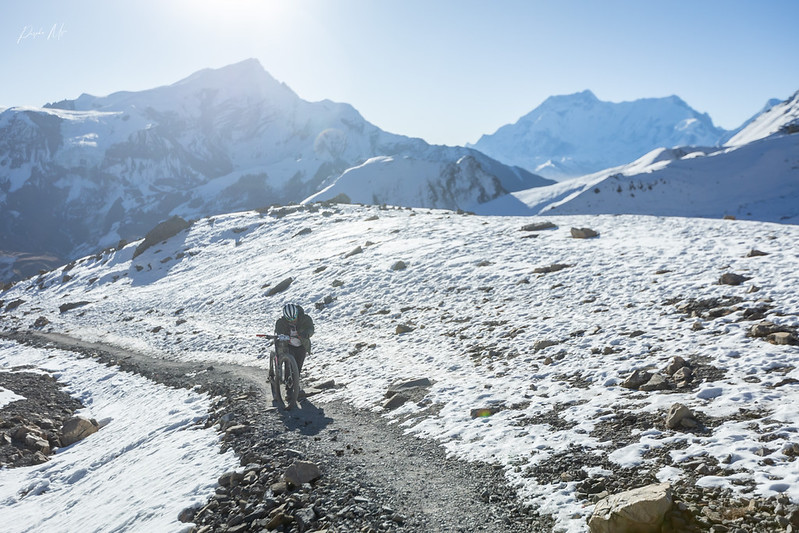
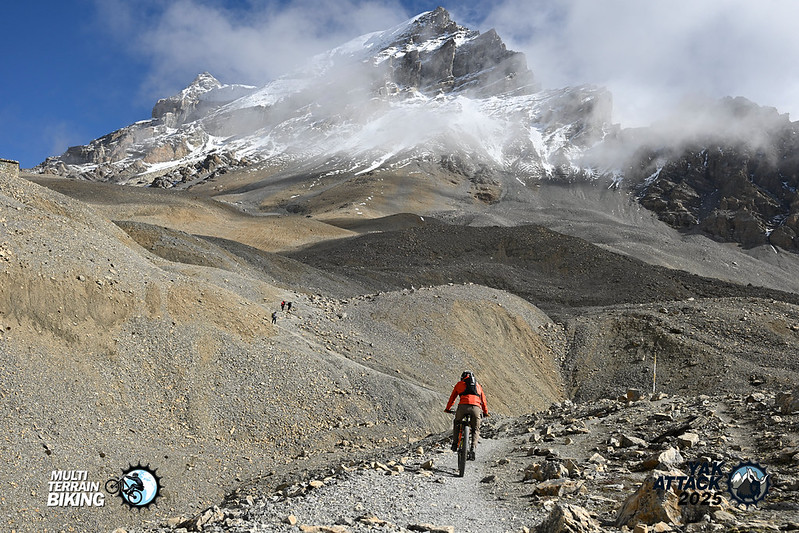
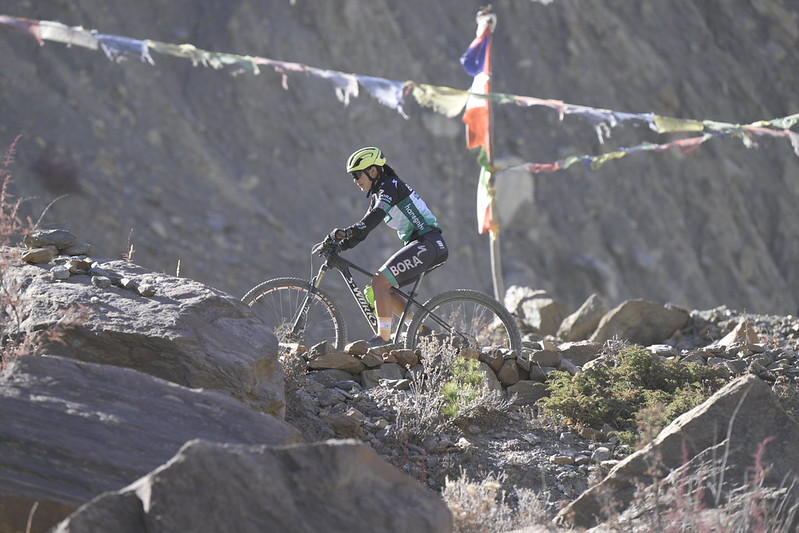
A Nepal ride can move from Kathmandu traffic and broken tarmac to stone tracks, jeep roads and high Himalayan passes in a single week. That is why the question, “what bike for a Nepal cycling tour?”, has no one-size-fits-all answer. The right choice depends less on the name on the down tube and more on your route, confidence off-road, luggage plan and appetite for long, rough descents.
For most riders joining an expertly supported Nepal cycling holiday, a capable hardtail mountain bike is the starting point. But gravel bikes, full-suspension bikes and even e-bikes can be the best tool for particular itineraries. Choose for the terrain you will actually ride, not the terrain you imagine from a dramatic Himalayan photograph.
What bike for a Nepal cycling tour? Start with the route
Nepal is not a single riding environment. A lower-valley journey may combine flowing back roads, farm lanes and gravel tracks with plenty of climbing. A remote mountain bike itinerary can involve rutted jeep trails, loose rock, washouts and long technical descents. A high-altitude expedition adds cold, fatigue and reduced recovery to the equation.
Ask for a realistic route breakdown before deciding. How much is paved? How much is unsealed? Are the descents smooth hardpack, rough stone, singletrack or old vehicle tracks? Is your luggage carried by vehicle, or are you expected to ride with it? These details matter more than headline distance or total ascent.
A bike that feels quick on a dry British gravel road may become tiring and sketchy on a steep, loose Nepali descent. Equally, a long-travel trail bike can feel unnecessarily heavy and slow on a journey built around rolling tarmac, broad gravel and cultural stops. The aim is confidence and comfort over consecutive days, not maximum suspension for its own sake.
The dependable choice: a hardtail mountain bike
For a classic Nepal off-road adventure, choose a modern hardtail with 29-inch wheels, hydraulic disc brakes and front suspension with around 100-120mm of travel. It is the most versatile answer for riders tackling mixed Himalayan terrain.
A hardtail copes well with rocky tracks and imperfect roads while remaining efficient on long climbs. It is also comparatively simple, which matters when riding in remote areas where access to specialised parts and workshop equipment may be limited. A good hardtail rewards active, alert riding but does not demand the same technical commitment as a rigid gravel bike on rough ground.
Look for tyres between 2.25 and 2.4 inches with a fast-rolling centre and dependable side knobs. Tubeless tyres are strongly recommended: they offer lower-pressure grip and help prevent the punctures that sharp stone and thorny trails can cause. Carrying a tube remains sensible, because no tyre system is invincible far from a bike shop.
Gearing is equally important. Nepal’s climbs are often sustained, steep and made harder by heat or altitude. A wide-range 1x drivetrain is excellent, provided its lowest gear is genuinely low. A 30 or 32-tooth chainring paired with a 50 or 52-tooth cassette gives most recreational riders a useful escape gear. Stronger riders may prefer more top-end speed, but it is rare to regret easier climbing gears in the Himalaya.
When a full-suspension bike earns its place
A full-suspension mountain bike is the better option for technical routes with extended rough descents, loose rock and repeated impacts. If your itinerary includes genuine singletrack or demanding jeep trails, 120-140mm of travel can preserve energy, improve grip and keep your hands and lower back happier by day four.
It is particularly valuable for riders who are confident off-road but do not want every descent to become a physical battle. The bike tracks more calmly through rubble and braking bumps, allowing you to ride with greater control when fatigue is building.
There is a trade-off. Full suspension adds weight, complexity and extra moving parts. It also needs careful setup. An over-soft rear shock wastes precious climbing energy, while an over-firm setup defeats the point of bringing it. Have the suspension serviced before travel, carry the correct shock pump if you are self-supported, and protect the frame well for flights or vehicle transfers.
For major endurance challenges such as Yak Attack, bike choice should be treated as part of your event preparation rather than a last-minute packing decision. The fastest-looking bike is not always the bike that will keep you moving comfortably and reliably through a demanding multi-stage week.
Can you ride a gravel bike in Nepal?
Yes, but only on the right route and with realistic expectations. A gravel bike is a brilliant choice for journeys that favour tarmac, smoother dirt roads, open valley tracks and long days of scenic climbing. It feels lively on the road, is efficient over distance and suits riders who prefer a more all-road style of adventure.
For Nepal, choose generous tyre clearance and fit the widest tyres your frame permits, ideally 45-50mm with a tough casing. Hydraulic disc brakes, low gearing and tubeless setup are non-negotiable for serious mixed-surface riding. A flared handlebar offers more stability than a narrow road bar, though it will not transform a gravel bike into a mountain bike.
The limitation arrives when surfaces deteriorate. Deep ruts, chunky rock, steep loose descents and exposed mountain tracks demand more from the rider and the bike. If you are an experienced gravel rider with confident handling, that challenge can be part of the appeal. If your priority is looking up at the Annapurna range rather than concentrating on every front-wheel line, choose a hardtail instead.
E-bikes: useful, but route-dependent
An e-mountain bike can open Nepal’s hills to riders who want to share a trip with fitter friends, protect a recovering knee or simply enjoy more of the destination at a less punishing effort level. On supported itineraries with planned charging, it can be a superb way to experience big climbs without sacrificing the thrill of the terrain.
However, battery logistics are decisive. Remote lodges may have limited power, charging can be slow, and cold temperatures reduce range. E-bikes are also heavy to lift, transport and manoeuvre on rough trails. They are best considered for routes with reliable overnight charging and vehicle support, not for high, remote expeditions where self-sufficiency is paramount.
Set your bike up for Nepal, not for home
Whichever platform you choose, preparation makes the difference. Fit fresh brake pads and inspect rotors before departure. Long Himalayan descents can generate serious heat, so reliable brakes are a safety feature, not an upgrade. Use a durable chain, check the condition of your cassette and make sure your wheels are properly tensioned.
Tyre pressure deserves attention each morning. There is no magic number because rider weight, tyre volume and trail conditions vary, but slightly lower pressure than you would use on smooth roads gives dramatically better control on loose surfaces. Avoid going so low that you risk rim strikes or tyre burps. Your guides can help dial this in as conditions change.
Bring familiar contact points: saddle, pedals, shoes and grips. A bike supplied locally may be excellent, but comfort items that have already proved themselves over long rides are worth taking where practical. If you bring your own bike, use a proper travel case or carefully packed bike box, remove or protect the rear derailleur, and photograph your setup before dismantling it.
Bring your own bike or use a tour bike?
Bringing your own bike makes sense when fit is highly personal, you use unusual components, or you are preparing for a race with a specific machine. It also means you know exactly how the bike handles before the first rocky descent.
Using a well-maintained tour bike removes much of the friction around flights, bike boxes and transfer damage. It can be the more stress-free option, especially when the fleet has been selected for the route and supported by experienced mechanics. Multi Terrain Biking can advise on the most suitable setup for the terrain and trip style, so you arrive ready to ride rather than second-guessing your kit.
The best decision is often practical rather than emotional. If your treasured carbon gravel bike is unsuitable for a rocky route, leave it at home. If your hardtail is dialled, dependable and comfortable for six-hour days, it may be exactly the bike Nepal has been waiting for.
Choose the machine that lets you descend with control, climb without emptying the tank and stop often enough to take in the prayer flags, high ridges and villages beyond the next bend. That is the bike that will turn a Nepal cycling tour into the story you came for.