A loaded bike climbing out of Kathmandu before sunrise tells you almost everything about bikepacking Nepal routes: this is not a destination for ticking off easy miles. It is for riders who want their days measured in long climbs, village tea stops, prayer flags, rough descents and views that make a hard-earned pass feel entirely reasonable.
Nepal rewards commitment. The country’s roads and trails can be brilliant, but they are rarely predictable in the way riders may be used to in Europe or North America. Surfaces shift quickly, weather changes the character of a route overnight, and a short line on a map can conceal serious elevation gain. Get the route, timing and support right, however, and few cycling destinations feel as deeply immersive.
What makes bikepacking in Nepal different?
The obvious answer is the Himalaya, but altitude is only part of the equation. Nepal compresses extraordinary cultural and geographical variety into relatively short distances. You can leave the bustle of the Kathmandu Valley, ride through terraced farmland and pine forest, then reach high, dry landscapes where Tibetan Buddhist culture shapes every settlement.
For bikepackers, that variety creates a rare sense of journey. Every day has a distinct rhythm: steep climbing in the cool morning, a simple lunch in a local village, a rougher afternoon section and an evening in a family-run lodge or carefully chosen hotel. The strongest routes do not chase remoteness at all costs. They balance wild terrain with sensible access to food, water, accommodation and vehicle support.
The trade-off is that Nepal is demanding. Roadworks, monsoon damage, landslides and seasonal snow can alter an itinerary. A mountain bike with fast-rolling, durable tyres is often more useful than a pure gravel bike, especially if your preferred route includes old jeep tracks, broken tarmac and technical descents. Riders looking for flowing hardpack all day should choose their region carefully.
The best bikepacking Nepal routes by riding style
Kathmandu Valley to Nuwakot and the mid-hills
For a first Nepal bikepacking experience, the valley rim and surrounding mid-hills offer a compelling introduction. Quiet back roads, old trading routes and forest tracks lead away from Kathmandu’s intensity surprisingly quickly. The riding is steep in places, but the rewards come early: broad valley views, traditional villages and a powerful contrast between urban energy and rural calm.
A route towards Nuwakot can work well over a few days, particularly for riders who want cultural depth without committing immediately to high altitude. Expect mixed surfaces, punchy climbing and descents where line choice matters. It is an excellent choice for capable gravel riders on wider tyres or mountain bikers who value variety over speed.
This region also makes sense as an acclimatisation block before a bigger Himalayan journey. It gives your body time to adjust, lets guides assess equipment and pace, and provides a more forgiving start than heading straight for a high pass.
The Annapurna region and the Kali Gandaki corridor
The Annapurna region delivers one of Nepal’s great mountain journeys. Routes through the Kali Gandaki Valley combine dramatic scale with a practical sequence of settlements, making them especially appealing for supported bikepacking. The valley sits between the Annapurna and Dhaulagiri massifs, and its changing scenery is extraordinary: subtropical foothills give way to wind-shaped, high-altitude terrain.
The appeal is not simply the backdrop. This is a route where climbing earns genuine progression. As the landscape dries and opens out, the architecture, food and atmosphere change too. Sections can be rough, dusty and exposed to afternoon wind, while vehicle traffic on certain road sections requires thoughtful route planning. A well-crafted itinerary uses quieter side tracks and times the riding to make the most of the conditions.
For riders with stronger mountain biking skills, this area can be combined with more technical lines. For those seeking a less technical adventure, it remains possible to build an itinerary around gravel roads and lodge-based riding, with a support vehicle carrying luggage and providing a valuable contingency option.
Mustang: high desert, ancient villages and big passes
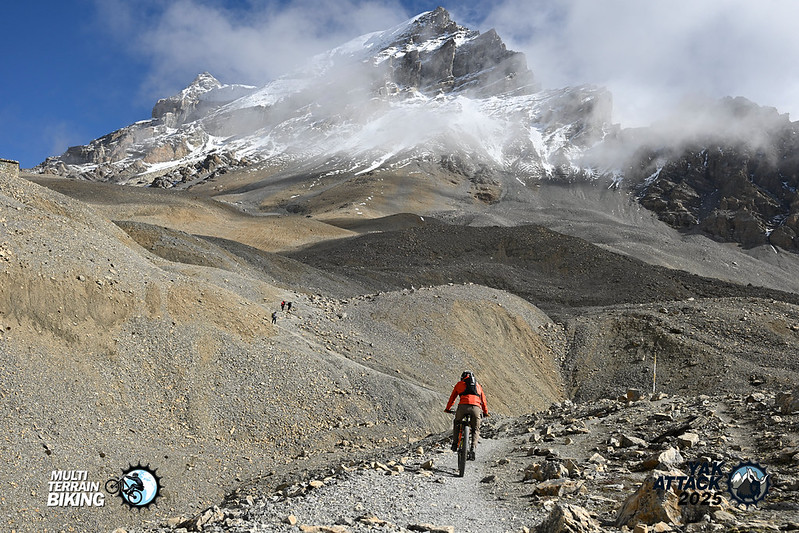
Upper Mustang is the route many riders picture when they imagine high Himalayan bikepacking. Its ochre cliffs, deep gorges, cave dwellings and walled settlements feel startlingly remote, while the riding has a distinctive high-desert character. This is a place for experienced riders who understand that altitude changes the rules.
The gradients are not always the steepest in Nepal, but the elevation, dry air, wind and rough tracks make every day more demanding. Good acclimatisation is essential, and a flexible schedule is wise. Conditions can be affected by wind, snow, road repairs and local access arrangements, so the strongest trips are designed with alternatives rather than a rigid point-to-point agenda.
Mustang has controlled-access areas and requirements can change. Permits, accommodation, transport logistics and local regulations should be confirmed well before travel. This is where local knowledge matters most: a route that looks straightforward online may be unsuitable for a loaded bike, temporarily inaccessible, or far better ridden in the opposite direction.
Manaslu and lesser-ridden Himalayan corridors
For riders drawn to a quieter, more expedition-like challenge, the approaches to Manaslu and other lesser-ridden Himalayan corridors offer serious potential. These are not casual routes. Expect longer gaps between services, more variable surfaces and days where carrying enough layers, food and water is as important as fitness.
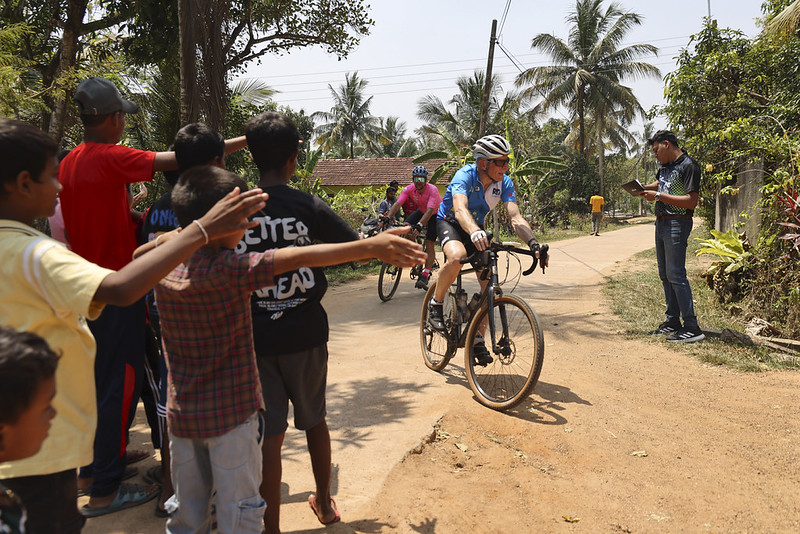
The attraction is the feeling of travelling through a working mountain landscape rather than following a well-worn cycling circuit. You may share the road with jeeps, porters, livestock and schoolchildren rather than other riders. That said, remoteness should not be romanticised. A guided or supported format brings real value here, particularly when weather, mechanical issues or route changes demand rapid decisions.
When to ride Nepal
Spring and autumn are the principal bikepacking seasons. March to May usually brings warmer temperatures, clear mornings and flowering hillsides, although haze can build at lower elevations and snow may linger on higher routes. October to November often provides crisp visibility and stable post-monsoon conditions, making it a favourite for major mountain itineraries.
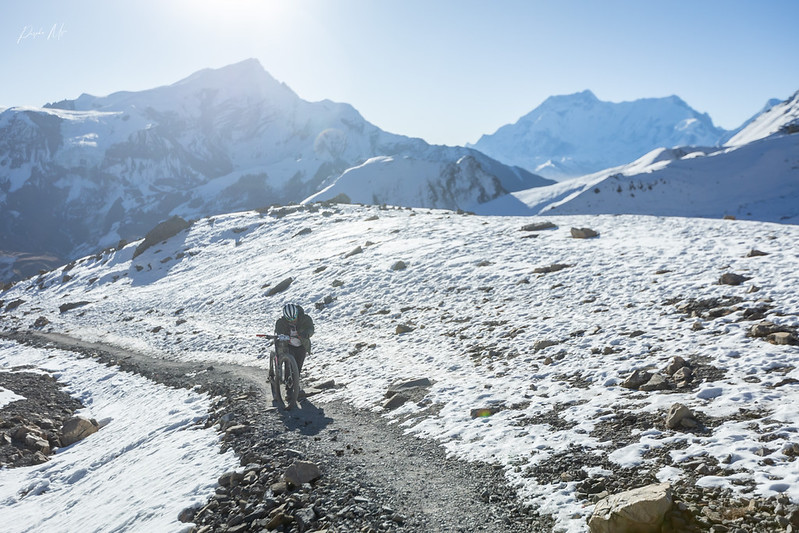
Winter can be superb in lower regions, with bright days and fewer visitors, but high passes and exposed routes may be limited by cold or snow. The monsoon, broadly from June into September, brings lush landscapes but also rain, leeches in some areas, muddy tracks and a greater risk of landslides. It can suit adventurous riders with flexible plans, but it is not the straightforward choice for a first Himalayan bikepacking holiday.
Build the route around reality, not just ambition
A memorable Nepal itinerary is usually more conservative than a rider’s first draft. The daily distance that feels modest at sea level can become substantial after 1,500 metres of climbing on rough ground. Build in time for acclimatisation, mechanical checks, weather delays and the small moments that make the journey worthwhile: a monastery visit, a long tea break, a conversation with lodge owners or a stop when the light hits the mountains properly.
Your bike choice matters. A hardtail mountain bike is the most versatile answer for many Nepal routes, especially with tubeless tyres, low gearing and room for a light frame bag. A gravel bike can be excellent on selected valley and mid-hill journeys, but only if you accept that some sections may be slow, rough or best bypassed. Full-suspension bikes add comfort on technical terrain, though they complicate luggage and can be less efficient on long road climbs.
Pack for changing temperatures rather than simply cold weather. High days can begin below freezing and end warm in the sun. A reliable waterproof layer, warm gloves, spare brake pads, a derailleur hanger, tyre repair equipment and a way to purify water are sensible essentials. Keep luggage compact. Nepal’s steep gradients make every unnecessary kilogram obvious.
Why local support changes the experience
Independent bikepacking is possible in Nepal, but self-sufficiency has limits when terrain, permits and transport are complex. Support is not about removing the adventure. It is about keeping the focus on the riding while someone with local knowledge handles the moving pieces: accommodation, food stops, luggage transfers, changing road conditions and evacuation planning if needed.
For a route such as Mustang or a high Annapurna crossing, expert planning can also make the journey feel more complete. Instead of spending precious riding time negotiating logistics, you can take quieter lines, stay in the right places and adjust the day when the mountains dictate a different plan. Multi Terrain Biking has spent more than 19 years doing precisely that across Nepal’s most rewarding cycling landscapes.
Choose a route that leaves enough room for the unexpected. In Nepal, the unplanned stop at a hillside teahouse or the decision to linger beneath a clear Himalayan skyline is often the part of the ride you remember most.