
You can ride from tea country switchbacks to palm-lined coast in a single trip, then finish the day with a proper curry and a warm sea breeze instead of a transfer back to a resort. That is the real appeal of a guided cycling tour Sri Lanka delivers so well – big variety, compact geography, and a riding culture that rewards curiosity as much as fitness.
For experienced cyclists looking beyond Europe’s usual summer circuits, Sri Lanka feels refreshingly different. Distances are manageable, the terrain changes fast, and the riding is tied closely to daily life. You are not pedalling through a curated backdrop. You are passing fruit stalls, temples, village tanks, tea estates and fishing towns, often within the same week. Done properly, it is deeply immersive. Done badly, it can become a hot, disjointed transfer-heavy trip with the best roads missed entirely. That is where guidance matters.
Why a guided cycling tour Sri Lanka works so well
Sri Lanka suits guided riding because the island packs an unusual amount into a relatively small footprint. You can build a route that starts with rolling cultural heartland roads, rises into cooler mountain terrain, then drops towards the south coast without ever feeling repetitive. For cyclists, that means one holiday can combine endurance days, scenic recovery spins and genuine cultural depth.
The guided format also removes the friction that tends to blunt long-haul bike travel. You are not landing tired and trying to negotiate transfers, traffic patterns, hotel bike storage or the day’s best food stop. Instead, the route is already refined, support is on hand, and the timing of each day is shaped around conditions. In a destination where heat, road choice and local knowledge make a real difference, that support is not just a luxury. It changes the quality of the ride.
There is also the simple fact that Sri Lanka rewards insider knowledge. Two roads can run almost parallel, yet one is busy and forgettable while the other is quiet, shaded and brilliant on a bike. The best riding is often found through experience rather than obvious map-planning.
What the riding actually feels like
Expect contrast. That is the defining characteristic.
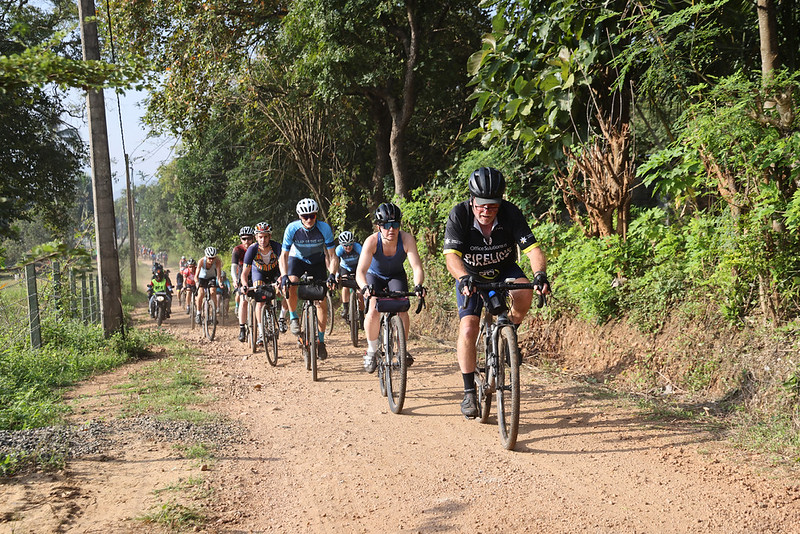
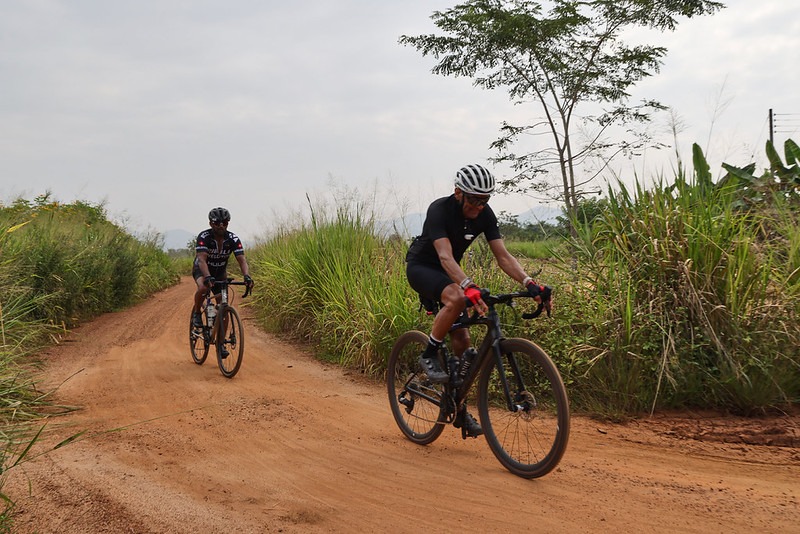
In the Cultural Triangle and central plains, the roads can be gently rolling, warm and rhythmical, ideal for settling into the trip. You ride through paddy fields, past ancient reservoirs and low-slung villages, with frequent glimpses of the island’s historical depth. These are not typically savage days in climbing terms, but they are engaging, especially when heat and humidity are factored in.
Move into the hill country and the tone changes. The roads tighten, gradients become more serious, and the air cools as tea estates begin to dominate the landscape. This is where many riders fall hardest for Sri Lanka. The climbs are long enough to feel earned, the descents are technical enough to stay interesting, and the scenery has a scale that photographs never quite capture.
Then there is the coast. Depending on the route, coastal riding can be a fine finale or a section to handle selectively. Some stretches are lively with traffic and better used for transitions. Others, especially when timed well and linked with quieter inland roads, bring that open-horizon feeling many riders want at the end of a big trip. A strong guided itinerary knows the difference.
The biggest advantage of going guided
The strongest reason to choose a guided cycling tour is not that Sri Lanka is impossible to ride independently. It is perfectly rideable. The reason is that guidance sharpens the experience at every level.
First, it improves route quality. Good operators know when to avoid a main road, when to start early to beat heat and buses, and where a backroad opens into a memorable section you would never have picked from a screen. That route intelligence is the difference between a decent trip and a genuinely standout one.
Second, it improves comfort and consistency. Quality support means proper vehicle backup, well-briefed local guides, hydration planning, mechanical help and hotels that suit cyclists rather than merely tolerate them. For riders investing in a premium long-haul holiday, that matters. You want the challenge to come from the terrain, not from preventable logistics.
Third, it deepens the destination. A well-run trip gives context to what you are riding through. You are not just ticking off kilometres. You begin to understand why one region feels different from another, how weather shapes the best season, why a tea-country climb rides the way it does, and where local food and hospitality fit into the rhythm of the day.
Who Sri Lanka suits best
Sri Lanka is broad enough to suit several rider types, but not every trip is right for every cyclist.
If you are a fit recreational road rider or gravel rider who wants a mix of challenge and comfort, the island is exceptionally strong. The days can be tailored, the scenery remains varied, and there is enough climbing to make the holiday feel athletic without demanding race-level form every day.
If you are performance-focused, Sri Lanka can still deliver, especially in the hill country where sustained climbing and heat management come into play. But the appeal is less about iconic alpine benchmark ascents and more about cumulative adventure, road texture and destination depth. Riders expecting a pure high-mountain numbers game may prefer Nepal. Riders wanting a richer balance of effort, scenery and travel experience often find Sri Lanka hits the sweet spot.
If you are newer to cycling holidays, it depends on expectations. A guided format can make the trip very accessible, but you still need to be comfortable spending several hours in the saddle in warm conditions. Support can shorten or adapt days, yet the holiday works best when riders arrive with a solid base rather than hoping to build one on the trip.
When to go and what to expect from conditions
Sri Lanka has year-round riding potential, but season and route design are closely linked. Weather patterns vary across the island, which is one reason experienced local planning is so valuable.
Broadly, the most popular cycling windows tend to favour drier conditions in the key riding regions, but even in good months you should expect some variability. Heat is often the bigger factor than rain. On flatter or lower-elevation days, hydration and pacing matter more than riders first assume. Start times are important, and the best trips respect that rather than trying to force late, exposed riding for the sake of a schedule.
In the hill country, temperatures are kinder, but climbing loads rise quickly. A smart itinerary balances the difficulty across the week so the strongest days land where the scenery and road quality justify them.
What a premium guided trip should include
Not all guided tours are equal, and Sri Lanka is a destination where quality shows.
You should expect airport transfers that actually work with bike logistics, a support vehicle with space and attentive staff, experienced local ride leaders, reliable mechanical backup, and accommodation chosen for recovery as much as location. Food planning matters too. Cyclists need more than a scenic lunch stop. They need consistent fuelling, clean hydration and enough flexibility for different riding paces.
The best operators also understand flow. They know when to include a point-to-point ride, when a scenic transfer improves the overall journey, and when a tougher stage deserves a stronger hotel at the finish. Premium does not mean removing the adventure. It means smoothing the rough edges that do not add value.
That is where specialist experience counts. Companies with deep on-the-ground knowledge, such as Multi Terrain Biking, tend to build journeys that feel cleaner, more immersive and less compromised because they know exactly which details matter in Sri Lanka.
Guided cycling tour Sri Lanka or self-guided?
This is the right question, and the honest answer is that it depends on how you travel.
A self-guided trip can suit confident riders who enjoy independence, are comfortable with navigation and mechanicals, and do not mind solving the occasional logistical problem on the fly. Sri Lanka’s compact size makes that possible, and for some riders the freedom is part of the point.
But if this is a one-off long-haul trip, or if you want the strongest routes with the least wasted energy, guided usually wins. It gives you better road selection, faster problem-solving, and a more polished overall holiday. It also lets you stay present. Instead of thinking about the next turn, the next refill or whether the hotel understands late check-in with bike boxes, you can focus on the ride itself.
For many riders, that is worth the premium.
Is it worth the trip from the UK or Europe?
Yes, if you want a cycling holiday that feels genuinely different from your standard options.
Sri Lanka is not a replacement for Mallorca, Girona or the Alps. It offers something else – a richer sense of travel, stronger cultural contrast, and a more adventurous rhythm. You come for the riding, but the ride is only part of the story. The roads carry you through tea country, old kingdoms, jungle-fringed plains and coastal towns, all within one compact island. Few destinations deliver that range without demanding a month of travel.
The best guided trips make that variety feel effortless. They keep the riding sharp, the logistics stress-free and the experience grounded in the island rather than floating above it. If that balance appeals, Sri Lanka is not just worth doing once. It is the kind of place riders start recommending before they have even unpacked.
Choose the route carefully, go with operators who know the roads in detail, and give yourself enough time to ride beyond the obvious. Sri Lanka rewards cyclists who travel with intent.