Land in Colombo late, sleep near the coast, and by the next morning you can be riding between paddy fields, coconut groves and Buddhist temples with hardly a traffic light in sight. That is the appeal of a well-built Sri Lanka cycling trip itinerary – the country gives you huge variety in a compact footprint, but only if the route is paced properly. Get that right and you can move from the Cultural Triangle to the hill country and finish on the south coast without spending half your holiday in a vehicle.
For most riders travelling from the UK or Europe, 10 days is the sweet spot. It is long enough to feel like a proper point-to-point journey, short enough to fit around work, and realistic for a guided or self-guided holiday with a sensible amount of recovery. You can always add beach time at the end, but the riding itself needs structure. Sri Lanka is not especially difficult because of altitude, yet the combination of heat, humidity and repeated climbing can catch out strong cyclists who arrive expecting easy tropical miles.
A Sri Lanka cycling trip itinerary that actually flows
The best routes in Sri Lanka are rarely about ticking off the maximum number of famous sights. They are about rhythm. Flat and rolling roads through the dry zone let you settle in early, then the terrain gradually hardens as you approach Kandy and the tea country. From there, the riding becomes more dramatic, with long climbs, cooler air and faster descents, before the route opens again towards the southern plains and coast.
That shape works far better than forcing big mountain days straight after arrival. Jet lag, climate and road conditions all matter here. An expertly crafted itinerary gives you time to adapt, keeps transfers under control and makes sure the hardest riding comes when your legs are ready.
Day 1: Arrival in Negombo
Negombo is the practical first stop for most international arrivals. It is close enough to the airport to keep day one stress-free, and it gives you a soft landing before the ride begins. If your bike has travelled in a box, this is the place to rebuild it, spin the legs and let the humidity sink in.
A short shakedown ride is worthwhile, but this is not a day to prove fitness. Good mechanics, a proper dinner and sleep are worth more than extra kilometres.
Day 2: Negombo to Sigiriya region
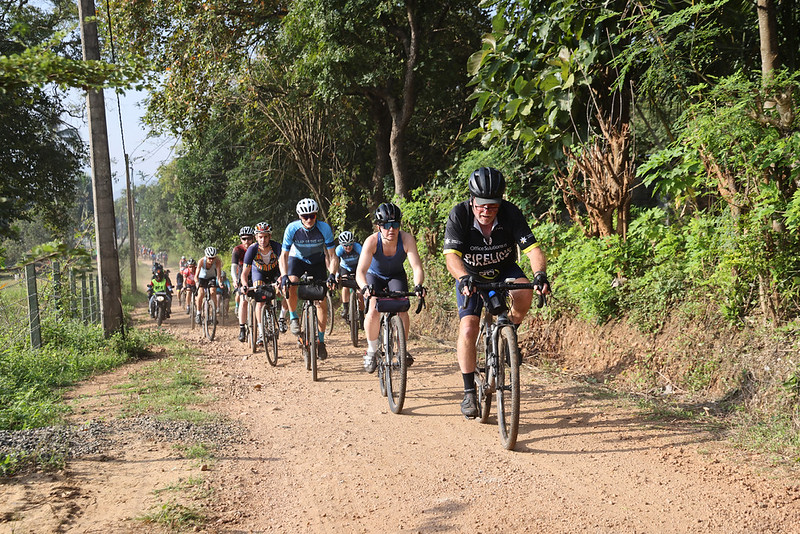
This is usually a transfer-and-ride day rather than a pure road stage. Starting closer to the Cultural Triangle saves a long, traffic-heavy exit from the west coast and gets you quickly into the part of the island that feels made for cycling. Expect warm, rolling roads, small villages and your first proper taste of rural Sri Lanka.
A ride of 40 to 60 kilometres works well here. It is enough to settle into the trip without overreaching. The Sigiriya area also gives you immediate access to standout landscapes, with giant rock outcrops rising from otherwise gentle terrain.
Day 3: Sigiriya, Polonnaruwa and back roads of the dry zone
This is where the trip starts to feel special. The roads around Sigiriya and Polonnaruwa suit cyclists brilliantly – broad views, quiet sections, wildlife on the roadside and a sense that the journey is unfolding at exactly the right speed. Distances can vary, but 70 to 90 kilometres is very manageable for a fit recreational rider.
The terrain is not severe, yet the heat can be. Early starts are a smart move, especially outside the coolest months. Hydration, electrolytes and a support plan matter more here than gearing.
Day 4: Sigiriya region to Kandy outskirts
This is a transition day, and it should be treated as one. The route begins to tilt upwards, the roads get busier in places, and you start feeling the shift from dry plains to central highlands. Depending on the exact line taken, this stage can include steady climbing rather than one major ascent.
It is tempting to push all the way into central Kandy, but that can turn a good day into a draining one. Staying on the outskirts or in a quieter hill-country property nearby often makes for a much stronger overall trip. The payoff is better rest and a cleaner start for the climbing to come.
How to pace a Sri Lanka cycling trip itinerary in the hills
The hill country is where Sri Lanka earns its reputation with cyclists. It is also where many itineraries go wrong. Riders see modest elevation totals on paper and underestimate what tropical climbing feels like over consecutive days. Roads are often good, gradients are usually rideable, but the fatigue builds differently here.
Day 5: Kandy outskirts to Hatton or Nuwara Eliya approach
This is the first properly demanding day. Tea plantations replace rice fields, the air cools slightly, and the road begins to contour and climb in a more sustained way. Distances of 60 to 80 kilometres can feel plenty, especially if you are gaining over 1,200 metres.
This is a classic Sri Lanka trade-off. If you want a more luxurious, immersive ride, you keep the distance sensible and finish somewhere atmospheric in the tea country. If you want a harder sporting challenge, you can extend the day and gain more height. Neither is wrong, but mixing those two approaches halfway through the trip usually leaves someone disappointed.
Day 6: Tea country riding
Do not rush this section. A loop or shorter point-to-point ride through Hatton, Dickoya or towards Nuwara Eliya gives you some of the island’s finest road cycling: winding climbs, plantation roads, cool mist in the morning and sweeping descents. It is also a strong day to include a lighter distance if the group contains mixed abilities.
This is where a premium cycling holiday should feel polished. Good vehicle support, flexible route options and the right hotel matter because weather can change quickly in the hills. Sunshine at breakfast can become rain by lunch.
Day 7: Nuwara Eliya area to Ella or Haputale
This is one of the most memorable days in the country. The road undulates at altitude before dropping towards the dramatic escarpments around Haputale and Ella. Views open out across valleys, tea estates and ridgelines, and the riding becomes cinematic in the best sense.
Traffic around the busiest town centres can be a factor, so route timing matters. An early departure helps, and finishing just outside the most crowded areas often improves the overall experience without losing the scenery.
Day 8: Ella descent towards the south
After several days of climbing and contouring, the run off the highlands feels earned. This stage can be long and exhilarating, with a major net descent balanced by heat building again as you lose altitude. The landscape shifts fast – tea country gives way to forest, then lowland roads and agricultural settlements.
This is a day when support logistics really pay off. Strong riders may want to ride it almost in full. Others may prefer to trim a busier or less rewarding section with a transfer. A good itinerary allows for both without breaking the journey.
What makes this Sri Lanka cycling trip itinerary work
The strength of this route is not simply that it connects famous regions. It respects how cyclists actually travel. It starts with accessible terrain, builds towards the hills, gives the high country enough room to breathe and then releases you towards the coast rather than forcing a backtrack.
Day 9: Southern plains to the coast
Once you are clear of the hill-country exit roads, the final run towards the south coast can be fast, warm and satisfying. Expect rolling to flat terrain, changing road surfaces and more signs of the ocean as the day unfolds. Depending on your finish point, this can be a celebratory stage rather than a brutal one.
Galle, Tangalle and the quieter stretches in between all work, but they create different endings. Galle offers atmosphere and easy onward logistics. Tangalle feels more remote and more exhale-at-the-end. Choose based on the kind of finish you want, not just what looks best on a map.
Day 10: Coastal spin or departure
A final easy ride is ideal if your flight timing allows it. The south coast is not the place for one last heroic effort. It is where you roll out, loosen the legs and absorb the fact that in little more than a week you have crossed a startling amount of terrain.
If you prefer, make this a beach day and keep the bike packed. There is no medal for squeezing in junk kilometres before a long-haul flight.
Practical planning before you book
The best season depends on which side of the island you prioritise, but for a classic cross-country route, December to April generally gives the cleanest window. Outside that, riding is still very possible, though rainfall patterns can affect comfort and road conditions. Sri Lanka is a year-round cycling destination, but not every route works equally well every month.
Road bikes are ideal for most of this itinerary if you are comfortable on variable surfaces and occasional rough patches. An endurance road bike with sensible tyre clearance is close to perfect. Gravel bikes also work brilliantly if your route includes more back-road exploration. Pure climbing gears are worth having, because the gradients are rarely savage but can grind if the day is hot.
Support style changes the experience. A self-guided holiday suits confident riders who like independence and can manage heat, navigation and the occasional plan change. A guided or fully supported trip is a better fit if you want the ride to feel deeply immersive and stress-free, especially in a country where local route knowledge makes a real difference. That is exactly where specialist operators such as Multi Terrain Biking earn their keep.
Sri Lanka rewards riders who leave a little margin in the plan. Not because the country is difficult to love, but because it is too rich to race past. Build the journey well, and every day feels earned rather than rushed.