The choice often comes down to one moment. You are standing in Kathmandu with your bike box somewhere behind customs, or waking to birdsong in Sri Lanka before a ride through tea country, and you ask yourself a simple question: do I want total freedom today, or do I want every detail expertly handled? That is really what guided versus self guided cycling holidays comes down to.
Both formats can deliver a superb riding experience. Both can put you on quiet backroads, through remote villages and into landscapes that stay with you long after the flight home. But they suit different riders, different trip goals and different levels of tolerance for uncertainty. In destinations such as Nepal and Sri Lanka, where the rewards are huge and the logistics can be more complex than in Europe, the difference matters.
Guided versus self guided cycling holidays – what changes on the ground?
A guided cycling holiday is built around support. You ride with a knowledgeable leader or local team who know the route, manage timings, handle accommodation, solve mechanical issues, adapt plans when weather shifts and help you connect with the place beyond the road itself. You still do the riding, the climbing and the hard yards, but the trip is framed for you.
A self guided holiday gives you the route, the logistics backbone and the independence to ride it in your own way. Usually that means GPX files, booked hotels, luggage transfers and pre-trip briefing, but without a guide riding alongside you. You set the rhythm. Stop when you like, push on when you feel strong and take ownership of the day.
On paper, the difference sounds simple. In reality, it shapes everything from how much kit you carry to how much mental energy you spend each day.
When a guided trip is the better choice
If you are travelling a long way for a once-in-a-lifetime ride, guided support often pays for itself in quality of experience. That is especially true in places where road conditions, trail access, altitude, traffic patterns or cultural nuances are not instantly obvious to visiting riders.
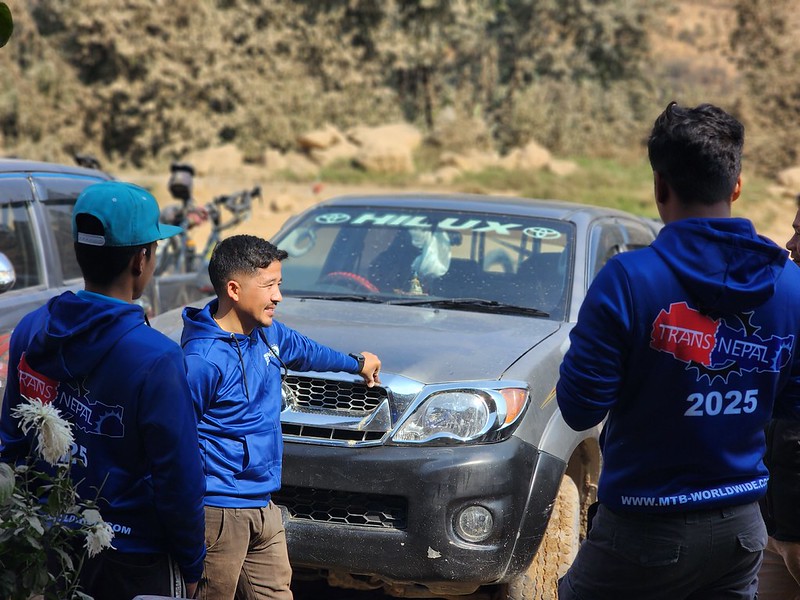
In Nepal, for example, a guide is not just there to point left or right. They understand how a route rides after monsoon damage, which climbs become genuinely testing at altitude, where vehicle support can meet the group, and when a simple tea stop turns into the perfect window into local life. On a serious mountain route, that level of judgement can make the difference between a great day and an exhausting one.
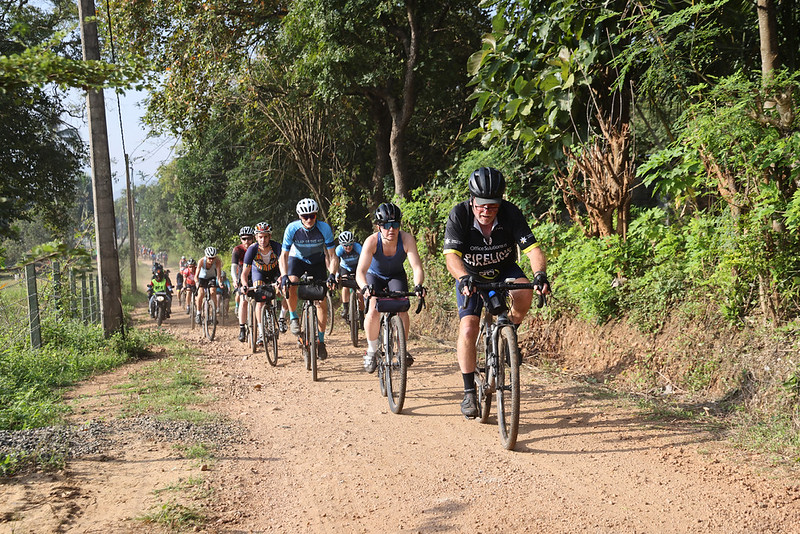
The same applies in Sri Lanka, though in a different way. A guided trip can smooth out the contrasts of the island brilliantly – humid lowlands, punchy inland climbs, wildlife zones, cultural sites and coastal riding all packed into one holiday. A good guide reads the day, keeps the pace comfortable, adjusts around heat and traffic, and lets you focus on the ride rather than the map.
Guided holidays also suit riders who want camaraderie. Some people travel for landscapes; others travel for the shared stories that build over breakfast, climb by climb, beer by beer. A strong group dynamic adds real value, particularly on more challenging itineraries.
Then there is simple efficiency. If your holiday window is short, guided travel helps you make the most of it. There is less faff, less decision fatigue and far less chance of wasting a day on the wrong road or a poor overnight choice.
Why self guided can be exactly right
There is a certain satisfaction in riding under your own steam with no convoy behind you and no set group pace to match. For many experienced cyclists, that freedom is the whole point.
Self guided holidays work well for riders who are comfortable navigating, broadly self-sufficient and happy making small decisions throughout the day. You might want to linger at a temple, stop for an extra coffee, add an out-and-back climb or take a long lunch because the sea is too inviting to rush past. On a self guided trip, that flexibility is built in.
They are also ideal for couples or friends with a shared rhythm. If you already know how you ride together, a self guided format can feel more intimate and more personal than joining a group. You still get the reassurance of a well-designed route and pre-arranged logistics, but the experience belongs to you.
In Sri Lanka particularly, self guided riding can be excellent for those who enjoy steady days, comfortable hotels and a good balance of cycling and cultural exploration. The island lends itself well to route-based travel, and with the right planning the logistics can be very smooth.
That said, self guided does not mean unsupported in a meaningful sense if it is properly designed. The best versions still include route curation, local advice, accommodation planning and reliable backup if something goes wrong.
Cost, comfort and what value really means
One of the first assumptions riders make is that self guided always means cheaper and guided always means expensive. Sometimes that is true. Often it is too simplistic.
A guided holiday generally costs more because you are paying for staff, vehicle support, local expertise and active trip management. But that extra cost can deliver better riding, stronger safety cover, more ambitious routes and a noticeably higher level of comfort. In a destination where transport, language, spares, weather and route choice all carry some complexity, that can be excellent value.
Self guided trips may reduce the headline price, but they still require expert planning to be good. Cheap route files and a list of hotels are not the same as a properly crafted cycling holiday. If the route is poor, the transfers awkward or the accommodation badly placed, the lower cost quickly loses its appeal.
Value is not just about pounds spent. It is about whether the format matches the kind of holiday you want.
The terrain question matters more than most riders expect
In Nepal
Nepal tends to favour guided riding when the terrain becomes remote, technical or high altitude. Big elevation, shifting conditions and limited infrastructure in some areas reward local knowledge. If your ambition is to ride dramatic mountain routes, link gravel and tarmac intelligently, or tackle something with genuine expedition character, guided support gives you more margin and more access.
For lower-altitude valley rides or selected bespoke routes, self guided can still work for riders with strong travel confidence. But Nepal is rarely a place where winging it is the smart option.
In Sri Lanka
Sri Lanka is often more forgiving for self guided travel, particularly on curated road and gravel itineraries that move between established hotels and well-understood riding zones. Distances can be manageable, the hospitality strong and the cultural rewards packed closely together.
Even so, a guided format still shines if you want to cover varied terrain efficiently, ride harder, or combine remote inland sectors with smooth logistics. Heat management, route timing and local traffic knowledge all matter more than they might appear from home.
Which rider are you really?
Guided versus self guided cycling holidays by rider type
If you are performance-driven, ambitious about terrain and keen to ride the very best roads or trails without second-guessing the route, guided usually wins. You conserve mental bandwidth for the effort itself.
If you are an experienced traveller who enjoys autonomy as much as the riding, self guided may be the more satisfying choice. The route becomes part of the adventure rather than something delivered to you.
If this is your first cycling holiday outside Europe, guided support offers reassurance without diluting the experience. If you have already done a few organised trips and now want more space, self guided can feel like a natural next step.
And if your priority is not raw riding but a polished blend of cycling, comfort and cultural immersion, either option can work. The difference is whether you prefer to shape the days yourself or let an expert team do it for you.
The best trips are honest about trade-offs
No format is automatically superior. Guided trips can be brilliantly stress-free, but they come with structure. Self guided trips offer freedom, but freedom includes responsibility when the weather turns, the road surface deteriorates or the café stop you expected simply is not there.
For many riders, the answer is not ideological. It is practical. On one trip, they want full support to tackle high mountains or a major event. On another, they want a quieter week of independent riding through a new country with luggage moved ahead each day.
That is why the strongest cycling holidays are designed around the destination first and the rider second. In Nepal and Sri Lanka, that balance matters. Get it right, and the trip feels effortless in the best possible sense, whether or not a guide is rolling beside you.
If you are weighing up the two, be honest about what you want your evenings to feel like. Proud because you figured it all out yourself, or relaxed because every detail is already in hand. Either can be exactly right. The smart choice is the one that lets you enjoy the ride at its absolute best.