The choice is rarely between a good ride and a bad one. In Sri Lanka, it is a choice between two entirely different kinds of memorable day in the saddle. Sri Lanka coast versus highlands means salt air or cool tea-country mist, rolling kilometres or sustained climbing, seafood suppers or a hot cup of Ceylon tea after a serious ascent. The best answer depends on how you want your cycling holiday to feel.
For riders who want a journey with real contrast, the strongest itinerary often combines both. Yet understanding what each region delivers will help you choose the right route, riding season and level of challenge before your wheels touch the tarmac.
Sri Lanka Coast Versus Highlands: The Riding Difference
Sri Lanka’s coastline is built for rhythm. Much of the riding follows quieter back roads running behind beaches, lagoons, coconut groves and fishing villages. The terrain is generally flatter, though not entirely flat: short rises, bridges and coastal headwinds can all add up over a long day. It is a superb setting for riders who enjoy covering ground, settling into a steady pace and stopping often enough to absorb the country around them.
The central highlands are a different proposition. Roads thread through jungle-clad slopes, tea estates and mountain towns, climbing from the heat of the lowlands into cooler air. Gradients can be sustained, the road often narrows, and the elevation gain becomes a defining part of the day. This is where strong road riders, gravel enthusiasts and mountain bikers looking for a proper challenge find their reward.
Neither is inherently better. The coast is not simply the easy option, and the highlands are not a sufferfest by default. A well-crafted route can make the coast a fast, endurance-focused traverse or turn the hills into a supported, achievable ascent with plenty of recovery built in.
The Coast: Long Days, Tropical Energy and Ocean Views
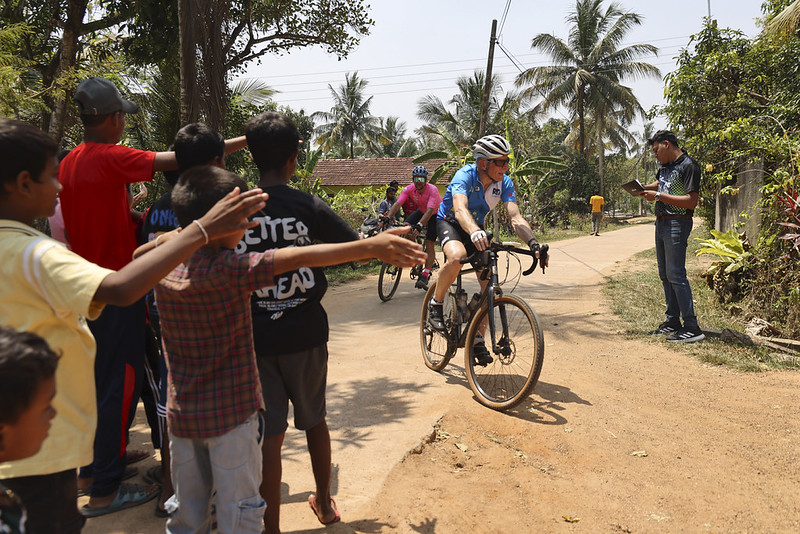
Coastal Sri Lanka rewards riders who like their cycling immersive rather than isolated. You pass through working villages where schoolchildren wave from roadside shops, tuk-tuks hum past, and the smell of woodsmoke gives way to the Indian Ocean. The best roads tend to sit away from the busiest resort strips, linking local lanes, paddy fields and small communities where the pace feels distinctly Sri Lankan.
Around the south coast, the scenery has a cinematic quality: palm-lined beaches, stilt fishermen, colonial-era fort walls and deep-blue water appearing at the end of a lane. Further east, the landscape can feel more spacious and remote, with long sandy bays, wildlife-rich wetlands and a quieter road network. Each has its own character, but both lend themselves to point-to-point riding that feels like genuine travel rather than a series of loops.
For gravel riders, the coast also has hidden range. Sandy tracks, plantation lanes and rougher links can be incorporated where conditions allow, although tyre choice matters. A wider, durable tyre offers more confidence on broken surfaces and after tropical rain. Road riders will appreciate a bike with sensible gearing too, because even coastal days can include punchy ramps and uneven sections.
The practical appeal is considerable. Lower elevations mean warmer temperatures, so an early start is often the smart move. You can be riding through soft morning light, finish before the full force of the afternoon heat, and still have time for a swim, a visit to Galle Fort or a cold drink overlooking the sea. For couples or groups with mixed ambitions, this balance of riding and downtime is hard to beat.
The Highlands: Tea Country With Serious Vertical
The highlands are where Sri Lanka reveals its climbing pedigree. The transition from lowland tropical heat into the mountains is one of the island’s great cycling experiences. As the road rises, palms gradually give way to eucalyptus, tea bushes and cloud forest. The air cools. The views widen. Your effort becomes more deliberate.
Routes around Kandy, Hatton, Nuwara Eliya and Ella can offer everything from flowing hill roads to long, testing climbs. There are no Alpine switchback spectacles on every corner, but that is not the point. The attraction is the texture of the terrain: climbing through active tea estates, passing Hindu kovils and Buddhist shrines, and cresting ridges with valleys falling away beneath you.
For fit recreational riders, the highlands deliver satisfying days without needing race-level fitness, provided the route is intelligently paced. A supported itinerary can divide a big ascent into manageable sections, carry spare layers and arrange vehicle support when fatigue, weather or road conditions call for it. Stronger riders can seek bigger elevation totals, linking climbs over several days and using the rolling terrain to build a serious endurance challenge.
Weather is the crucial variable. Highland mornings can be crisp, while cloud and rain may arrive later in the day. Descents can become cool and slippery, particularly through shaded forest. A lightweight waterproof, arm warmers and a packable gilet are not overkill here. Neither are good brakes and the confidence to descend patiently on unfamiliar roads.
The reward for that preparation is immense. A tea-country ride has a sense of arrival that flatter terrain cannot always match. You earn the panorama, the cool air and the evening in a characterful hill-country hotel.
Culture and Recovery Look Different in Each Region
On the coast, recovery is outward-looking. Think barefoot walks on the sand, grilled fish, fresh fruit and sunset over the water. Coastal hotels range from elegant boutique properties to relaxed beach stays, and the atmosphere suits riders who want the holiday to continue after the day’s kilometres are done.
In the highlands, recovery feels more cocooned. The evenings are cooler, the landscape quieter and the accommodation often more intimate, from heritage bungalows to tea-estate retreats. It is the place for a warm meal, a proper night’s sleep and the satisfying heaviness in the legs that follows a day of climbing.
Culturally, both regions are rich, but the encounters differ. Coastal routes bring fishing communities, old trading ports and the energy of roadside life. Highland routes move through tea-growing communities, temple towns and landscapes shaped by the island’s colonial railway and plantation history. Riders looking for a deeper sense of place should not treat either setting as scenery between hotels. The roadside moments are often what stay with you.
When to Ride Each Part of Sri Lanka
Sri Lanka’s weather patterns are regional, so broad statements about a single ‘best time’ can mislead. The south and west coast are generally at their driest from roughly December to April, making this a popular period for coastal cycling. The east coast often comes into its own from around May to September.
The central highlands can be ridden across a wider portion of the year, but conditions are less predictable due to altitude and local rainfall. Expect the possibility of rain whenever you travel, especially on mountain routes. It is part of the experience, not a reason to avoid the region, as long as the itinerary includes flexibility and the right kit.
For a coast-to-highlands journey, route direction also matters. Starting near sea level and climbing inland gives the trip a natural narrative, but it demands respect for heat and accumulated ascent. Beginning in the hills can make logistical sense for riders who want their toughest terrain tackled while legs are fresh, before rolling towards the coast for a more relaxed finish.
How to Choose Your Sri Lanka Cycling Holiday
Choose the coast if you want long, sociable days, tropical warmth and a ride that blends naturally with beach time. It is ideal for riders newer to multi-day cycling, partners with varied interests, and anyone who values a steadier physical challenge without sacrificing adventure.
Choose the highlands if climbing is central to your idea of a great day on the bike. You should be comfortable with changing weather, prepared for meaningful elevation and excited by the prospect of earning every view. The reward is a more muscular, mountain-led experience with remarkable cultural depth.
Choose both if you want Sri Lanka at its most complete. Few destinations allow you to ride from surf-fringed roads into misty tea country within one compact island. This is where expert route planning matters: the right transfers, carefully chosen stages and local support turn a potentially complicated trip into a deeply immersive, stress-free cycling journey.
Multi Terrain Biking designs Sri Lanka riding around exactly this principle. The aim is not to force every rider into the same route, but to match the terrain to the experience they came for, whether that means ocean-road momentum, highland climbing or a carefully balanced combination.
Bring a bike you trust, pack for heat and rain, and be honest about whether your holiday is fuelled by the pull of the horizon or the satisfaction of a summit. Sri Lanka has room for both instincts, often on the very same journey.