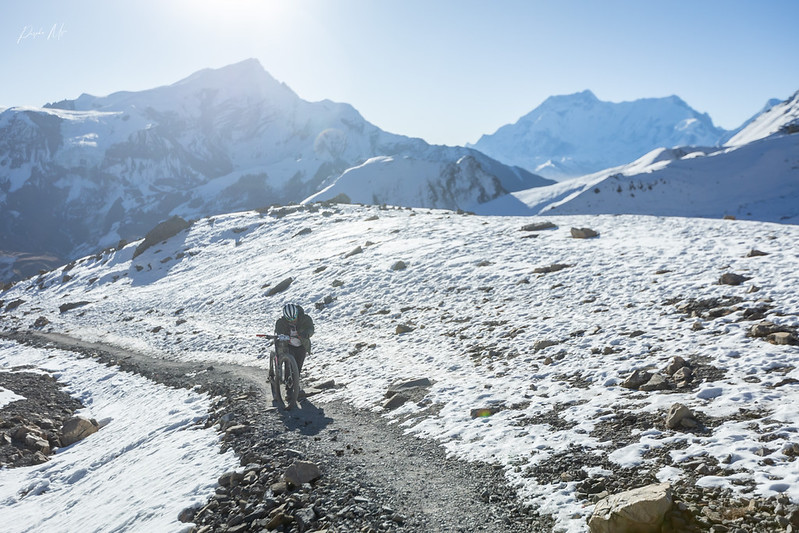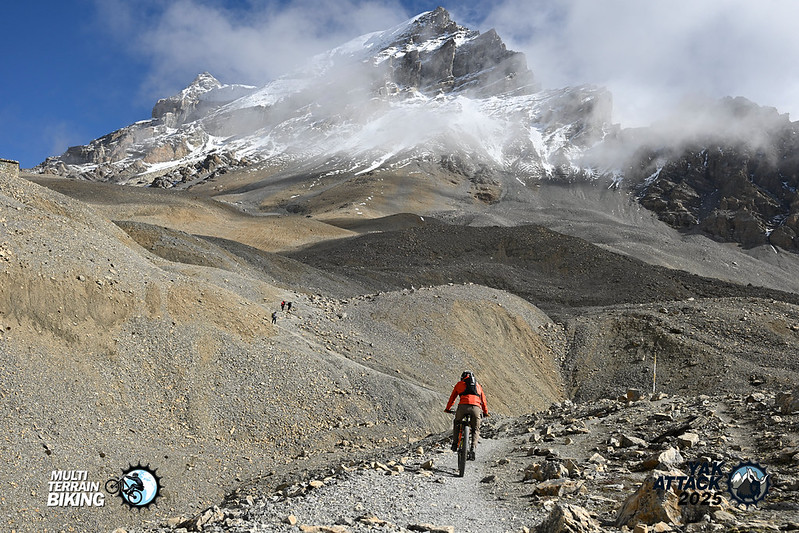

A big day in the Himalaya rarely announces itself with one brutal climb. It arrives in layers: a long jeep track out of a valley town, loose switchbacks in the afternoon heat, thin air above the tree line, then a rocky descent demanding concentration when your legs are already empty. To train for Himalayan cycling, prepare for that accumulation. You are not simply building fitness for a hill climb; you are preparing to ride strongly, safely and with enough reserve to enjoy one of the world’s great mountain landscapes.
For riders heading to Nepal, the strongest preparation combines endurance, climbing durability, technical confidence, intelligent fuelling and a realistic approach to altitude. The exact balance depends on your trip. A supported gravel journey with quality lodges asks something different of you than Yak Attack’s high-altitude race format, but both reward a body that can keep working when the terrain refuses to become predictable.
What Himalayan cycling asks of your body
Himalayan routes are defined by variation. A day may mix tarmac, broken road, hardpack, sand, river crossings and singletrack, often with substantial elevation gain and a wide swing in temperature. The gradient is only part of the story. Rough surfaces make every kilometre more expensive, while long descents load your hands, shoulders, core and braking muscles.
Altitude changes the equation again. Above roughly 2,500 metres, many riders notice that familiar efforts feel harder. At higher elevations, recovery slows and high-intensity power is reduced. You cannot fully replicate this at sea level, and trying to arrive already exhausted is a poor substitute for acclimatisation. What you can do is arrive with a broad aerobic base, sensible pacing habits and the patience to let your body adjust once you are in the mountains.
The aim is not to become a specialist racer unless your event demands it. It is to be the rider who can climb steadily, descend with composure, eat and drink consistently, and wake up ready for another extraordinary day.
Build the engine before chasing steep climbs
For most riders, the best place to start is steady aerobic volume. Easy-to-moderate riding builds the capacity to use fuel efficiently and recover between hard efforts. It also conditions your contact points for consecutive days in the saddle, which matters as much on a 10-day Nepal journey as it does during a demanding multi-stage event.
If you have four to six months, begin by adding one longer ride each week and increase total time gradually. Keep most of that riding conversational. A heart-rate monitor or power meter can help, but perceived effort is enough: you should be able to speak in complete sentences without feeling as though you are holding a meeting on a summit ridge.
As the trip approaches, include occasional back-to-back long rides. Saturday might be four hours with sustained climbing, followed by three easier but still purposeful hours on Sunday. These weekends reveal practical weaknesses early: saddle comfort, hand numbness, poor pacing, unsuitable kit and a nutrition plan that works for two hours but not six.
Riders with limited time should prioritise consistency over heroic sessions. Three focused rides a week, plus strength work and a long weekend outing, will take you much further than an erratic block of punishment followed by missed weeks. A coach can be valuable for performance-focused riders, but the underlying principle remains simple: build gradually enough that training leaves you stronger, not perpetually depleted.
Add sustained climbing and repeatable efforts
Himalayan climbs are often long, but they are not always smooth or evenly graded. Train for sustained work by riding local climbs at a controlled tempo, or use an indoor trainer when your terrain is flat. Begin with efforts of 10 to 15 minutes below all-out intensity, recover, then repeat. Over several weeks, progress towards longer efforts of 20 to 40 minutes.
Shorter, harder intervals still have a place. They raise your ability to deal with steep ramps, rough pitches and sudden changes in gradient. Use them sparingly alongside your endurance work – one demanding interval session each week is plenty for many holiday riders. If your legs are not recovering, reduce intensity before reducing all easy riding.
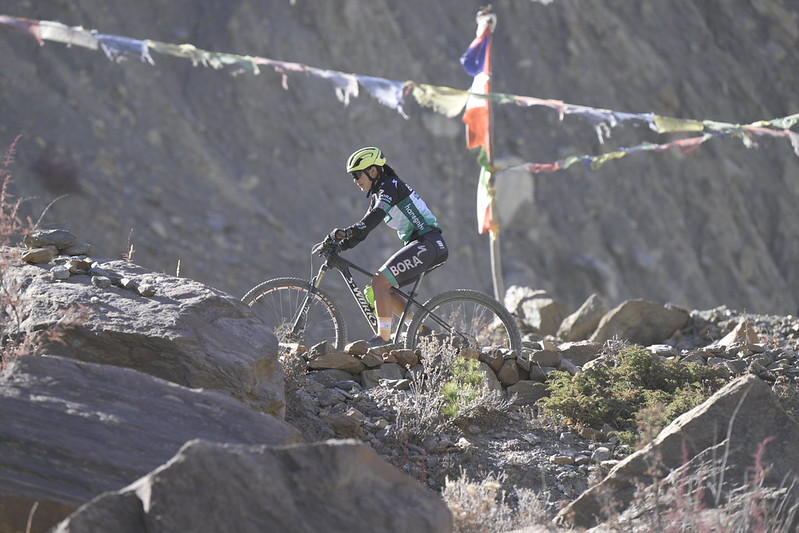
Avoid the temptation to train every climb at maximum effort. In Nepal, the rider who keeps a sustainable rhythm is usually the rider with enough energy left to look up, take in the prayer flags and enjoy the descent.
Train the bike handling, not just the fitness
A powerful rider can lose confidence quickly on loose stone, washboard tracks or exposed descents. Technical preparation is not about chasing spectacular jumps. It is about making sound choices when tired: staying relaxed on the bike, braking before corners, looking through turns and selecting a line without panicking.
Spend time on the surfaces closest to your expected route. Gravel riders should seek loose climbs, corrugated tracks and long descents. Mountain bikers should practise steep, rocky terrain, tight turns and riding with a loaded hydration pack. If local trails are limited, skills coaching is a worthwhile investment. A few hours spent improving braking, body position and cornering can transform your enjoyment far more than another hard turbo session.
Descending deserves its own conditioning. Long mountain drops place continuous demand on your forearms, shoulders and hands. Practise riding descents with light hands, bent elbows and a stable lower body. Check your brake setup well before travel, and learn what lever reach and bite point feel comfortable after several hours riding. Equipment should support confidence, not become another problem to solve halfway down a pass.
Build strength for rough ground and long days
Cycling-specific strength is less about chasing a huge lift and more about resilience. Two short sessions each week through the preparation phase can improve force production, balance and durability. Prioritise squats or split squats, hip hinges, step-ups, calf raises, pulling movements and anti-rotation core work. Controlled form matters more than loading the bar aggressively.
Single-leg work is especially useful. It exposes side-to-side differences and mirrors the stability needed when pedalling over uneven ground or catching the bike on a loose descent. Add mobility for ankles, hips and upper back, particularly if you spend long hours at a desk. You do not need to become a gymnast; you need enough movement to stay comfortable and controlled on the bike.
In the final two weeks before departure, reduce strength volume. Keep a little mobility and light activation, but arrive with fresh legs rather than the soreness of a late gym breakthrough.
Practise fuelling as seriously as training
Under-fuelling is one of the quickest ways to turn a great route into a long day. At altitude, appetite can be less reliable, while cold, wind and dry air increase the need to drink. Build the habit at home: eat before hunger becomes urgent and drink before thirst feels obvious.
On longer rides, practise taking in regular carbohydrate from foods you genuinely enjoy and tolerate. There is no universal formula, but many riders perform well with frequent small portions rather than occasional large stops. Test a mix of drink, snacks and real food. Himalayan journeys often include memorable local meals, yet riding days can be long enough that you should know what works between breakfast and lunch.
Recovery is equally practical. Eat a proper meal after demanding rides, include protein, replace fluids and protect sleep. The athlete who treats recovery as optional rarely gets the benefit of their hardest training.
Prepare for altitude with humility
Fitness helps at altitude, but it does not make anyone immune to altitude illness. The most effective strategy is a sensible itinerary with staged ascent, rest where needed and experienced local support. Once in Nepal, resist racing the first climb because you feel fresh. Ride at an effort you can maintain, drink regularly and tell your guide early if you develop headache, nausea, unusual fatigue, dizziness or poor sleep.
Never try to push through worsening symptoms to protect a schedule. Descent is the key response when symptoms are severe or progressing. A professionally organised trip gives you route knowledge, vehicle support and clear decision-making when mountain conditions change, but every rider still has a responsibility to listen to their body.
For high-altitude events, arrive with time to acclimatise if the schedule allows. That time is not a luxury add-on; it is part of your preparation.
Make your final month specific
Four weeks out, shift from general fitness towards the demands of the trip. Ride the bike you will use where possible, wear your chosen shoes and shorts, and test luggage, gloves, eyewear and layers in poor weather. A perfect training plan means little if your jacket leaks, your saddle bag rubs or your hands cannot operate your brakes in cold conditions.
In the final seven to 10 days, taper. Reduce overall volume while keeping a little intensity so your legs retain their spark. Sleep well, avoid last-minute equipment experiments and arrive with the confidence that comes from preparation rather than bravado.
Multi Terrain Biking riders benefit from expertly crafted routes and experienced support on the ground, but the best journeys begin before the flight. Build the engine, respect the mountains and leave enough space in every day to absorb where you are. The Himalaya will supply the challenge; your training should ensure you have the energy to remember every magnificent kilometre.