A loaded bus rounds a blind bend above a thousand-metre drop. A ribbon of tarmac narrows to gravel, prayer flags flicker in the wind, and the Himalaya fills the horizon. It is fair to ask, are Nepal mountain roads safe for cyclists? The honest answer is yes, with the right route, season, standards of riding and local support. They are not roads to underestimate.
Nepal offers some of the most rewarding mountain riding anywhere: long valley climbs, high passes, quiet farm tracks and unforgettable descents through changing cultures and climates. But road conditions can change quickly, traffic follows its own rhythm, and a route that feels perfectly manageable in dry autumn weather may be a very different proposition in the monsoon. Safety here is earned through preparation rather than assumed.
Are Nepal mountain roads safe? It depends where and when you ride
There is no single category called a “Nepal mountain road”. The experience varies dramatically between the busy approach roads out of Kathmandu, the broad valleys of the Annapurna region, remote gravel sectors in Mustang and high Himalayan tracks used on expeditions and endurance events.
Main roads connecting major towns can carry buses, jeeps, motorbikes and lorries. They may be newly surfaced in one section and broken, dusty or under repair around the next corner. Traffic can be assertive, especially near Kathmandu and Pokhara, and overtaking happens where a British rider might not expect it. On these roads, visibility, positioning and timing matter as much as fitness.
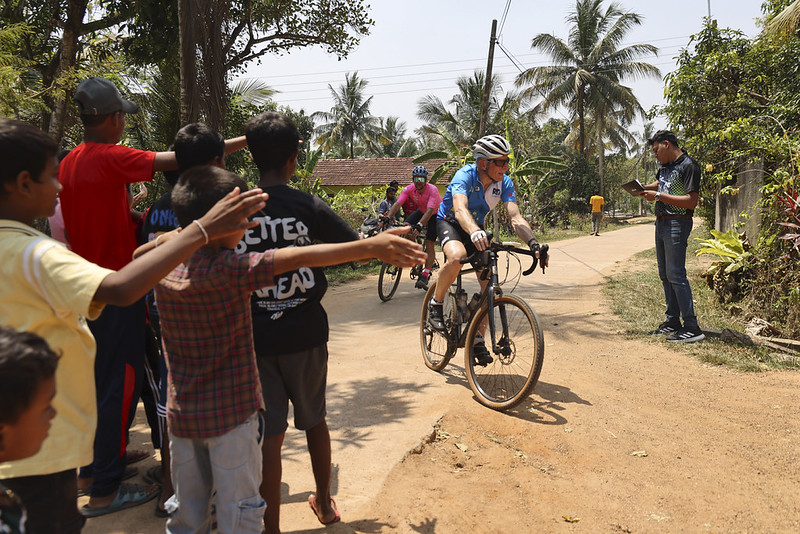
Further from the cities, vehicle numbers often fall away sharply. Many of Nepal’s finest cycling days unfold on rough jeep tracks, old roads and village lanes where the biggest obstacles are loose stone, livestock, washouts and the occasional tractor. These routes can feel gloriously remote, but they demand self-sufficiency and realistic expectations. A puncture is a minor inconvenience; a mechanical failure on a high, isolated pass needs a plan.
The season changes the calculation. October and November generally bring clear skies, stable weather and excellent riding conditions after the monsoon has settled the dust. March to May is also a strong window, with warmer temperatures, flowering hillsides and clear mornings, though afternoon wind and haze can build. During the monsoon, roughly June to September, landslides, mud, swollen streams and poor visibility make many mountain roads less predictable. Some routes remain possible, but this is not the time for a first Himalayan cycling holiday.
The risks cyclists should take seriously
The spectacular terrain is part of the appeal, but it creates real hazards. Nepal rewards calm, attentive riding rather than a head-down effort to chase a segment.
Landslides and roadworks
Steep slopes, seasonal rain and ongoing infrastructure work mean surface conditions can change overnight. A road that was smooth at breakfast may be covered in rockfall, churned into mud by machinery or narrowed to one lane by a fresh slip. During dry periods, loose dust can hide potholes and ruts. After rain, the same section can become slick and unstable.
The sensible response is not simply to ride more cautiously. It is to build flexibility into the day. Start early, allow time for delays, and accept that a vehicle transfer or alternative route can be the best call. On guided trips, local teams receive information from drivers, hoteliers and communities well before an issue appears on a visitor’s map.
Traffic and blind corners
On Nepal’s mountain roads, sound often arrives before sight: an engine climbing hard, a horn at a hairpin, brakes echoing through a gorge. Horn use is normal communication, not necessarily aggression. It tells other road users that a vehicle is approaching a blind bend.
Ride predictably, stay left, and do not cut corners on descents. Assume a bus, jeep or motorbike could appear in the line you want to take. Give large vehicles room, particularly on narrow sections, and resist the temptation to ride side by side where sight lines are limited. A bright rear light is valuable even in daytime, while a front light helps you stand out in dust, shade and tunnels.
Altitude, fatigue and weather
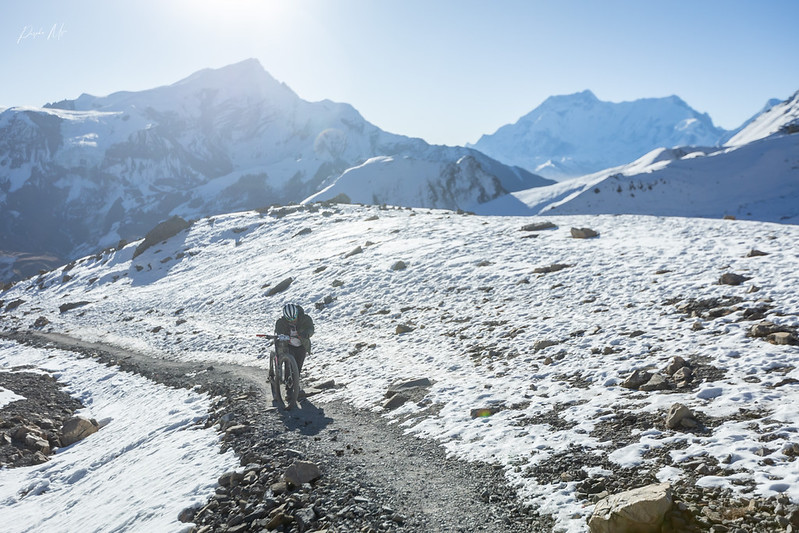
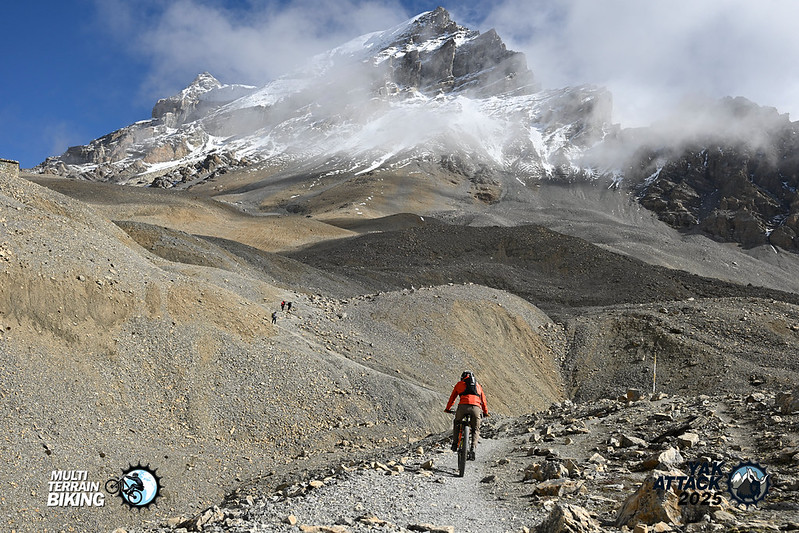
For riders heading towards the high Himalaya, the greatest risk is not always the road. Altitude can affect fit, experienced cyclists just as readily as anyone else. Headache, nausea, poor sleep and unusual fatigue are signs to respect, especially above 2,500 metres.
Long climbing days also change concentration. Descending rough terrain after hours in the saddle, when temperatures are falling and hands are tired, is when small errors become expensive. Layers, gloves, eye protection and enough food are safety equipment, not optional extras. Mountain weather can turn from hot sun to cold rain quickly, especially on exposed passes.
What safer riding looks like in Nepal
Strong riders sometimes arrive expecting a simple equation: more fitness equals more safety. Fitness helps, certainly, but judgement is the more useful currency. The best days come from riding within your limits and adapting to the road in front of you.
Choose a bike that suits the surface, not just the photographs. A gravel bike with generous tyre clearance can be excellent on mixed-surface routes, while a hardtail mountain bike offers more control and comfort on rougher tracks. Reliable brakes, low gearing and durable tyres matter far more than saving a few grams. Tubeless set-ups can reduce puncture disruption, though carrying a tube remains wise in remote areas.
Before every descent, check your brakes and make a simple plan: know where you are stopping, how far it is to the next settlement, and whether anyone is riding behind you. Keep speed in reserve. Gravel over tarmac, a water channel across the road or an unexpected pothole can appear with little warning.
Hydration deserves attention too. Bottled or treated water is the sensible choice, and regular drinking is vital in dry, high-altitude air. Take frequent food stops before you feel depleted. Nepal’s tea houses and roadside cafés are part of the experience, but the gap between them can be longer than expected in more remote regions.
Why local route knowledge makes a real difference
Navigation apps are useful, but they cannot tell you whether a bridge has washed out, a road is temporarily closed for construction, or a once-quiet valley is busy with festival traffic. Nor do they show the better lunch stop, the safer overnight town or the turn that leads from vehicle-heavy tarmac onto a superb backroad.
This is where an expertly planned trip changes the experience. A well-designed itinerary balances challenge with recovery, keeps the hardest terrain where it belongs in the day, and uses vehicle support intelligently rather than unnecessarily. It also allows for an alternative when weather or road conditions demand one.
At Multi Terrain Biking, our Nepal routes are shaped by years of riding, racing and operating in these mountains. That means knowledgeable local guides, carefully chosen accommodation, support vehicles where appropriate, mechanical backup and itineraries that respect both the terrain and the rider. It is the difference between merely getting through a complex journey and having the confidence to enjoy every remarkable kilometre.
Is a guided cycling holiday the safer choice?
For most visiting cyclists, particularly on a first trip to Nepal, guided riding is the lower-stress and safer option. It removes the logistical pressure of arranging transfers, interpreting road changes, finding reliable accommodation and managing a mechanical problem far from a bike shop. More importantly, it gives you a local decision-maker when conditions change.
That does not mean every day is escorted at the same pace. The best supported journeys leave room for personal riding: fast climbers can stretch their legs, steady riders can settle into their rhythm, and everyone reconnects at planned points. The support is there when it adds value, not to dilute the adventure.
Self-guided travel can suit experienced, independent riders on established routes in favourable seasons. It requires a conservative approach to daily distances, strong mechanical skills, offline navigation, emergency contact arrangements and enough time to absorb delays. If your holiday has a fixed schedule and your route reaches remote or high-altitude terrain, guided support is a very sensible investment.
A practical pre-ride check
Before setting out each morning, confirm the weather forecast locally rather than relying only on a national forecast. Ask about roadworks, landslides and traffic conditions ahead. Carry water treatment, warm layers, a basic first-aid kit, lights, tools, spare tubes, a power bank and some cash in small denominations. Keep travel insurance details accessible and make sure the policy explicitly covers the altitude and off-road riding you intend to do.
Most of all, give the mountains time. A shorter day with a long tea stop, a viewpoint and enough daylight for a careful descent is often the better ride. Nepal is not a destination to rush through with your eyes fixed on the next checkpoint. Ride alert, ride prepared, and let the road reveal why these mountains stay with cyclists long after the dust has been washed from their bikes.