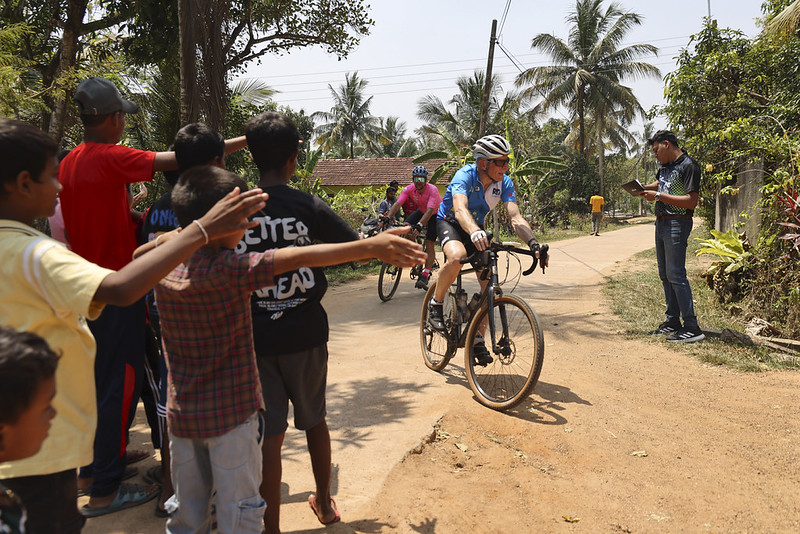
Nepal does not do tame gravel. A promising farm road can turn into a rocky climb, a suspension bridge, a tea stop and a long, dusty descent before lunch. That unpredictability is precisely what makes the best gravel routes in Nepal so compelling: they connect Himalayan views, living rural landscapes and riding that feels genuinely earned.
For riders accustomed to smooth European gravel, a reset is useful. Nepal’s unsealed roads are often jeep tracks, newly cut access roads or old trading corridors, and conditions can change dramatically after one monsoon season. Come for the immense landscapes and deeply immersive travel, rather than a guarantee of perfectly graded surfaces.
What gravel riding means in Nepal
The strongest Nepal itineraries are usually mixed-surface journeys. You may ride tarmac out of a city, settle into hard-packed dirt through terraced hills, then encounter loose stone, washboard and a steep section best handled on foot. This is adventure riding with a Himalayan edge, not a quest for uninterrupted cream-coloured gravel.
A capable gravel bike with 45-50mm tyres is a sensible starting point for the smoother, lower-altitude routes. For Upper Mustang, remote Himalayan valleys and rougher monsoon-damaged tracks, a hardtail can be the more enjoyable and forgiving choice. Low gearing matters far more than aerodynamic speed, while tubeless tyres, spare sealant, warm layers and a reliable hydration plan are practical essentials.
The best gravel routes in Nepal
1. Kathmandu Valley to Nuwakot via Kakani
This is one of the finest introductions to Nepal’s riding character. Leaving Kathmandu’s intensity behind, the road climbs towards Kakani, where forested ridges open to distant Himalayan peaks on a clear morning. From here, quieter lanes and rougher back roads lead north-west towards Nuwakot, an atmospheric historic town with an old royal palace and a slower pace of life.
Expect a mixture of paved climbing, broken road and dirt sections rather than wall-to-wall gravel. The appeal lies in the contrast: one day you can move from the capital’s bustle to hillside farms, pine forest and traditional villages. It works brilliantly as a two- or three-day warm-up for a longer Nepal cycling holiday, though the route should be planned around current roadworks and traffic patterns.
2. Chitlang and the Kulekhani reservoir
South-west of Kathmandu, the Chitlang corridor offers a rewarding escape into the Mahabharat hills. The classic line climbs through forest towards the Kulekhani reservoir, then drops into a landscape of smallholdings, village homes and open ridgelines. Chitlang itself is a lovely overnight stop, known for its rural character and a welcome sense of quiet after the city.
The gradients are the main challenge. Several climbs are short but punchy, and loose surfaces can make them feel steeper than the elevation profile suggests. Fit riders can cover the area in a hard day, but an overnight itinerary is the better experience: it allows time for local food, a relaxed morning and a more measured approach to the descents.
3. Pokhara’s ridge roads and the Panchase hills
Pokhara is Nepal’s natural adventure capital, but the best riding is found once you leave the lakeside and climb into the surrounding hills. The back roads around Pumdi Bhumdi, Dhampus, Australian Camp and Panchase combine stone tracks, forest lanes and wide views towards Annapurna, Machhapuchhre and Dhaulagiri.
This is a superb choice for riders who want big scenery without committing to high altitude. The surfaces vary constantly, and some descents are too rough to be rushed on a lightly loaded gravel bike. Yet the rewards are immediate: terraced fields, hillside settlements and mountain views that seem improbably close. Build this into a three- to five-day loop and use comfortable Pokhara accommodation at either end for a stress-free start and finish.
4. The Marsyangdi Valley to Manang
The Marsyangdi Valley is a classic gateway into the Annapurna region, following an ancient valley corridor beneath increasingly dramatic peaks. The lower approach has seen extensive road development, so it is not a pure gravel route. But beyond the busier sections, side roads, rough tracks and old alignments still make for a powerful mixed-terrain journey.
This route is about progression. Subtropical greenery gives way to pine forest, then a drier, higher mountain environment where the scale of the Himalaya becomes all-consuming. Altitude is the key trade-off. It is possible to be strong on the bike and still feel the effects above 3,000 metres, so a considered ascent profile, rest days and experienced local support are vital. The riding is best approached as part of a carefully crafted point-to-point journey, not a race to Manang.
5. Jomsom, Kagbeni and Muktinath in Lower Mustang
For many riders, Lower Mustang is where Nepal’s gravel potential becomes unforgettable. The Kali Gandaki Valley is broad, stark and wind-scoured, framed by enormous walls of rock and snow peaks. From Jomsom, routes towards Kagbeni and Muktinath offer a dramatic mix of valley tracks, riverbed riding, rough road and high-desert atmosphere.
The scenery is extraordinary, but this is not an easy cruise. The afternoon wind can be ferocious, surfaces are loose in places, and the climb to Muktinath rises above 3,700 metres. Starting early is a serious tactical advantage. The reward is a route with remarkable cultural depth too, passing Tibetan-influenced villages, Buddhist chortens and apple-growing communities. For riders seeking a premium Himalayan adventure without the logistical commitment of Upper Mustang, this is a standout.
6. Upper Mustang to Lo Manthang
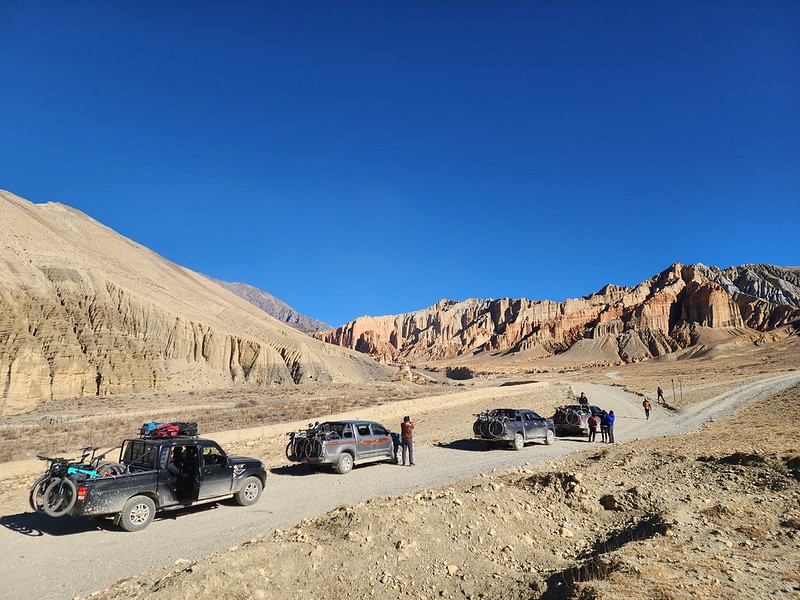
Upper Mustang is one of the world’s great high-desert bike journeys. Beyond Kagbeni, the landscape becomes drier, more remote and more otherworldly with every kilometre: ochre cliffs, cave dwellings, ancient monasteries and broad valleys cut by the wind. The route towards Lo Manthang follows rough roads and jeep tracks through a former Himalayan kingdom with a culture distinct from much of Nepal.
It demands more than fitness. Upper Mustang requires a restricted-area permit, careful accommodation planning and dependable vehicle support, particularly if weather, mechanical issues or altitude affect the group. The terrain can be corrugated and rocky, so many riders will prefer a hardtail or a very capable adventure gravel set-up. Go in the main riding seasons of spring or autumn, when the skies are generally clearer and high passes are more dependable. This is a route to savour, not tick off quickly.
7. The Helambu back roads above Kathmandu
North-east of Kathmandu, Helambu offers a rewarding blend of forest roads, Tamang and Hyolmo villages, terraces and mountain ridges. Routes through Melamchi, Tarkeghyang, Sermathang and surrounding valleys can be linked into a challenging multi-day escape with a distinctly local feel.
Road conditions here are especially variable. Landslides, monsoon damage and rebuilding work can alter a route from one season to the next, which is why current local knowledge matters. When the tracks are running well, Helambu delivers long climbs, technical descents and a rare sense of closeness to Kathmandu without feeling connected to the city at all. It suits confident riders who enjoy a rougher, more exploratory edge.
When to ride Nepal’s gravel roads
October to December and March to May are the prime windows. Autumn usually brings crisp visibility after the monsoon, although popular trekking areas can be busy. Spring offers warmer days, flowering rhododendrons in the middle hills and excellent riding conditions, though haze can soften long-distance mountain views.
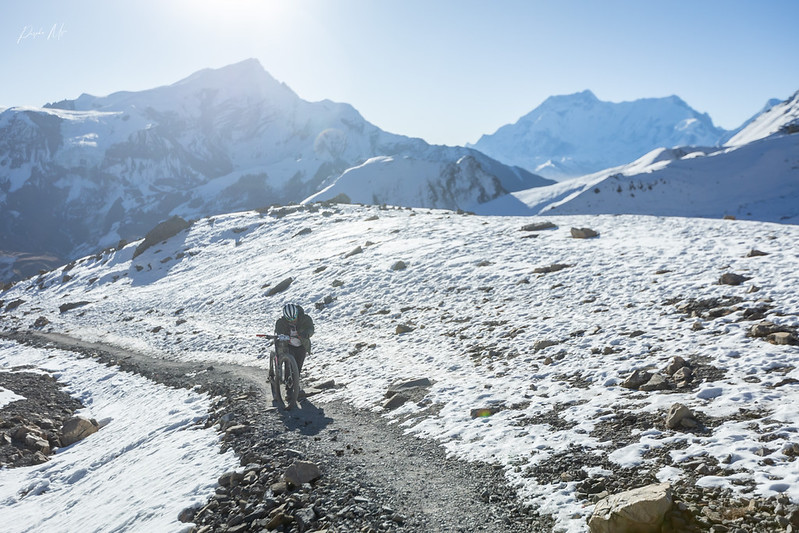
The monsoon, broadly June to September, is not simply wet. It can bring leeches in lower forests, landslides, swollen rivers and route changes with little warning. Winter riding can be excellent around Kathmandu and Pokhara, but higher regions become colder and more exposed, with snow possible on mountain passes. The right season depends on whether your priority is high-altitude desert, lush hills or clear Himalayan panoramas.
Plan for the terrain, not just the distance
Daily kilometres in Nepal can be deceptively modest. A 60-kilometre day with 1,500 metres of climbing, loose stone and a late headwind may feel bigger than a much longer ride at home. Allow room in the schedule for mechanicals, photo stops, tea breaks and the occasional section where pushing is the smart option.
A supported journey removes much of the friction. A knowledgeable guide can adapt to road conditions, manage permits, arrange the right local stays and make sure your luggage is waiting at the end of a demanding day. That turns a complex Himalayan undertaking into the sort of adventure you can fully enjoy. With nearly two decades of on-the-ground experience, Multi Terrain Biking can shape a Nepal route around your preferred balance of challenge, comfort and cultural discovery.
Choose the route that excites you most, then give it the time it deserves. In Nepal, the memorable moments are rarely found by chasing the fastest line – they arrive on the unplanned ridge, at the village tea stop and in the final light on a road that leads further into the mountains.