
You can roll out from a palm-lined beach at sunrise, climb into tea country by late morning, and finish the day watching elephants move across scrubland on the edge of a national park. If you are asking is Sri Lanka good for cycling holidays, that contrast is the real answer. Few destinations pack so much variety into such a compact island, and fewer still do it with this much warmth, colour and rideable terrain.
Sri Lanka works brilliantly for riders who want more than one-note cycling. This is not a place for endless Alpine passes or manicured bike lanes. It is a destination of changing surfaces, shifting scenery, punchy climbs, fast coastal stretches, spice gardens, ancient cities and mountain roads that keep revealing another reason to stay in the saddle. For the right rider, it is one of the most rewarding cycling holiday destinations in Asia.
Is Sri Lanka good for cycling holidays in practice?
Yes, but the best answer is a useful one rather than a simple one. Sri Lanka is excellent for cycling holidays if you want a deeply immersive trip where riding is only part of the experience. The island suits gravel riders, road cyclists with a taste for mixed conditions, experienced leisure riders and adventurous couples or groups who want high-quality support and carefully chosen routes.
Where Sri Lanka stands out is density. You do not need to transfer for days to reach the next worthwhile riding region. In one trip you can move between the Cultural Triangle, the southern coast, the Knuckles foothills, the tea-covered highlands and wildlife-rich dry zones without the logistics becoming unwieldy. That makes it unusually strong for point-to-point journeys.
The trade-off is that Sri Lanka is not a destination where you should expect European-style cycling infrastructure. Roads vary. Traffic can be lively near towns. Heat and humidity are real factors. If you arrive wanting perfectly quiet tarmac all day, every day, you may need to reset expectations. The island rewards riders who are flexible, curious and keen to see a place properly rather than skim over it.
What makes riding in Sri Lanka so special?
The first reason is terrain. Sri Lanka offers a rare mix of ride styles in a relatively small footprint. Coastal roads can be flat and flowing, ideal for warm-up days or scenic spins between fishing villages and oceanfront hotels. Inland, the profile changes quickly. You get rolling backroads through rice paddies and rural settlements, then longer climbs into cooler hill country where the gradients bite and the views open up.
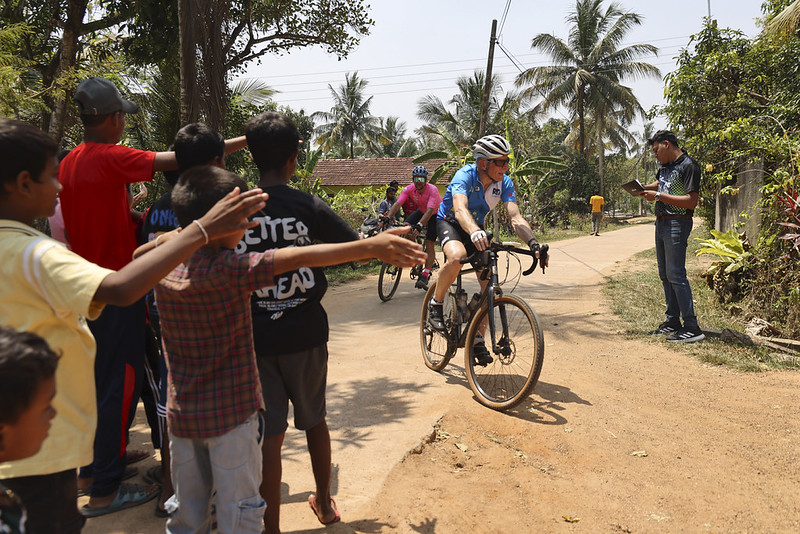
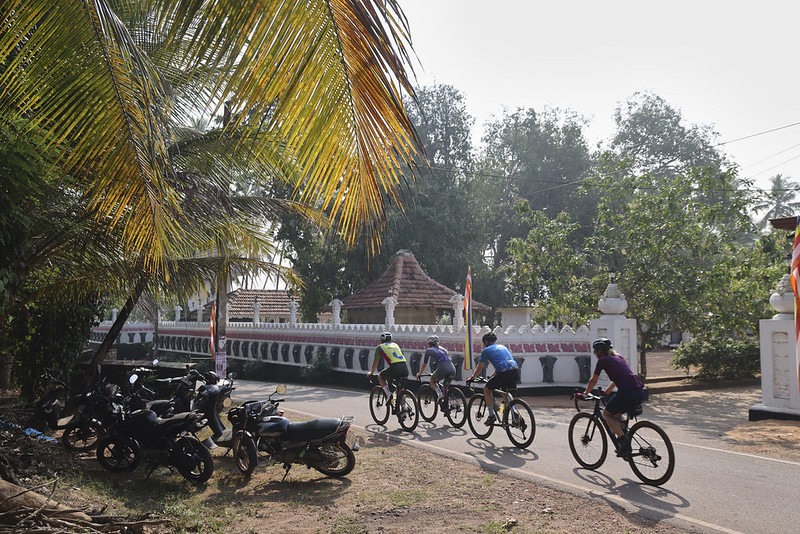
The second is cultural depth. A cycling holiday here does not feel detached from the country around you. You pass Buddhist temples, colonial-era buildings, market towns, roadside fruit stalls and schoolchildren waving from village lanes. Stops matter. Lunch matters. The off-bike hours matter. Sri Lanka delivers those moments naturally.
Then there is wildlife. It is one thing to ride beautiful roads. It is another to do it in a place where monkeys scatter from the verge, peacocks cross the road, and safari extensions can bring you close to elephants and leopards. That combination of active travel and genuine natural spectacle is a big part of the island’s pull.
The riding style: road, gravel and mixed terrain
Sri Lanka is at its best when approached with an open mind about surfaces. There is plenty of good tarmac, especially on well-planned routes, but some of the most memorable riding comes when you add gravel tracks, plantation roads and quieter rural connectors. Riders who enjoy mixed terrain generally get the richest experience.
Road cyclists can absolutely have a strong trip here, especially in the hill country and on selected inland roads where traffic is lighter and scenery is consistently high quality. Gravel riders tend to have even more freedom, as a capable bike opens up estate roads, village tracks and lesser-used routes that feel far removed from the main transport corridors.
For mountain bikers, Sri Lanka is more about adventure riding than bike-park style trail networks. Expect backcountry flavour rather than groomed trail-centre predictability.
Where Sri Lanka shines most for cyclists
The hill country is the island’s headline act. Around places such as Kandy, Hatton, Nuwara Eliya and Ella, the riding becomes cooler, greener and more dramatic. Tea plantations stripe the slopes, roads contour the mountainside, and climbs build steadily into rewarding descents. If you enjoy earning your views, this is where Sri Lanka really starts to flex.
The Cultural Triangle offers a different feel. Riding between ancient sites, reservoirs and rural farmland brings a slower, more atmospheric rhythm. This region is excellent for riders who value history and landscape as much as climbing metres.
The south and south-west coasts can work well at the start or end of a trip. The terrain is less demanding in places, the accommodation options are strong, and the contrast between beachside recovery and inland riding is part of the appeal. It is also an easy way to build a holiday that includes non-riding partners or a few days of downtime.
Is Sri Lanka good for cycling holidays all year round?
Not quite, and that matters. Sri Lanka has two monsoon patterns, which means conditions vary by region and season. One side of the island can be far more rideable than the other depending on the time of year.
Broadly, the best cycling windows often fall between December and April for much of the south, west and hill country. The east coast comes into its own later in the year. Temperature is another consideration. Lower elevations can be hot and humid, while the highlands are far more comfortable for sustained climbing.
This is where route design becomes critical. A good itinerary does not just chase famous sights. It matches riding regions to seasonal weather, daily effort and transfer logic. That is the difference between a trip that feels expertly crafted and one that feels like a compromise.
The practical realities riders should know
Sri Lanka is welcoming, but it is still an adventure destination. Road behaviour can appear chaotic at first, with buses, tuk-tuks, scooters and local traffic all moving to their own rhythm. In practice, experienced local support makes a major difference. The best routes avoid busy corridors where possible and use early starts to make the most of cooler temperatures and quieter roads.
Nutrition and hydration need more attention than many riders expect. The tropical climate can sap energy quickly, especially for visitors arriving from a British winter. Electrolytes, sensible pacing and support vehicle access are not luxuries here. They are part of riding well.
Mechanical planning also matters. Tyre choice should match the route rather than the marketing. A light road set-up can work on the right trip, but a wider tyre often delivers a calmer, more enjoyable ride on Sri Lanka’s mixed surfaces.
Who Sri Lanka suits best
Sri Lanka is ideal for riders who want challenge with comfort. You can push hard on the bike, then recover in excellent boutique hotels, heritage properties or well-chosen lodges. That balance is one of the island’s great strengths.
It also suits couples and small groups where not everyone needs the same day in the saddle. One rider can chase climbing and distance while another takes a shorter stage, visits a temple, or spends the afternoon by the pool before everyone meets for sundowners and dinner. The holiday still works.
If your perfect cycling trip means nothing but high-altitude suffering, Sri Lanka may not replace the biggest mountain destinations on your list. If, however, you want a premium adventure with real riding, cultural depth and serious variety, it is a standout option.
Is Sri Lanka good for cycling holidays compared with other destinations?
Sri Lanka is not trying to be Mallorca, the Alps or Girona. That is precisely why it appeals. It offers a different kind of quality. The roads are not famous because professional teams train there. The island is compelling because the riding feels exploratory and the days are layered with encounters you could not script.
Compared with larger countries, the logistics are more contained. Compared with some parts of South East Asia, the elevation profile is more interesting. Compared with many long-haul cycling destinations, the blend of luxury, culture, wildlife and genuine ride challenge is unusually well balanced.
For riders who value story-worthy travel as much as average speed, Sri Lanka tends to overdeliver.
A well-run trip is the key to seeing the island at its absolute best. With the right season, the right bike and routes shaped by local knowledge, Sri Lanka becomes far more than a good cycling holiday destination. It becomes the sort of ride you keep talking about long after the tan lines have faded.